- .
- info@earthtrip.in
-
INR
-
USD
INR
USD
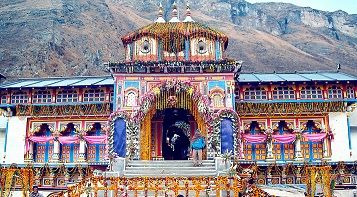
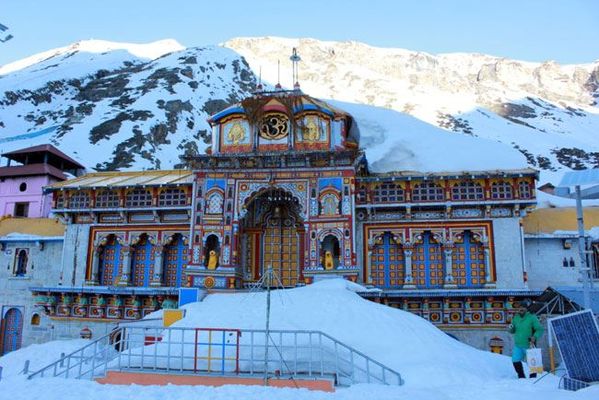
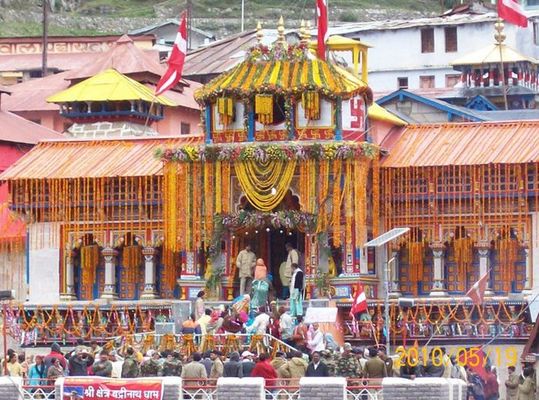
Located between the two mountains Nar and Narayan, Badrinath Dham is a majestic sight as well as the the most important of all the Char Dhams. Lakhs of tourist come every year to this sacred Badrinath town to seek blessings and to get a glimpse of the famous temple of Shri Badrinathji.
Badrinath is the only Shrine which is part of both Chota Char Dham and India Char Dham. Badrinath is one among four pilgrimage centres in four corners of India. Among them were Badrikashram (Badrinath Temple) in the North, Rameshwaram in South, Dwarkapuri in west and Jagannathpuri in east.
¤ BADRINATH YATRA ¤
Badrinath Yatra ¥ is one of ¥ the oldest and holy Hindu places ¥ of worship. ¥ On the ¥ right bank ¥ of the Holy river Alaknanda ¥ lies the sacred ¤ shrine perched ¥ at an altitude of ¤ 3132 meters above ¥ sea level AND guarded on either side ¤ by the two high ¤ mountain peaks ¥ Nar & Narain(lord vishnu names) with the towering ¥ Neelkanth peak ¥ providing a awesome ¥ back drop.
Shri Badrintah Ji in Also known ¤ as the Vishal ¤ Badri, the largest ¤ among the five ¤ Badries, it is revered by all as the apt tribute to Lord Vishnu. he revered spot was once carpeted with wild berries which gave it the name 'Badri Van' meaning 'forest of berries.
Built by ¤ Adi Shankaracharaya, the philosopher ¤ saint of the 8th century, the temple has ¤ been renovated several times due to damage by avalanches and restored in the 19th century by the royal houses of Scindia & Holkar. The main entrance gate is colorful & imposing popularly known as Singhdwar. References to Sri Badrinath have been made in the Vedas & perhaps it was a popular shrine during the Vedic age also. The Skand Purana gives an accvount of the Adiguru consecrating the idol of Lord Badri Vishal in the temple after recovering it from Narad Kund, in a pursuance of a divine call from heaven.
The idol is made of black stone similar to granite. So holy is the shrine that it forms one of the four prominent places of Hindu worship. The epic Mahabharat, it is believed, was composed in the Vyas & ganesh caves close by. The Vishnu Ganga which later becomes the Alaknanda flows below the temple. Almost 3 km north of Badrinath, mana is the last Indian village before the Tibetan border. The Vasudhara falls are quite spectacular. On the closing day the residents of Mana offer a choli to the deity to cover the deity all the winter. It is taken off on the opening day & its fibers are distributed amongst the Yatris (pilgrims) as a maha prasadam. Joshimath is the winter deity of Badrinath.
The temple opens every year in the month of April-May & closes for winters in the third week of November. Badrinath four subsidiary Badris include Bhavishya Badri, Yogdhyan Badri, Bridha Badri and Adi badri. It is popularly believed that with spread of Buddhism, the Buddhists enshrined the statue of Lord Buddha there and during the Hindu renaissance, the statue of Buddha was later restored by Adi Guru as the idol of Vishnu. This possibly explains the deity sitting in Padmasan posture, typical of Buddha icons. However, also according to Hindu mythology, Buddha was considered to be the ninth incarnation of Lord Vishnu.
Badrinath is devoted t the worship of Vishnu, who, according to an amusing tale, usurped this place from Shiva. For Vishnu had come here as the gods once did, to offer penance. He loved the place so much that he plotted to unseat Shiva from his meditation here. He took on the form of a beautiful child and began to wail. Shiva's wife, Parvati, picked him up but could not calm the child. Since his wailing continued to disturb Shiva, he shifted to Kedarnath in exasperation, leaving the spot free for Vishnu to occupy. But reminders of Shiva's stay continue to linger, most visible in the name, Badri, a kind of berry that Shiva was most fond of and the gigantic tree, invisible to the mortal eye, that served Shiva. Legend also has it, when the Ganga was requested to descend to earth to help the suffering humanity, the earth was unable to withstand the force of its descend. Therefore the mighty Ganga was split into twelve holy channels, Alaknanda was one of them that later became the abode of Lord Vishnu or Badrinath.
Dedicated to Lord Vishnu, it is built in the form of a cone with a small cupola of a gilt bull & spire. Legend dates the temple prior to the vedic age and the original temple is believed to be built by King Pururava and the icon of the lord carved by Vishwakarma, the creator of gods. A Hindu reformist Adi Shankaracharya re-enshrined the temple back in 8th century. A flight of steps takes pilgrims to the main gate & then into the temple. The temple is divided into three parts - the 'Garbha Griha' or the sanctum sanctorum, the 'Darshan Mandap' where the rituals are conducted and the 'Sabha Mandap' where devotees assemble. The Garbha Griha portion has its canopy covered with a sheet of gold offered by Queen Ahilyabai Holkar. The complex has 15 idols. especially attractive is the one-meter high image of Badrinath, finely sculpted in black stone. It represents Lord Vishnu seated in a meditative pose-padmasan
Special pujas are also performed on behalf of individuals. Every puja must be preceded by a holy dip in the Tapta Kund. Some of the special morning pujas are Abhishek, Mahaabhishek, Geeta Path. Some special evening pujas are Aarti & Geet Govind. Such pujas are to be booked in advance. The temple opens at 0430 hrs & closes at 1300 hrs. Once again it opens at 1600 hrs & closes at 2100 hrs after the divine song Geet Govind. Rawal is the administrator-Pujari of the temple well versed in puja ceremonials & Sanskrit language and is expected to be celibate..
Day 01 : Arrival Delhi - Haridwar (205 kms. 6 hrs. drive)
Upon arrival meeting and assistance followed by drive to Haridwar. Upon arrival check at Hotel. Evening aarti at Har ki peri. Overnight stay at hotel.
Day 02 : Haridwar - Joshimath (275 Kms.)
Morning drive to Joshimath, en-route visit Rishikesh. Upon arrival Joshimath check in at the Hotel. Overnight stay at hotel.
Day 03 : Joshimath - Badrinath (45 Kms)
Morning Pooja and Darshan of Adi Sankracharya Samadhi and Sri Narsingh Mandir at Joshimath and drive to Sri Badrinath. On arrival check in at the Hotel. Afternoon visits temple, Mana Village, Byas Gufa, Ganesh Gufa, Saraswati and Saraswati River. Overnight stay at Hotel.
Day 04 : Badrinath - Rudrapryag (145 Kms)
Early morning Pooja and darshan at temple. Morning drive to Rudrapryag via Joshimath & Karanprayag. On arrival check-in at hotel. Overnight stay at hotel.
Day 05 : Rudrapryag - Rishikesh (134)
Morning drive to Rishikesh en-route visit Devprayag. Later drive to Rishikesh on arrival checks in at the hotel. Overnight stay at hotel.
Day 06 : Rishikesh – Delhi – Departure (234 Kms.)
Morning drive to Delhi. On arrival Delhi drop you at Airport / railway station for onward destination.
Badrinath Yatra ends with sweet memories ...............
Payments policy
Tour Cancilation policy
By Air:
Jolly Grant Airport (Airport Code: DED - Dehradun - 310 km southwest) operates daily direct flights from New Delhi, Mumbai, Bengaluru, Lucknow, Ahmedabad, and Hyderabad. Taxis and private hill cabs are available at the airport arrivals to reach Badrinath in 9.5 to 11 hours via Rishikesh, Devprayag, Rudraprayag, Karnaprayag, and Joshimath along NH-07.
Helicopter Services to Badrinath:
Direct passenger helicopter shuttles operate from Sahastradhara Helipad in Dehradun directly to Badrinath Helipad, as well as charter flights connecting Kedarnath and Badrinath during the Char Dham Yatra.
By Train:
Badrinath is served by two major railway junctions in Uttarakhand:
By Road:
Local Transport:
Shared jeeps, mountain taxis, and local shuttle buses operate continuously between Badrinath town, Mana village, and Joshimath.
Badrinath features an iconic collection of sacred temples, thermal springs, mythological caves, and glacial waterfalls:
The principal sanctuary of Lord Vishnu, situated on the right bank of the Alaknanda River. The temple features a distinctive brightly colored arched facade in traditional mountain pagoda style with a gold gilded roof. Inside the sanctum sanctorum (*Garbhagriha*), Lord Badri Narayan is seated under the Badri tree flanked by Kubera, Narada, Uddhava, Garuda, and Nar-Narayana.
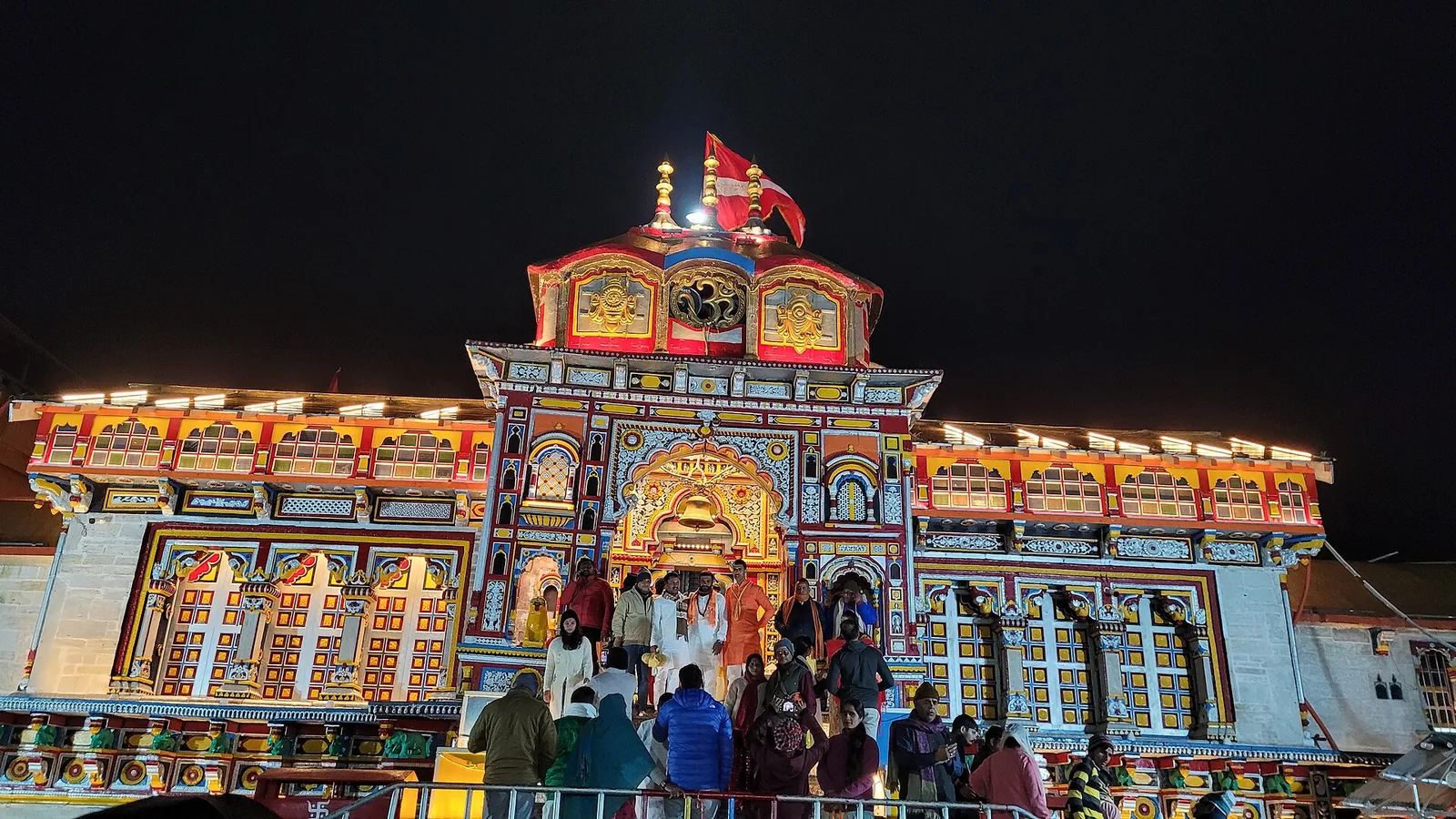 Badrinath Temple — Supreme Badri Vishal Sanctum of the Char Dham in Garhwal
Located 3 km beyond Badrinath at an altitude of 3,200 meters, **Mana** is officially celebrated as the *First Indian Village* before the Mana Pass and Tibetan border. Inhabited by indigenous Bhotiya tribal families, Mana is famous for handwoven sheep wool carpets, traditional stone slate houses, organic tea stalls (*India's First Tea Shop*), and mythological sites.
 Mana Village — First Indian Village on the Indo-Tibetan Border Near Badrinath
A spectacular 122-meter (400-foot) natural waterfall plunging off sheer glacial cliff walls into the Alaknanda valley. Reached via a scenic 5 km mountain trek from Mana village across rocky moraines and birch woods, the falls are believed to turn away from unrighteous souls according to Garhwali folklore.
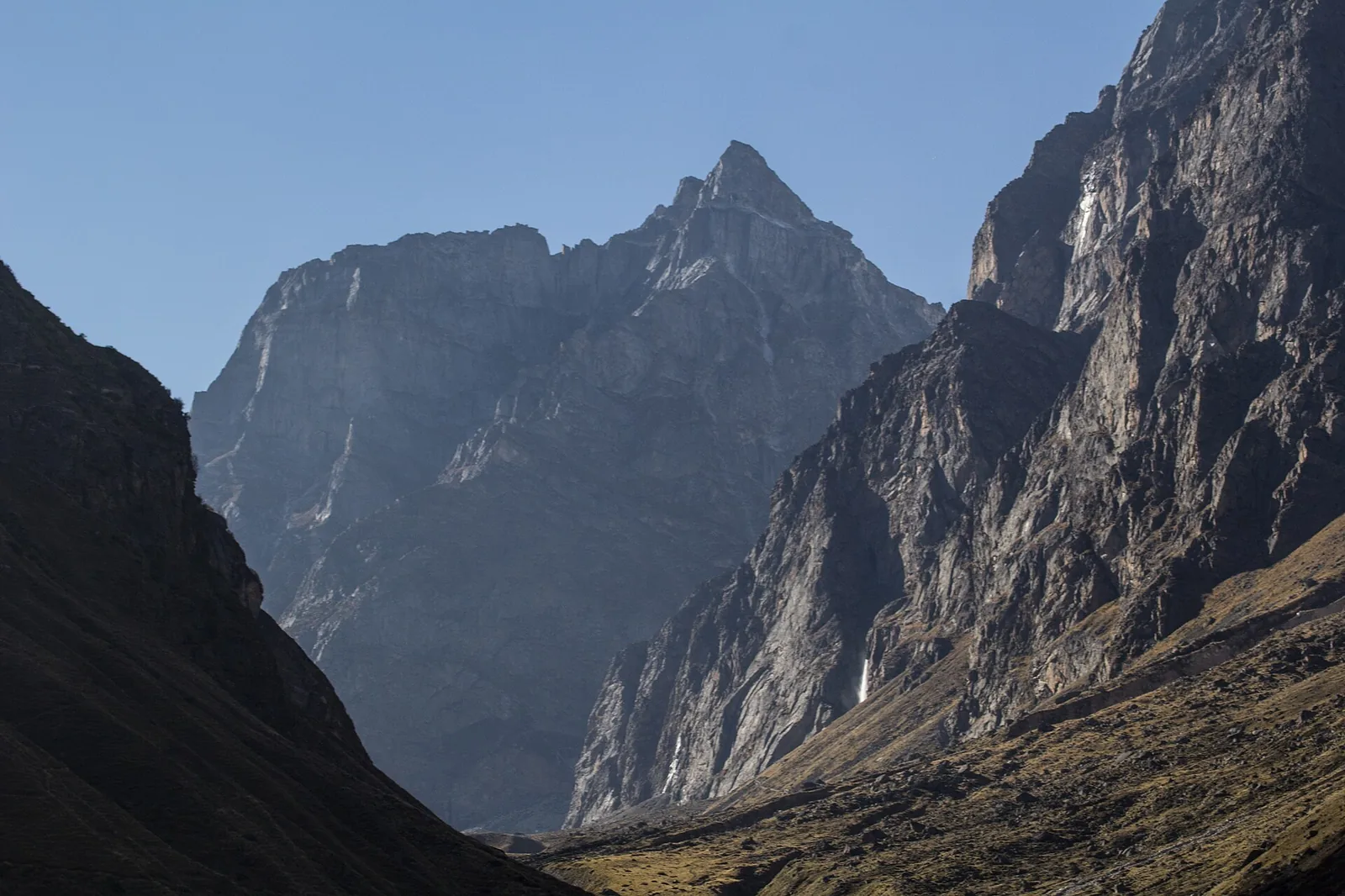 Vasudhara Falls — 400-Foot Glacial Cascade Waterfall Trek from Mana Village
Natural geothermal hot water springs located directly below the Badrinath Temple along the riverbank, with constant mineral water temperatures of 45°C. Devotees take ritual purification baths in the separate men and women bathing tanks before temple worship.
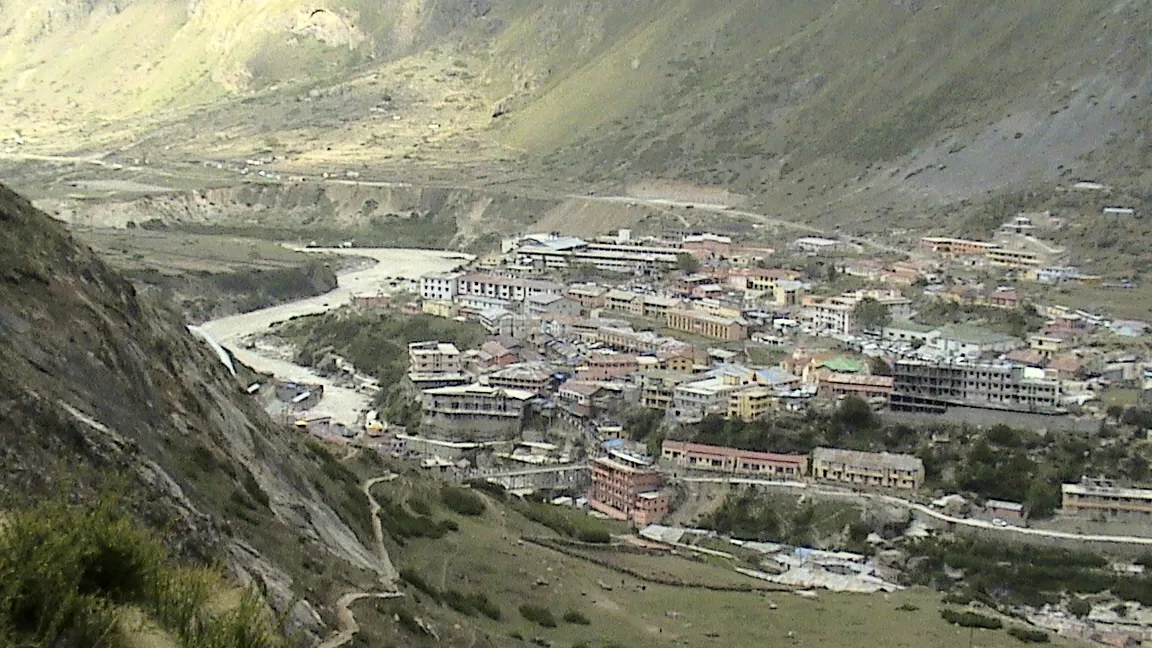 Tapt Kund — Natural Geothermal Hot Springs for Ritual Bathing at Badrinath Ghat
Towering majestically directly behind the Badrinath shrine at an elevation of 6,596 meters, **Nilkantha** is celebrated as the *Garhwal Queen*. The sharp pyramidal summit catches the first rays of morning sunlight, creating a golden glow over the sacred valley.
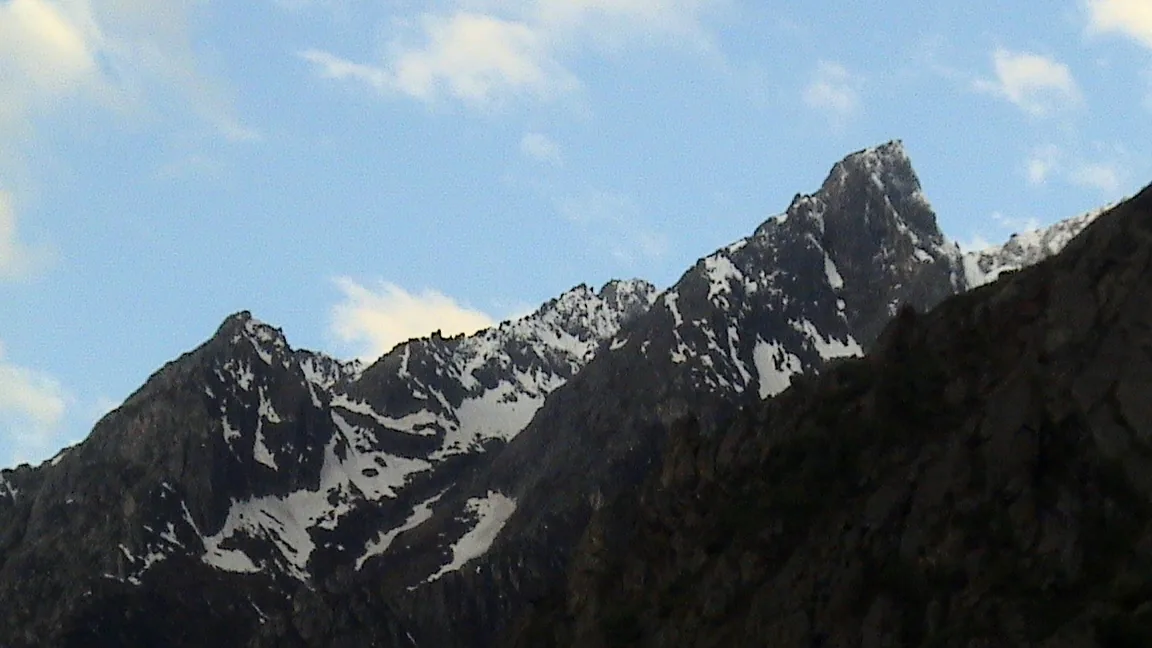 Nilkantha Peak — Colossal 6,596-Meter Pyramidal Snow Mountain Overlooking Badrinath
A holy flat platform on the banks of the Alaknanda River where pilgrims perform *Shradh* and *Pind Daan* ceremonies for their deceased ancestors, believed to grant immediate liberation (*moksha*) to departed souls.
Ancient natural rock caverns in Mana village where Maharishi Ved Vyasa dictated the epic Mahabharata and 18 Puranas to Lord Ganesha, featuring a rock roof resembling pages of ancient palm leaf manuscripts (*Vyas Pothi*).
A colossal natural rock slab placed across the roaring gorge of the holy Saraswati River in Mana by the mighty Pandava prince Bheema to help his wife Draupadi cross the turbulent mountain torrent.
A sacred rock boulder situated at an altitude of 3,380 meters (3 km uphill from Badrinath), bearing the clear divine footprints (*charan chinhas*) of Lord Vishnu when he first stepped upon Earth from Vaikuntha.
Duration: 3 Night/4 Days
 Best Flights
 Best Prices
 Unique Holidays