Badrinath — Travel Guide
Badrinath (the supreme holy pilgrimage shrine of Sanatana Dharma, premier pillar of both the pan Indian Char Dham and Uttarakhand's Chota Char Dham, and sacred seat of Lord Badri Vishal in the Chamoli district of Uttarakhand, perched at an altitude of 3,133 meters / 10,279 feet above sea level in the Higher Garhwal Himalayas), stands as one of the most revered spiritual sanctuaries on Earth.
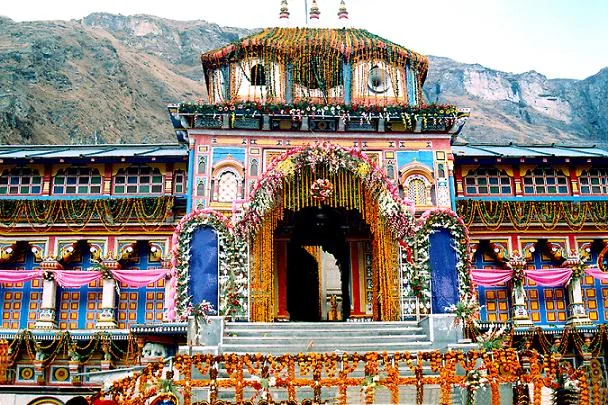
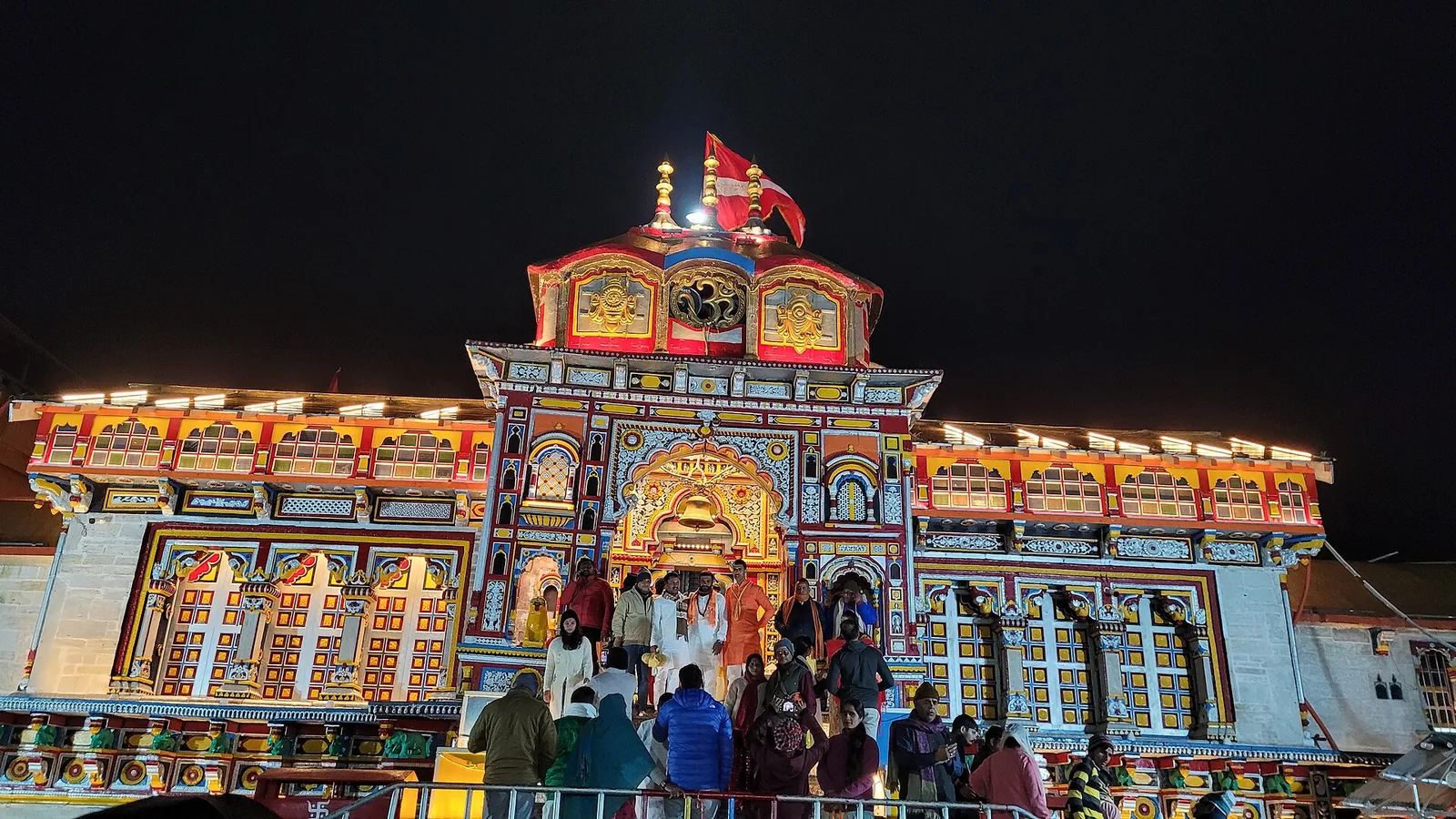 The Colorful Facade of Sacred Badrinath Temple on the Banks of the Alaknanda River
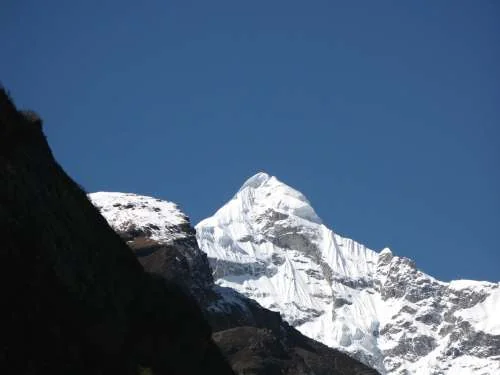
Nestled in a high alpine valley along the roaring currents of the holy Alaknanda River between the sacred twin peaks of **Nar Mountain** and **Narayana Mountain**, the temple is framed by the colossal snow pyramid of Nilkantha Peak (6,596 m) — celebrated as the *Queen of Garhwal*.
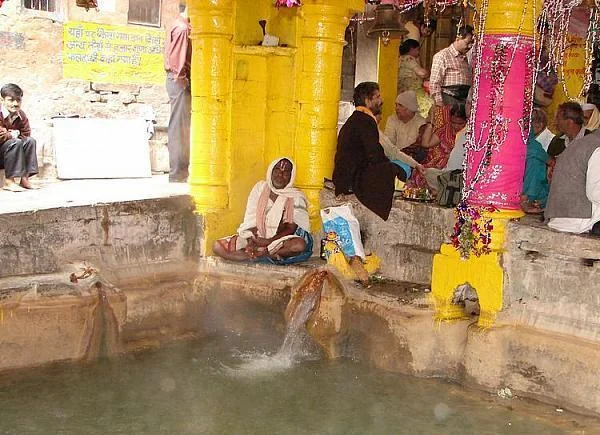
Established in the 8th century by Adi Shankaracharya, the temple houses a self manifested black stone *Saligram* idol of Lord Vishnu in deep meditative padmasana posture. Devotees take holy purifying dips in the natural thermal sulfur waters of Tapt Kund (45°C) before entering the colorful stone sanctum.
Just 3 km north lies Mana Village — designated as the *First Indian Village* on the Indo Tibetan border, home to the ancient cave of **Vyas Gufa** (where Sage Vyasa composed the Mahabharata), the monolithic stone bridge of **Bheem Pul**, the origin of the Vedic Saraswati River, and the 400 foot glacial cascade of **Vasudhara Falls**.
Connected via the all weather Char Dham highway just 45 km from Joshimath, 58 km from Auli, and 295 km from Rishikesh, Badrinath offers pilgrims profound spiritual elevation, sacred rituals at Brahma Kapal, and Himalayan splendor.
Best Time to Visit Badrinath:
- May to June (Summer & Char Dham Peak Season / Ideal Window): Daytime temperatures range from 10°C to 18°C with pleasant mountain sun, cool breezes, and clear blue skies, making it the most popular window for temple darshan, Tapt Kund baths, and Mana village visits.
- September to November (Autumn / Post Monsoon Clarity): Crisp autumn weather with crystal clear Himalayan views of Nilkantha peak and golden valley colors (4°C to 14°C).
- July to August (Monsoon): Seasonal monsoon rains along the Alaknanda gorge.
- December to April (Winter Closure): The temple remains closed under heavy snow, and the deity of Lord Badri Vishal is worshipped at the Narsingh Temple in Joshimath.
Famous Garhwali Mountain Specialties & Mahaprasadam:
- Badri Tulsi & Dry Mahaprasad: Roasted mountain gram and sugar crystals blessed with sacred Badri basil (*tulsi*) leaves at the sanctum sanctorum.
- Mandua Ki Roti with Pure Desi Ghee: Nutritious finger millet flatbread served hot with fresh churned white butter and spicy green mint chutney.
- Gahat (Kulath) Ki Dal: Aromatic mountain horse gram soup cooked in iron kadhai with fried *jakhya* seasoning.
- Pahadi Chainsoo & Kafuli: Slow roasted black gram curry and pureed mountain spinach cooked in traditional iron cookware.
- Singori & Jhangore Ki Kheer: Traditional malu leaf khoya sweet and sweet barnyard millet pudding enriched with saffron and dried fruits.
By Air:
Jolly Grant Airport (Airport Code: DED - Dehradun - 310 km southwest) operates daily direct flights from New Delhi, Mumbai, Bengaluru, Lucknow, Ahmedabad, and Hyderabad. Taxis and private hill cabs are available at the airport arrivals to reach Badrinath in 9.5 to 11 hours via Rishikesh, Devprayag, Rudraprayag, Karnaprayag, and Joshimath along NH-07.
Helicopter Services to Badrinath:
Direct passenger helicopter shuttles operate from Sahastradhara Helipad in Dehradun directly to Badrinath Helipad, as well as charter flights connecting Kedarnath and Badrinath during the Char Dham Yatra.
By Train:
Badrinath is served by two major railway junctions in Uttarakhand:
- Rishikesh / Yog Nagari Rishikesh (Station Code: YNRK / RKSH - 295 km): Principal railhead connected by express trains from Delhi, Mumbai, and Kolkata.
- Haridwar Junction (Station Code: HW - 320 km): Major national railhead with regular Shatabdi, Jan Shatabdi, and Vande Bharat trains.
- The upcoming *Rishikesh Karanprayag Railway Line* will provide high speed rail access to Karnaprayag (125 km from Badrinath).
By Road:
- From Delhi (~535 km / 13 to 15 hours): Via Delhi Meerut Expressway, Haridwar, Rishikesh, Devprayag, Srinagar, Rudraprayag, Karnaprayag, Chamoli, Pipalkoti, Joshimath, Govindghat, and Pandukeshwar (NH-07).
- From Rishikesh (~295 km / 9 to 10 hours): Smooth all weather Char Dham Highway (NH-07).
- From Kedarnath Route (Gaurikund ~215 km / 7 to 8 hours): Via Kund, Chamoli, and Joshimath.
- Regular UTC and GMOU state transport buses depart daily from Rishikesh ISBT and Haridwar.
Local Transport:
Shared jeeps, mountain taxis, and local shuttle buses operate continuously between Badrinath town, Mana village, and Joshimath.
Shopping in Badrinath and Mana village offers sacred souvenirs, handwoven woolens, and mountain herbs:
- Badrinath Temple Road: Certified Badri Tulsi malas, sacred Saligram stones, brass Vishnu idols, conch shells (*shankh*), and religious scriptures.
- Mana Village Tribal Stalls: Handwoven pure sheep wool shawls, tweed jackets, wool blankets (*pankhi*), handknitted woolen socks, and Tibetan prayer flags.
- Organic Pahadi Produce: Mountain millets (Mandua, Jhangora), organic Garhwali kidney beans (*Joshimath / Mana Rajma*), pure Himalayan forest honey, and mountain spices (*jakhya*, *faran*).
Must-Visit Places in Badrinath
Badrinath features an iconic collection of sacred temples, thermal springs, mythological caves, and glacial waterfalls:
1. Badrinath Temple & Sacred Badri Vishal Sanctum (Alaknanda Bank)
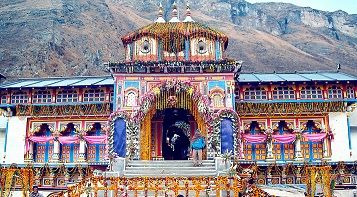
The principal sanctuary of Lord Vishnu, situated on the right bank of the Alaknanda River. The temple features a distinctive brightly colored arched facade in traditional mountain pagoda style with a gold gilded roof. Inside the sanctum sanctorum (*Garbhagriha*), Lord Badri Narayan is seated under the Badri tree flanked by Kubera, Narada, Uddhava, Garuda, and Nar-Narayana.
Badrinath Temple — Supreme Badri Vishal Sanctum of the Char Dham in Garhwal
2. Mana Village & First Indian Village at Indo-Tibetan Border (3 km)
Located 3 km beyond Badrinath at an altitude of 3,200 meters, **Mana** is officially celebrated as the *First Indian Village* before the Mana Pass and Tibetan border. Inhabited by indigenous Bhotiya tribal families, Mana is famous for handwoven sheep wool carpets, traditional stone slate houses, organic tea stalls (*India's First Tea Shop*), and mythological sites.
 Mana Village — First Indian Village on the Indo-Tibetan Border Near Badrinath
3. Vasudhara Falls & 400-Foot Glacial Cascade Mountain Trek (Mana)
A spectacular 122-meter (400-foot) natural waterfall plunging off sheer glacial cliff walls into the Alaknanda valley. Reached via a scenic 5 km mountain trek from Mana village across rocky moraines and birch woods, the falls are believed to turn away from unrighteous souls according to Garhwali folklore.
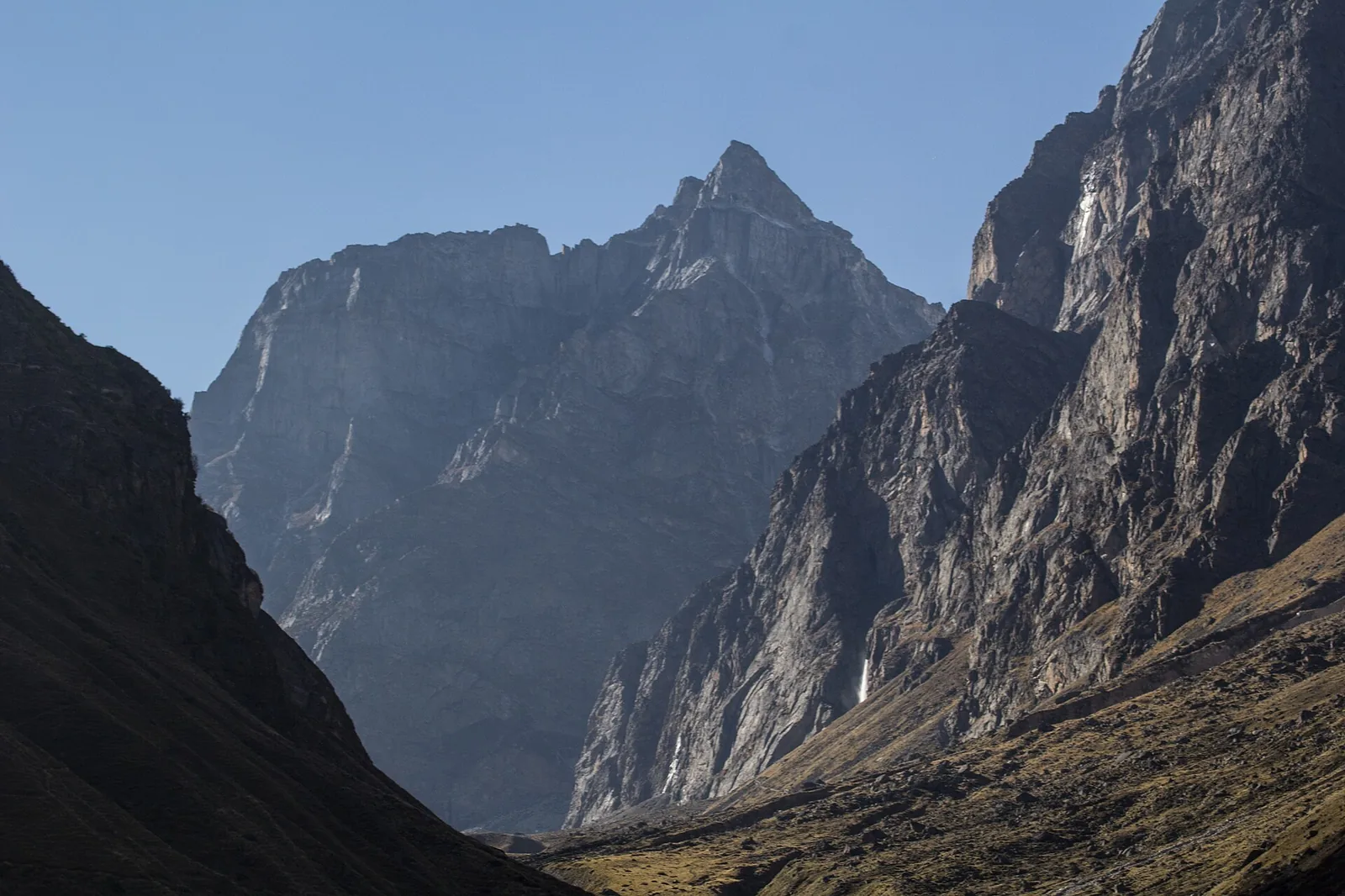 Vasudhara Falls — 400-Foot Glacial Cascade Waterfall Trek from Mana Village
4. Tapt Kund Thermal Sulphur Springs & Narad Kund (Temple Ghat)
Natural geothermal hot water springs located directly below the Badrinath Temple along the riverbank, with constant mineral water temperatures of 45°C. Devotees take ritual purification baths in the separate men and women bathing tanks before temple worship.
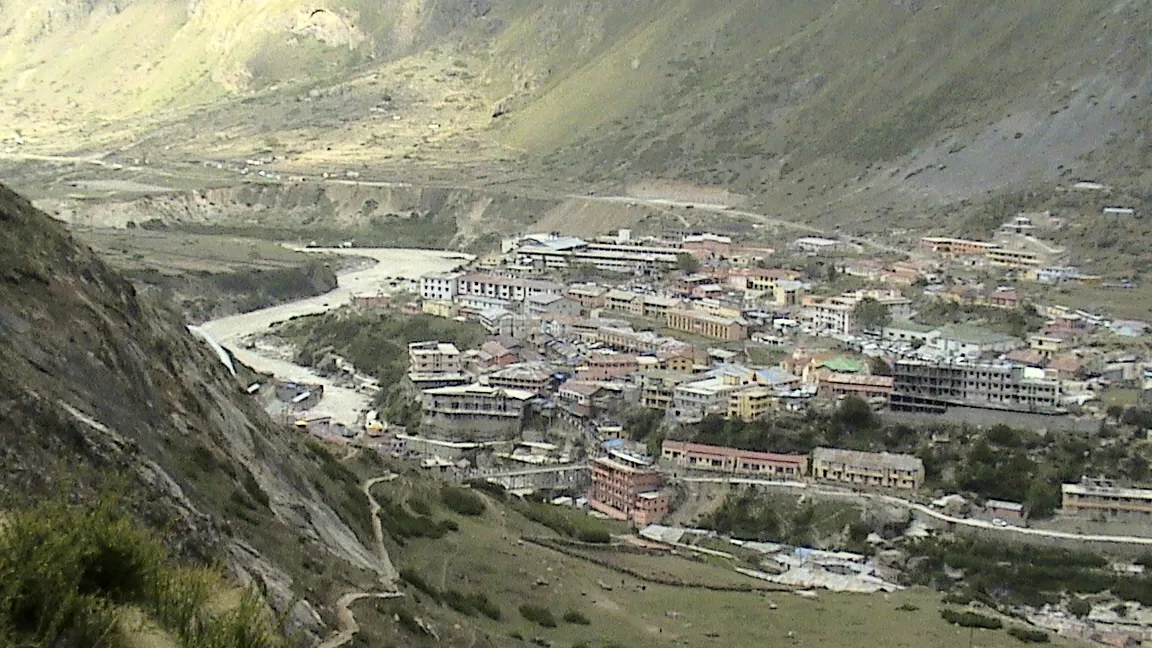 Tapt Kund — Natural Geothermal Hot Springs for Ritual Bathing at Badrinath Ghat
5. Nilkantha Peak (6,596 m) & Queen of Garhwal Pyramidal Snow Massif
Towering majestically directly behind the Badrinath shrine at an elevation of 6,596 meters, **Nilkantha** is celebrated as the *Garhwal Queen*. The sharp pyramidal summit catches the first rays of morning sunlight, creating a golden glow over the sacred valley.
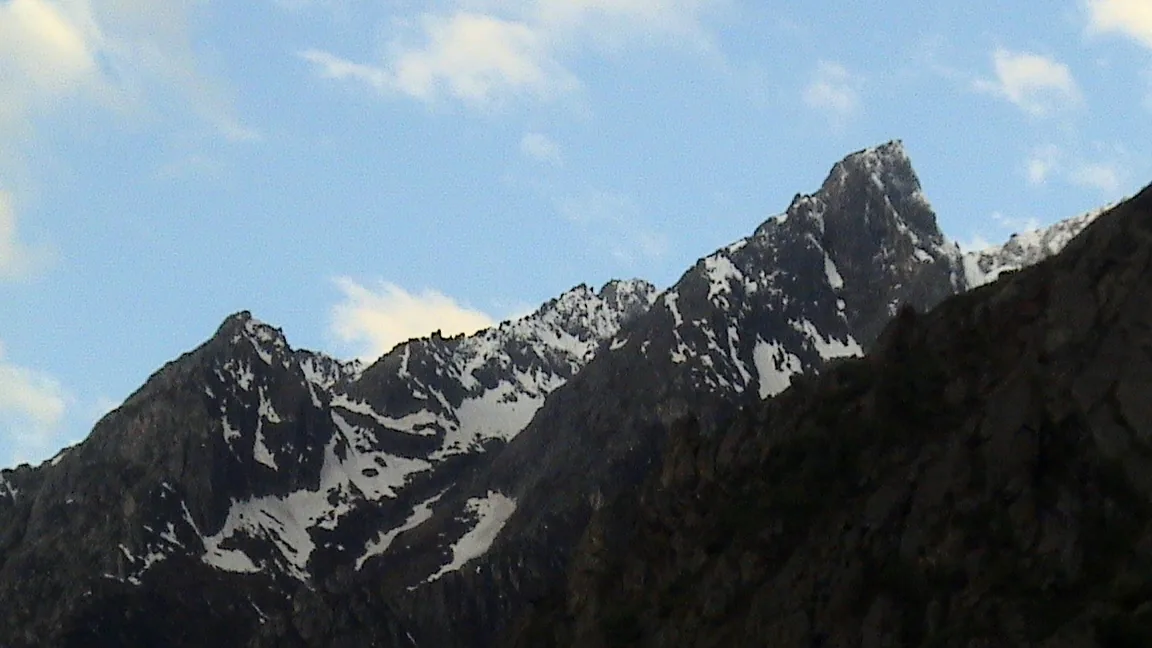 Nilkantha Peak — Colossal 6,596-Meter Pyramidal Snow Mountain Overlooking Badrinath
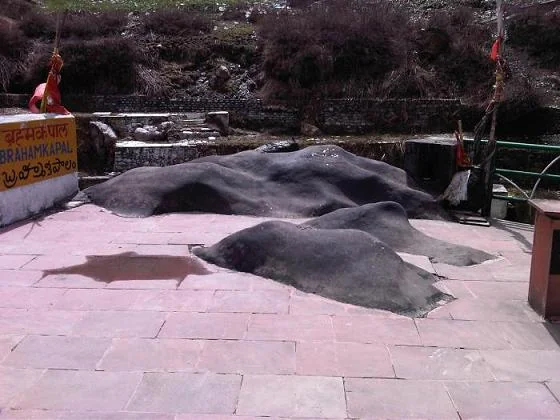
6. Brahma Kapal Ghat & Sacred Ancestral Pind Daan Sanctuary (Alaknanda)
A holy flat platform on the banks of the Alaknanda River where pilgrims perform *Shradh* and *Pind Daan* ceremonies for their deceased ancestors, believed to grant immediate liberation (*moksha*) to departed souls.
7. Vyas Gufa & Ganesh Gufa (Mahabharata Writing Caverns in Mana)
Ancient natural rock caverns in Mana village where Maharishi Ved Vyasa dictated the epic Mahabharata and 18 Puranas to Lord Ganesha, featuring a rock roof resembling pages of ancient palm leaf manuscripts (*Vyas Pothi*).
8. Bheem Pul & Saraswati River Origin (Natural Monolithic Stone Bridge)
A colossal natural rock slab placed across the roaring gorge of the holy Saraswati River in Mana by the mighty Pandava prince Bheema to help his wife Draupadi cross the turbulent mountain torrent.
9. Charan Paduka Sacred Rock & Footprints of Lord Vishnu (3 km Ridge Trek)
A sacred rock boulder situated at an altitude of 3,380 meters (3 km uphill from Badrinath), bearing the clear divine footprints (*charan chinhas*) of Lord Vishnu when he first stepped upon Earth from Vaikuntha.
Popular Hotels in Badrinath
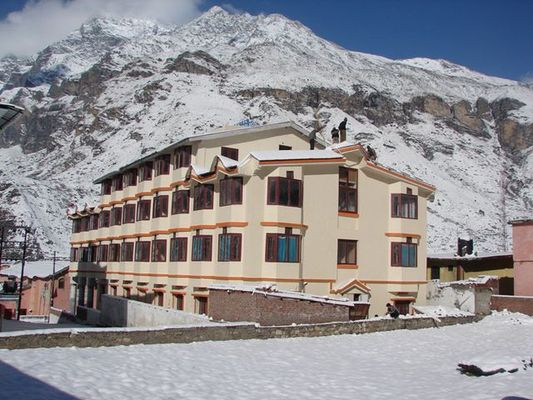 Hotel
Hotel
 Hotel
Hotel
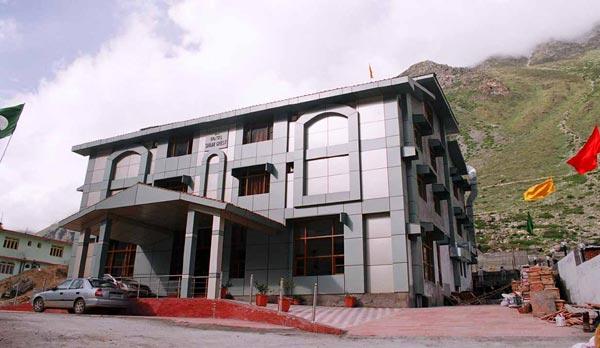 Hotel
Hotel
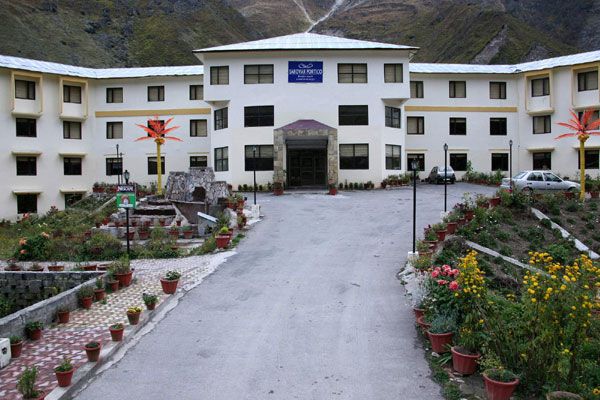 Hotel
Hotel
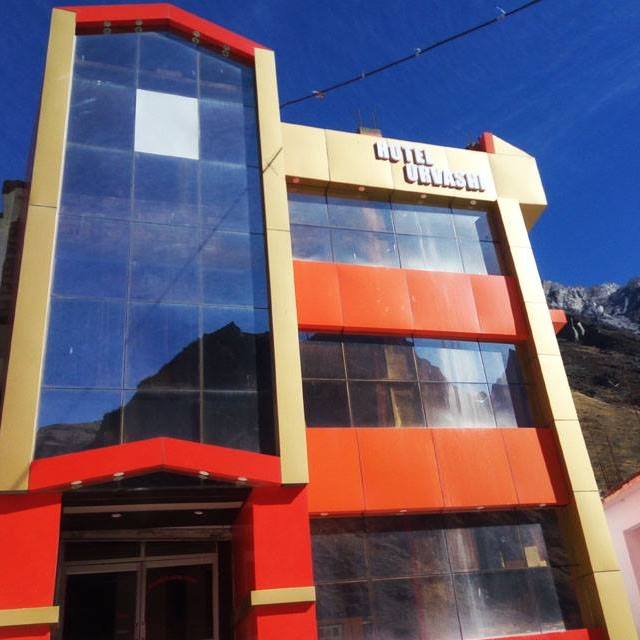 Hotel
Hotel
 Hotel
Hotel
 Hotel
Hotel
 Hotel
Hotel
 Hotel
Hotel
 Hotel
Hotel
Top Places to Visit in Badrinath
Badrinath Photo Gallery & Attractions
Explore high-resolution photographs of iconic temples, historical monuments, and scenic landmarks in Badrinath.
Plan Your Badrinath Trip Now
Get the best verified hotel deals and customized tour packages. Book directly on EarthTrip and save up to 45%!