- .
- info@earthtrip.in
-
INR
-
USD
INR
USD
Mana Village is celebrated as the First Indian Village (formerly designated as the Last Indian Village before the Indo Tibetan border), resting at a lofty ...
Mana Village is celebrated as the First Indian Village (formerly designated as the Last Indian Village before the Indo Tibetan border), resting at a lofty altitude of 3,219 meters (10,560 feet) along the banks of the Saraswati River in the Chamoli district of Uttarakhand. Perched just 3 km beyond Badrinath Dham, this ancient high altitude border settlement is framed by massive barren cliffs, glacial waterfalls, and towering snow covered Himalayan peaks.
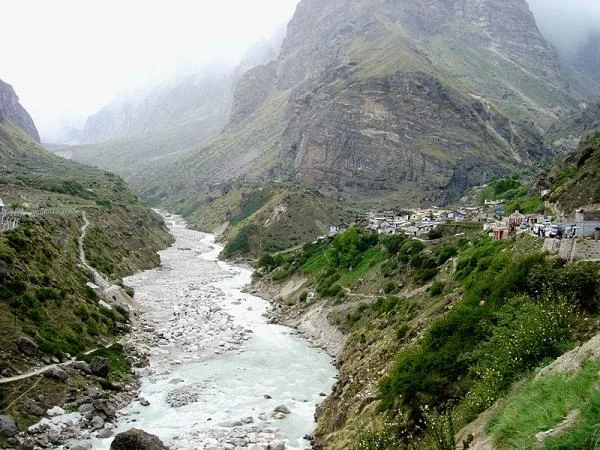
Inhabited by the indigenous Indo Mongoloid Bhotiya (Marchhas) community, Mana is steeped in profound Mahabharata lore. Notable landmarks within walking distance include Vyas Gufa (where Maharishi Ved Vyas composed the Mahabharata with Lord Ganesha), Ganesh Gufa, Bhim Pul (a massive natural stone bridge placed by Bhima over the roaring Saraswati River), and the cascading Vasudhara Falls. Travelers visiting Mana enjoy sipping hot chai at India's First Tea Shop, shopping for authentic handwoven sheep wool shawls and carpets, and taking in rugged border landscapes.
Mana Village is situated 3 km past Badrinath temple at the terminal end of National Highway 07.
The best months to visit Mana Village are from May to October when Badrinath Dham is open and roads are clear.
 Pilgrimage
 Family
 Honeymoon
 Trekking
 Honeymoon
 Honeymoon
Explore high-resolution photographs of iconic landmarks, temples, and scenic spots in Mana.
Essential visitor information regarding timings, entry tickets, location, nearby attractions, and travel guide in Mana.
Historically known as the last Indian village, Prime Minister Narendra Modi declared Mana as the 'First Indian Village' to celebrate border communities.
Major attractions include Vyas Gufa, Ganesh Gufa, Bhim Pul, Saraswati River origin, Vasudhara Falls (5 km trek), and Swargarohini trail.
Bhim Pul is a huge natural monolithic stone slab placed across the Saraswati gorge by Bhima to help Draupadi cross the river during their journey to heaven.
Visitors can buy hand knitted pure sheep wool sweaters, Pankhi shawls, Thulma blankets, and woolen carpets woven on traditional wooden looms.
No, heavy winter snow causes the Bhotiya villagers to migrate down to Gopeshwar and Joshimath from November to April.
Get a customized itinerary and the best deals on packages and hotels.
Enquire Now