- .
- info@earthtrip.in
-
INR
-
USD
INR
USD
Raniji Ki Baori in Bundi (celebrated across India as the 'Queen's Stepwell' and universally acknowledged as the most architecturally intricate, deeply scul...
Raniji Ki Baori in Bundi (celebrated across India as the 'Queen's Stepwell' and universally acknowledged as the most architecturally intricate, deeply sculpted, and majestic subterranean water monument among the 50+ historic stepwells of Bundi, City of Stepwells), situated near the town bazaar just 1 km south of Bundi city center in Rajasthan, is one of India's supreme hydro architectural masterpieces.
Constructed in 1699 AD by Rani Nathavati Ji (the younger queen of Rao Raja Anirudh Singh of Bundi and mother of the ruler Maharao Raja Budh Singh), this grand 46 meter-deep stepped reservoir was built as an act of royal public benevolence to provide reliable drinking water for desert travelers, townspeople, and holy pilgrims during harsh dry seasons.
It's the home of the monumental 4 tiered stepped descending corridor flanked by arched pillared pavilions and resting platforms, the towering multi tiered stone entryway Torana arch carved with scrolling floral garlands and mythical sea monsters (makaras), the exquisite high relief sculptures depicting the Dashavatara (ten incarnations of Lord Vishnu) including Matsya, Kurma, Varaha, and Narasimha, the celebrated high relief frieze of Gajraj (four sculpted royal white elephants facing each other across delicate stone pillar brackets), the narrow deep turquoise water well shaft flanked by vaulted niches, and an intensely tranquil subterranean atmosphere where cool stone steps descend into the sacred living heart of ancient desert water engineering.
It represents a rich Hada Rajput hydraulic heritage, 17th century stepped subterranean temple architecture, and maternal royal benevolence where carved Torana arches, Dashavatara sculptures, Gajraj brackets, and turquoise water shafts unite in Raniji Ki Baori Bundi.
Located in the historic center of Bundi town, it sits just 3 km from Bundi Railway Station (BUDI), 36 km from Kota, 155 km from Jaipur International Airport (JAI), and 190 km from Chittorgarh, easily accessible by walking, auto rickshaws, or private taxis.

In traditional Rajput culture, royal queens frequently commissioned stepwells (baoris) as sacred public charities that earned eternal spiritual merit for their ancestors while quenching the thirst of common citizens.
Rani Nathavati spared no expense, employing Rajasthan's finest master stone carvers from Bundi and Kota to transform a functional water well into a subterranean temple of extraordinary beauty.
Truth is, descending the cool stone stairs into the subterranean depths while admiring centuries old elephant carvings is an unforgettable walk through the past.
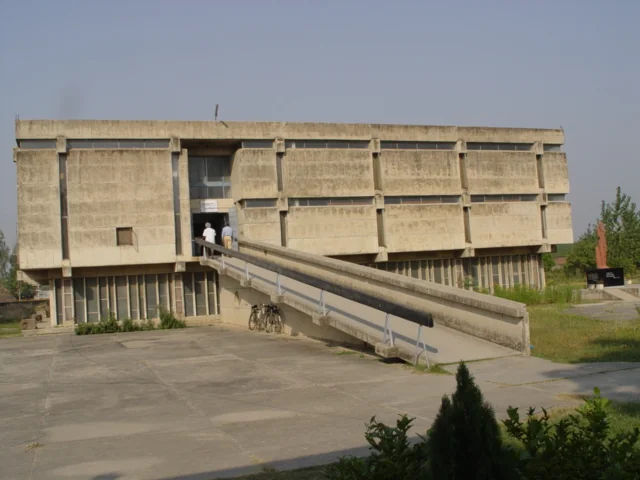
Torana Gateway: The main entrance features a grand high arch crowned with exquisitely carved stone scrollwork and elephant trunks intertwined in royal salutation.
Gajraj & Avatars: Wall niches house high relief sculptures of the incarnations of Lord Vishnu alongside four remarkable stone elephants carved with lifelike naturalism.
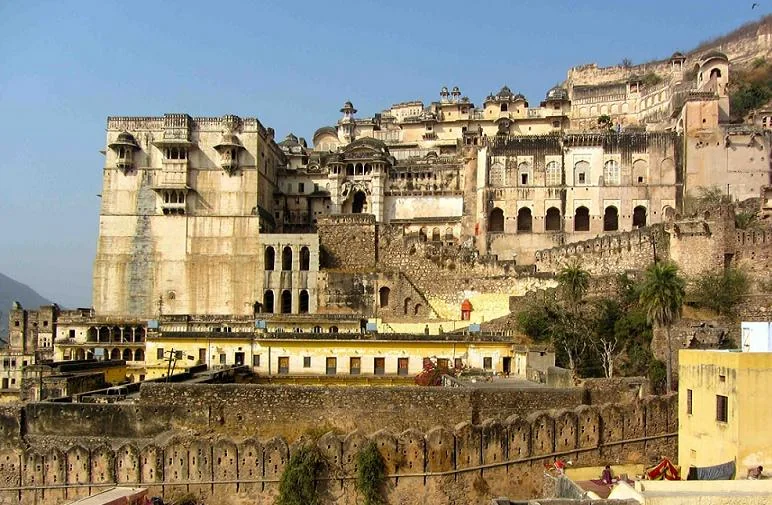
City of Baoris: Bundi is celebrated as the Stepwell Capital of India with over 50 historic baoris, with Raniji Ki Baori standing as the supreme main attraction.
Nearby Baoris: Visitors can easily combine this tour with visits to the adjoining Dabhai Kund, Nagar Sagar Kund, and the sprawling Garh Palace.
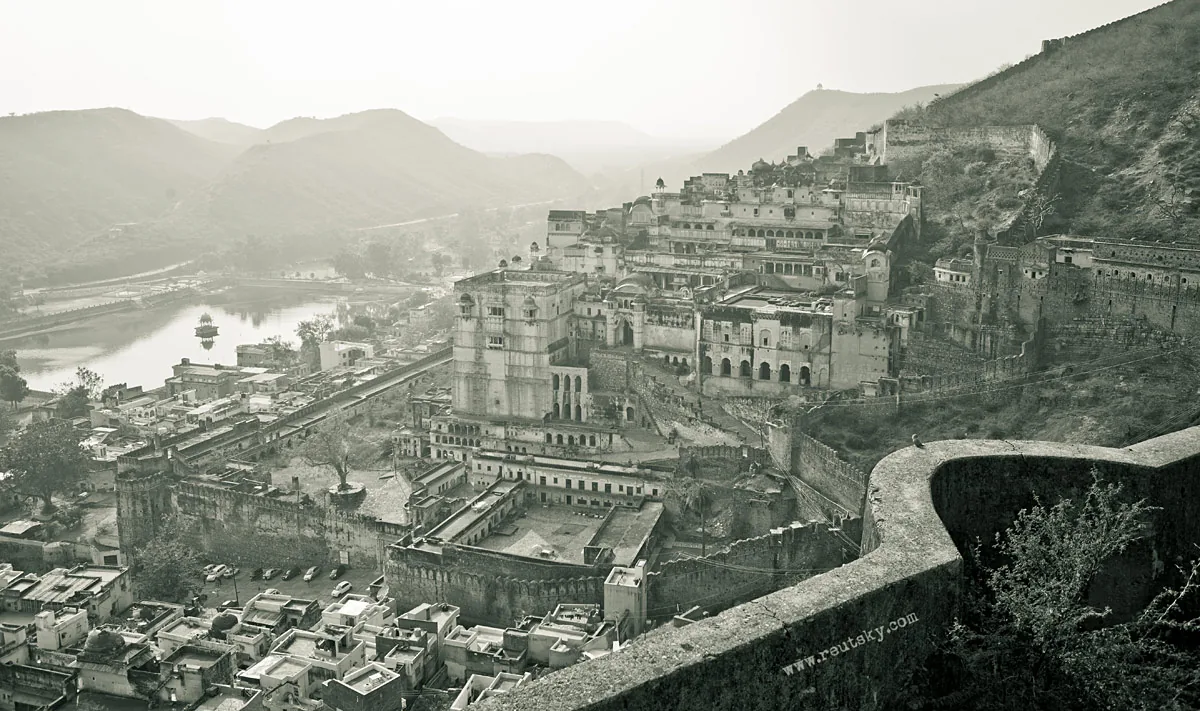
After exploring Raniji Ki Baori, visit the painted halls of Chitrashala, climb to the Cloud Palace of Badal Mahal, or tour the 84 Pillared Cenotaph.
Reaching Raniji Ki Baori in Bundi is very simple across Bundi in Rajasthan.
Best Time to Visit:
Explore more famous stepwells, cloud palaces, and painted havelis across Rajasthan.
 Family
 Family
 Family
 Family
 Family
 Family
 ★★★★ Hotel
Ishwari Niwas is a symbol of Hada legacy and ethnic culture. Here you find the royal hospi…
View Hotel Details ★★★ Hotel
The 3-star Jhankar Mansion offers comfort and convenience whether you're on business or ho…
View Hotel Details ★★ Hotel
The haveli Kasera heritage view is 150 year old heritage property in the heart of the old …
View Hotel Details ★★ Hotel
Haveli kasera paradise 16th century heritage property Offering a 24 room standard to delux…
View Hotel Details ★★★★ Hotel
The Haveli Braj Bhushanjee was built 200 years before and belongs to Bohara Braj Bhushanj…
View Hotel Details ★ Hotel
Annpurna Haveli is a newly renovated property at a most beautiful site by the side of N.H.…
View Hotel Details Attraction
Garh Palace in Bundi (celebrated across India as one of Rajasthan's most authentic, archit…
Explore Garh Palace Attraction
Taragarh Fort in Bundi (celebrated across India as the 'Star Fort' and immortalized by aut…
Explore Taragarh Fort Attraction
Badal Mahal in Bundi (celebrated across India as the 'Palace of Clouds' and one of Rajasth…
Explore Badal MahalExplore high-resolution photographs of iconic landmarks, temples, and scenic spots in Bundi.
Essential visitor information regarding timings, entry tickets, location, nearby attractions, and travel guide in Bundi.
Raniji Ki Baori was built in 1699 AD by Rani Nathavati Ji, the younger queen of Rao Raja Anirudh Singh of Bundi.
Raniji Ki Baori was built in 1699 AD by Rani Nathavati Ji, the younger queen of Rao Raja Anirudh Singh of Bundi.
The stepwell descends to a depth of 46 meters (around 150 feet) across four ornate multi-tiered stone pavilions.
The stepwell descends to a depth of 46 meters (around 150 feet) across four ornate multi-tiered stone pavilions.
It features stone high-reliefs of the Dashavatara (10 incarnations of Vishnu), delicate Torana arches, and four royal elephants (Gajraj) facing each other.
It features stone high-reliefs of the Dashavatara (10 incarnations of Vishnu), delicate Torana arches, and four royal elephants (Gajraj) facing each other.
It is open daily from 9:00 AM to 5:00 PM with an entry ticket of ?50 for Indians and ?200 for foreign tourists.
It is open daily from 9:00 AM to 5:00 PM with an entry ticket of ?50 for Indians and ?200 for foreign tourists.
Bundi is known as the City of Stepwells because it houses over 50 historic baoris and kunds built for water conservation, with Raniji Ki Baori being the most famous.
Bundi is known as the City of Stepwells because it houses over 50 historic baoris and kunds built for water conservation, with Raniji Ki Baori being the most famous.
Get a customized itinerary and the best deals on packages and hotels.
Enquire Now