Jaisalmer — Travel Guide
Jaisalmer (known worldwide as the Golden City of India and the most exotic desert destination in Rajasthan), was founded in 1156 CE by the Bhati Rajput ruler Rawal Jaisal. Rising dramatically out of the yellow sand dunes of the Thar Desert on the 250-foot Trikuta Hill, Jaisalmer is constructed entirely from golden yellow sandstone that shimmers like pure gold in the desert sunlight.
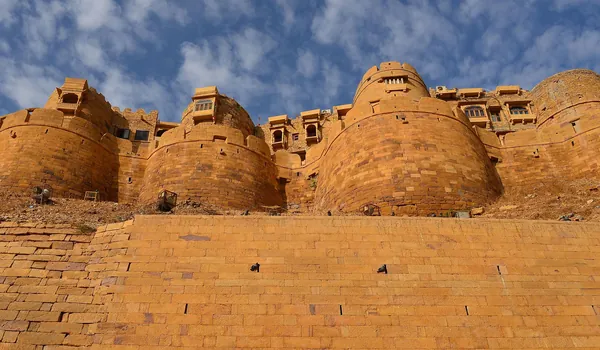
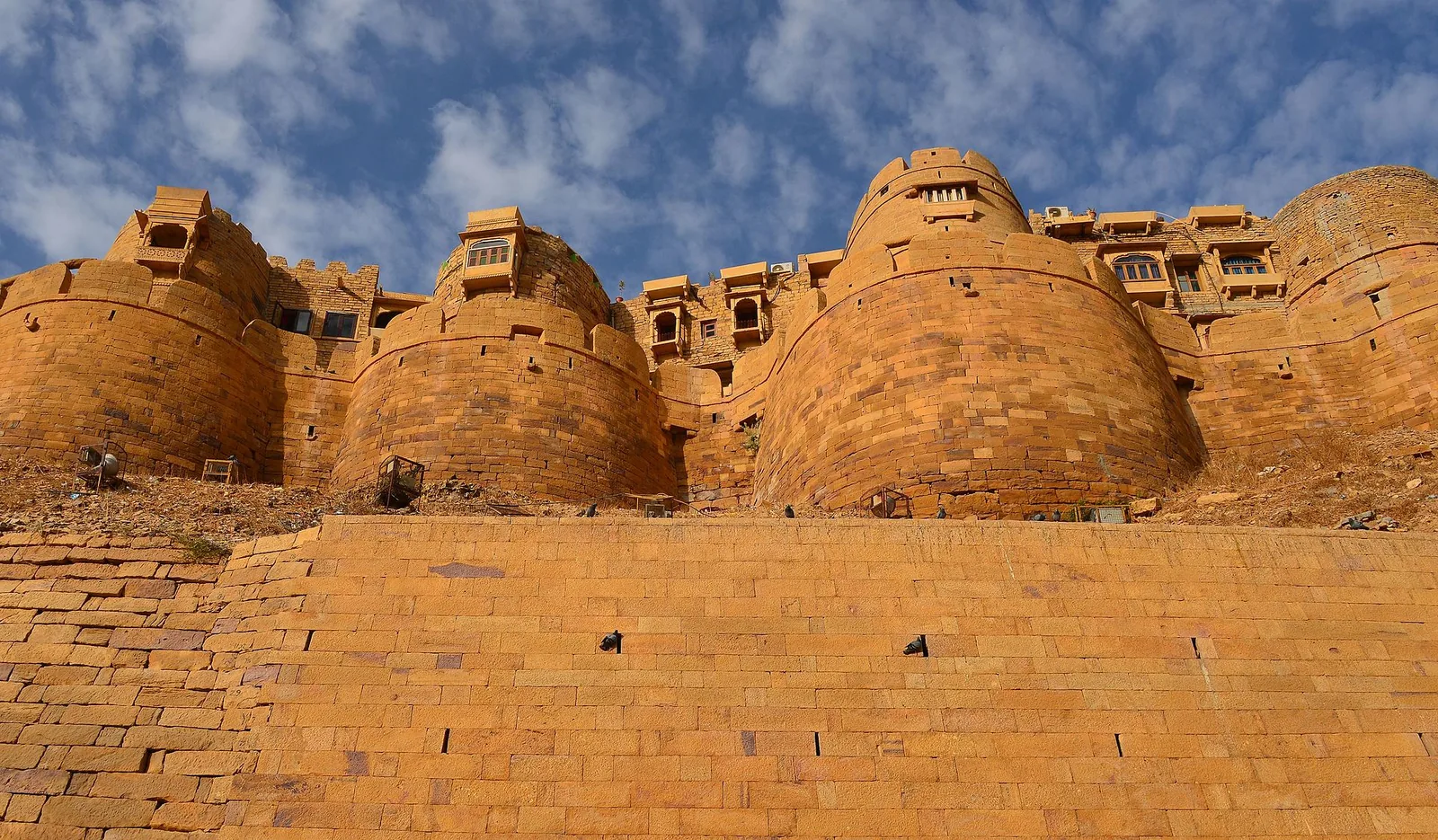 The Golden Bastions of Jaisalmer Fort (Sonar Qila) — A Living UNESCO World Heritage Citadel
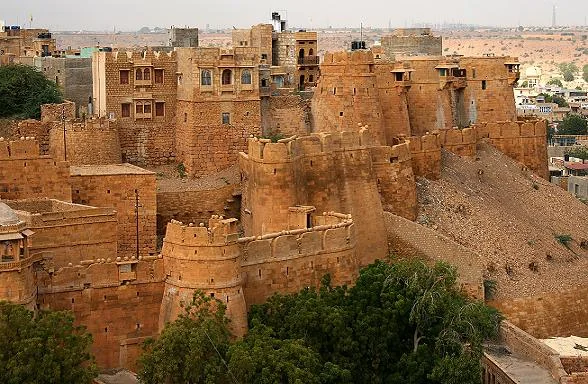
The city's crowning glory is the UNESCO World Heritage listed Jaisalmer Fort (Sonar Qila / Golden Fort) — one of the world's few surviving living forts. Nearly a quarter of the city's population still resides inside its 99 massive stone bastions, operating spice shops, rooftop restaurants, and medieval boutique stays.
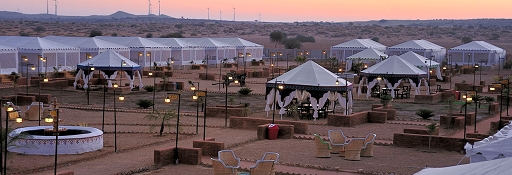
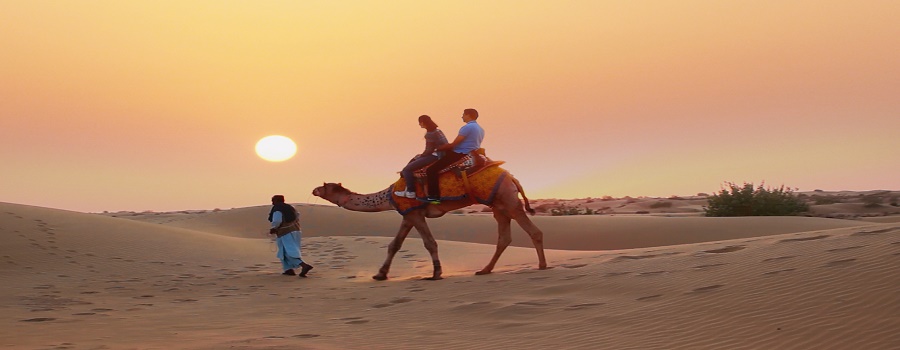
Beyond the fortress walls, the sweeping dunes of Sam Sand Dunes and Khuri offer unforgettable sunset camel treks, 4x4 dune bashing, and luxury Swiss tent camping under starlit desert skies. The town features the intricately chiseled Patwon Ki Haveli, the peaceful waters of Gadisar Lake, the royal cenotaphs of Bada Bagh, and the mysterious abandoned ruins of the 13th century Kuldhara Ghost Village.
Located 285 km from Jodhpur and 330 km from Bikaner, Jaisalmer connects easily with Jaipur and Udaipur, offering travelers the quintessential Arabian Nights desert holiday in the heart of the Thar.
Best Time to Visit Jaisalmer:
Jaisalmer is a classic desert destination best explored during the cooler winter months:
- October to March (Winter / Peak Desert Safari & Desert Festival Season): Daytime temperatures range pleasantly between 10°C and 25°C with clear azure skies and crisp desert night breezes. Perfect for exploring Jaisalmer Fort, taking sunset camel safaris at Sam Sand Dunes, glamping in Swiss desert tents, and attending the world famous Jaisalmer Desert Festival held every February with camel polo, turban tying, and folk music under the full moon.
- July to September (Monsoon / Mild Desert Showers): Occasional light rainfall (less than 150 mm) cools the desert heat with pleasant morning breezes.
- April to June (Summer / High Desert Sun): Temperatures range from 30°C to 45°C. Best suited for early morning fort walks (7:00 AM to 10:00 AM) and air conditioned heritage museum visits.
Famous Jaisalmeri Culinary Delicacies:
- Ker Sangri & Gatte Ki Sabzi: Authentic desert specialty made with wild dried desert beans (sangri) and wild capers (ker) cooked in mustard oil and spicy yogurt gravy.
- Ghotua Ladoo: Rich, melt in your mouth traditional dessert prepared with condensed milk (mawa), gram flour, pure desi ghee, saffron, and cardamom by heritage confectioners in the fort.
- Laal Maas & Dal Baati Churma: Fiery Rajput mutton curry simmered with Mathania chillies, accompanied by crispy baked dough balls dipped in pure desi ghee.
By Air:
The city is served by Jaisalmer Domestic Airport (Airport Code: JSA), situated 12 km from the city center. JSA operates scheduled commercial flights during the peak tourism season (October to March) connecting New Delhi, Mumbai, Jaipur, and Ahmedabad. Year round major air connections are available via Jodhpur Domestic Airport (Airport Code: JDH - 285 km / 4.5 hours drive via NH-125), which operates daily flights to all Indian metro cities.
By Train:
Jaisalmer Railway Station (Station Code: JSM) is the westernmost rail terminus in Rajasthan, well connected with direct superfast and express trains:
- Delhi-Jaisalmer Runicha Express / Intercity (Train 14087/14088): Direct daily train from Old Delhi (DLI) to Jaisalmer in 15 hours.
- Jodhpur-Jaisalmer Express: Multiple daily express trains connecting Jodhpur to Jaisalmer in 5 hours.
- Howrah-Jaisalmer Superfast Express: Weekly long distance train connecting Kolkata, Varanasi, Agra, and Jaipur.
- Prepaid auto rickshaws and private taxis operate round the clock from the station to all desert camps and fort hotels.
By Road:
Jaisalmer is connected via smooth national highways traversing the Thar Desert along National Highway 11 (NH-11) and National Highway 68 (NH-68):
- From Jodhpur (~285 km / 4.5 hours): Fast highway drive via Pokhran on NH-125 and NH-11.
- From Bikaner (~330 km / 5.5 hours): Smooth drive through desert landscapes via Pokhran and Kolayat on NH-11.
- From Udaipur (~490 km / 8.5 hours): Highway drive via Jodhpur on NH-62.
- From Jaipur (~560 km / 9.5 hours): Drive via Ajmer, Beawar, and Jodhpur on NH-48 and NH-11.
- State Buses: RSRTC operates daily Super Luxury Scania, Volvo AC, and sleeper buses to Jaisalmer Central Bus Stand from Jaipur, Jodhpur, Bikaner, and Ahmedabad.
Shopping in Jaisalmer is famous worldwide for golden sandstone handicrafts, camel leather products, Rajasthani mirror embroidery, and antique textiles:
- Golden Sandstone Carvings: Hand carved sandstone miniature jharokhas, decorative stone lanterns, tableware, and spice mortars crafted from yellow fossil stone (*Habur Stone*).
- Authentic Camel Leather Goods: Hand stitched camel leather footwear (*mojaris*), backpacks, leather journals, and saddlebags from Sadar Bazaar and Manak Chowk.
- Rajasthani Mirrorwork & Patchwork Quilts: Vibrant hand embroidered Kantha quilts, silk wall hangings, and mirror encrusted jackets from Bhatia Bazaar.
- Pure Tribal Silver Jewellery: Chunky oxidized silver necklaces, traditional ear pendants, and bangles from inside Jaisalmer Fort.
- Hand Woven Woollen Camel Blankets: Thick warm woollen blankets (*Pattu*) and desert rugs hand woven by rural Thar artisans.
Must-Visit Places in Jaisalmer
Jaisalmer offers an extraordinary collection of living UNESCO forts, vast desert sand dunes, carved sandstone merchant havelis, and desert oasis lakes:
1. Jaisalmer Fort (Sonar Qila UNESCO Living Golden Fortress - 1156 CE)
Erected in 1156 CE on Trikuta Hill, Jaisalmer Fort is a UNESCO World Heritage Site and one of the world's most remarkable living fortresses. Its 99 bastions protect a vibrant medieval world of narrow stone alleys, seven intricately carved 12th to 15th century yellow sandstone Jain temples, royal palaces (*Raj Mahal*), and panoramic cannon viewpoints like Cannon Point overlooking the golden city.
Jaisalmer Fort — 12th-Century Living UNESCO Golden Sandstone Fortress on Trikuta Hill
2. Sam Sand Dunes & Desert Safari Camping (Thar Desert - 42 km)
Located 42 km west of Jaisalmer in the heart of the Thar Desert, the vast rolling sand dunes of Sam Sand Dunes offer authentic desert adventures. Visitors enjoy sunset camel safaris across silk soft ridges, high speed 4x4 open jeep dune bashing, quad biking, and luxury Swiss tent camping with traditional Rajasthani folk dances (Kalbelia) and campfires under the Milky Way.
 Sam Sand Dunes — Rolling Desert Sand Ridges, Camel Safaris, and Starlit Camping in Jaisalmer
3. Patwon Ki Haveli Complex & 5-Story Golden Sandstone Mansions (1805)
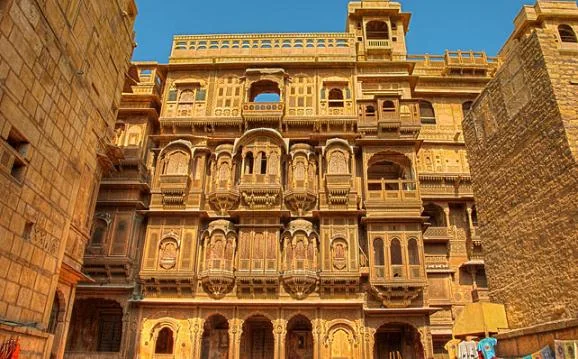
Built between 1805 and 1850 by wealthy brocade and opium merchant Guman Chand Patwa for his five sons, Patwon Ki Haveli is a cluster of five interconnected palatial mansions. Constructed in glowing yellow sandstone, the haveli features over 60 intricately carved jharokha balconies, mirror work murals, and period furniture showcasing 19th century merchant wealth.
 Patwon Ki Haveli — Ornate 19th-Century Five-Story Yellow Sandstone Merchant Palace in Jaisalmer
4. Gadisar Lake & Tilon Ki Pol Oasis Promenades (1367 CE)
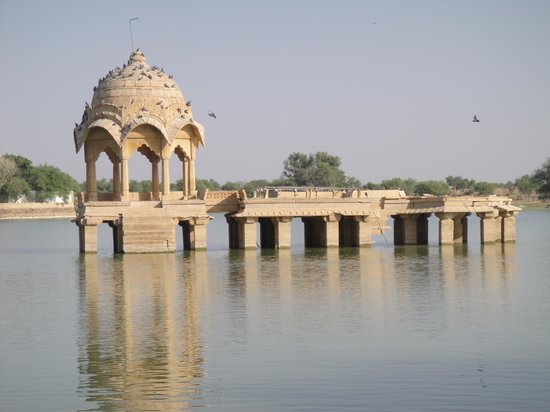
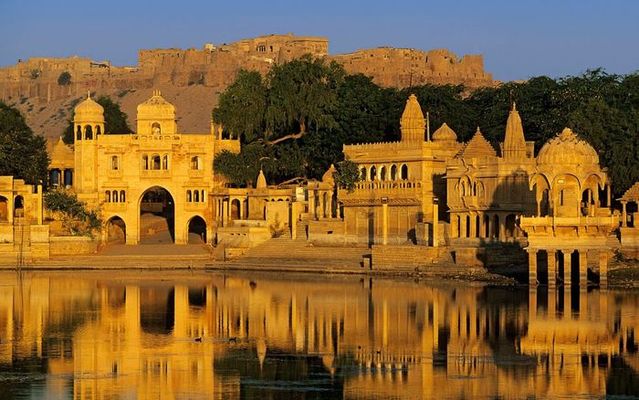
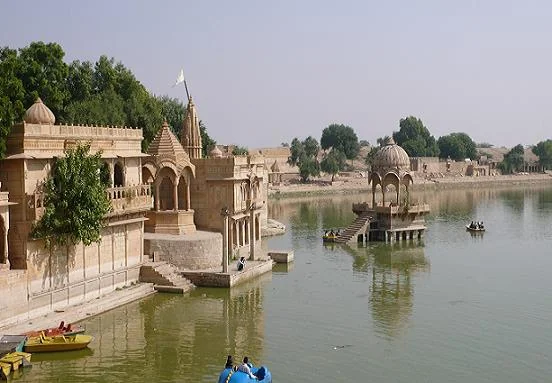
Built in 1367 CE by Maharawal Gadsi Singh as a rainwater conservation reservoir that supplied the entire desert city for centuries, Gadisar Lake is a scenic oasis lined with carved yellow stone temples, bathing ghats, and royal pavilions. Entrance to the lake is through the magnificent double story archway Tilon Ki Pol, built by a famous royal courtesan.
 Gadisar Lake — 14th-Century Historic Desert Oasis Reservoir and Carved Temples in Jaisalmer
5. Kuldhara Ghost Village & Abandoned 13th-Century Paliwal Settlement
Situated 18 km southwest of Jaisalmer, Kuldhara is an abandoned 13th century village once inhabited by prosperous Paliwal Brahmins. Legend recounts that in 1825, all 84 surrounding villages vanished overnight to protect their honor from the tyrannical prime minister Salim Singh, leaving behind eerie roofless stone homes, courtyards, and ancient stepwells.
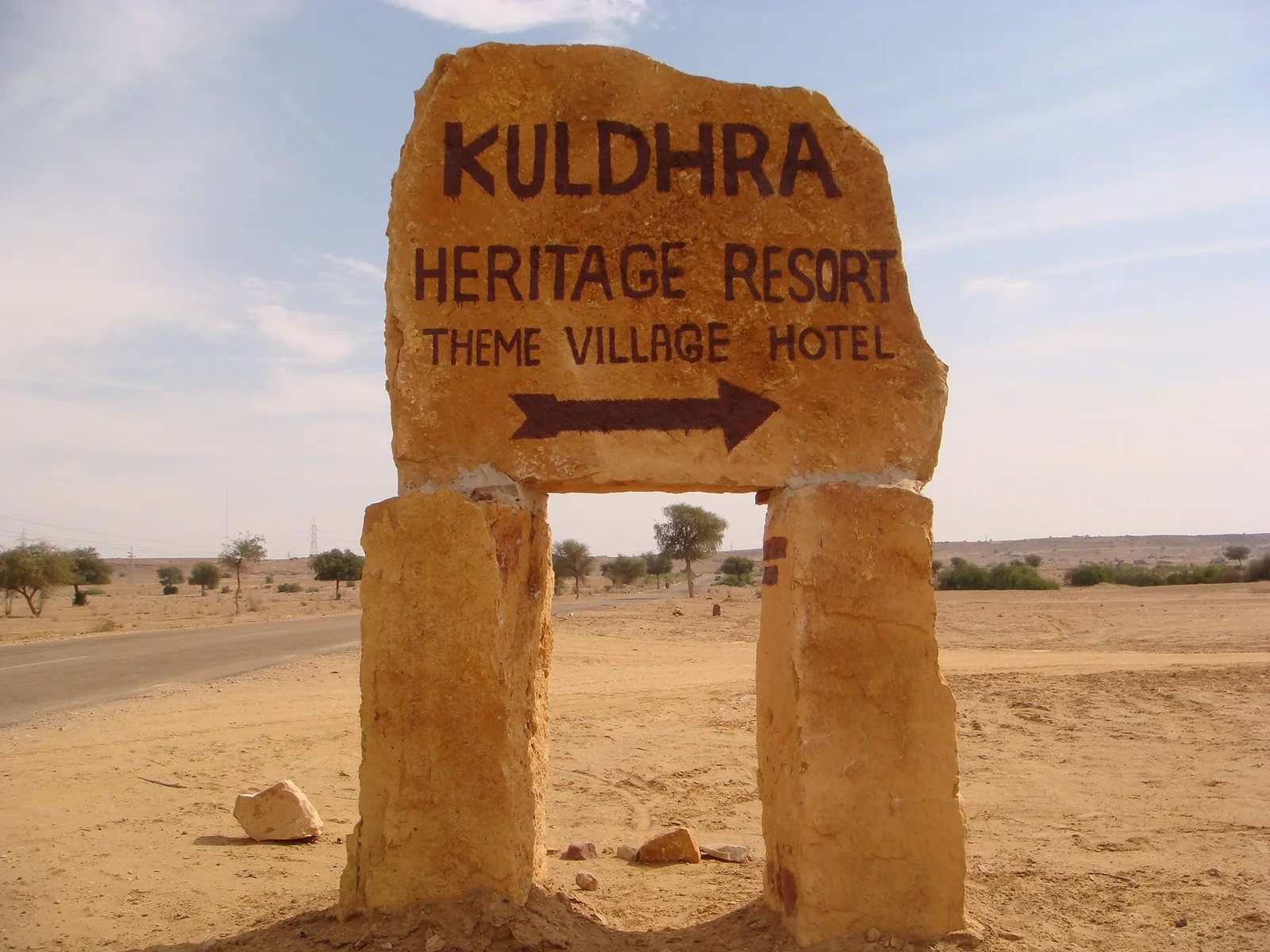 Kuldhara — 13th-Century Abandoned Heritage Ghost Village and Ancient Stone Ruins near Jaisalmer
6. Bada Bagh Royal Cenotaphs & Windmill Ridge
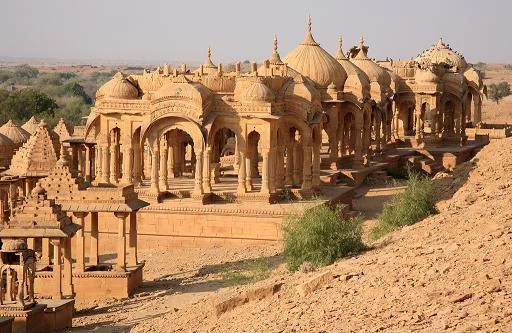
Located 6 km north of Jaisalmer on a desert ridge, Bada Bagh (Big Garden) features a series of majestic royal cenotaphs (*chhatris*) constructed in golden sandstone for the Maharawals of Jaisalmer, offering spectacular sunset photography against modern wind turbine farms.
7. Jain Temples Inside the Fort (Parshvanatha & Chandraprabha Shrines - 12th to 15th Century)
Enclosed within the fort bastions is a cluster of seven interconnected yellow sandstone Jain temples built between the 12th and 15th centuries. The temples feature ceilings carved with celestial dancers, torana arches, and the world famous *Gyan Bhandar* library containing rare 11th century palm leaf manuscripts.
8. Salim Singh Ki Haveli & Peacock Shaped Roof (Moti Mahal)
Constructed in 1815 with a narrow ground floor that opens up into an elaborate top floor shaped like a dancing peacock, this haveli features 38 balconies supported by stone brackets shaped like leaping horses and elephants.
9. Desert National Park & Great Indian Bustard Wildlife Sanctuary
Covering over 3,162 sq km of Thar sand dunes and thorny scrubland, this national park is one of the last remaining refuges of the critically endangered *Great Indian Bustard (Godawan)*, desert foxes, Bengal foxes, chinkaras, and migratory imperial eagles.
Popular Hotels in Jaisalmer
 Hotel
Hotel
 Hotel
Hotel
 Hotel
Hotel
 Hotel
Hotel
 Hotel
Hotel
 Hotel
Hotel
 Hotel
Hotel
 Hotel
Hotel
 Hotel
Hotel
 Hotel
Hotel
Tour Packages from Jaisalmer
 Package
 Package
 Package
Top Places to Visit in Jaisalmer
Jaisalmer Photo Gallery & Attractions
Explore high-resolution photographs of iconic temples, historical monuments, and scenic landmarks in Jaisalmer.
Plan Your Jaisalmer Trip Now
Get the best verified hotel deals and customized tour packages. Book directly on EarthTrip and save up to 45%!