Jaipur — Travel Guide
Jaipur (known worldwide as the Pink City and the royal capital of Rajasthan), was founded in 1727 CE by the astronomer king Maharaja Sawai Jai Singh II. Planned meticulously using ancient Vastu Shastra principles by Bengali architect Vidyadhar Bhattacharya, Jaipur stands as India's first planned heritage city and holds coveted UNESCO World Heritage City status.
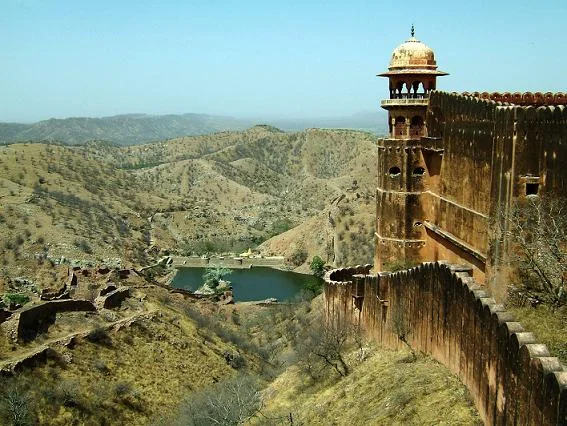
 The Magnificent 16th-Century Amber Fort Rising Above Maota Lake in the Aravalli Hills
In 1876, Maharaja Sawai Ram Singh ordered the entire walled city painted in terracotta pink to welcome the Prince of Wales. The color stuck, and the city still wears its iconic pink facade today. Truth is, wandering through the old bazaar lanes feels like stepping directly into living history.
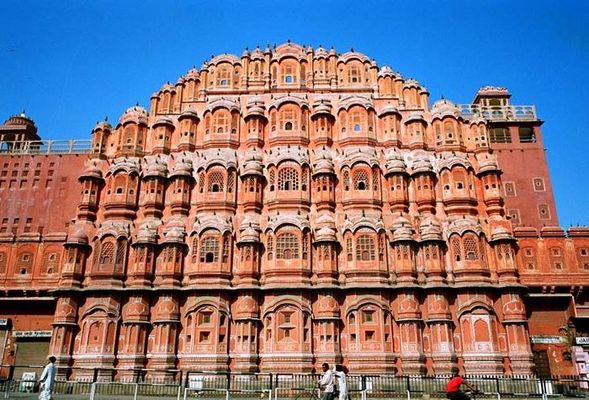
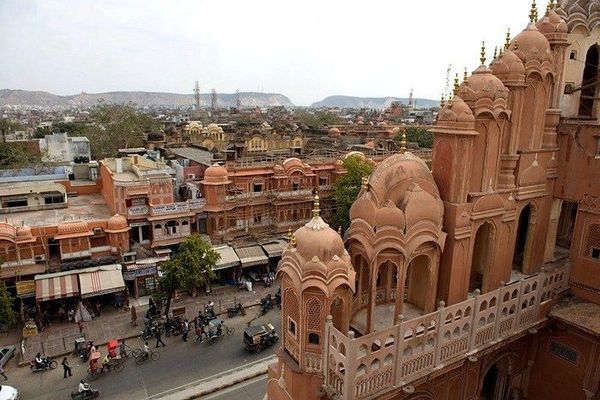
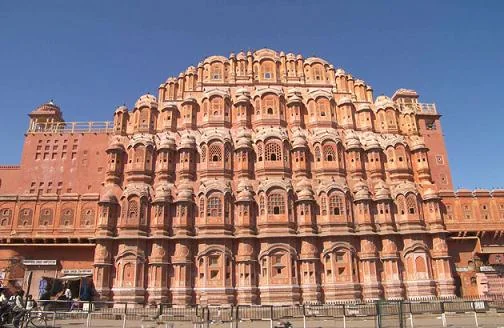
The city's architectural pride includes the five story honeycomb facade of Hawa Mahal (Palace of Winds, 1799) with its 953 carved jharokhas, the sprawling courtyards of the City Palace, the astronomical instruments of Jantar Mantar (UNESCO), and the rugged hilltop bastions of Amber Fort and Nahargarh Fort overlooking the plains.
As the cornerstone of India's world famous Golden Triangle alongside Delhi and Agra, Jaipur connects effortlessly with Udaipur, Jodhpur, and Pushkar, offering travelers a magical blend of Rajput valour, artisan crafts, and royal desert hospitality.
Best Time to Visit Jaipur:
Jaipur provides distinct seasonal experiences for holidaymakers and heritage explorers:
- October to March (Winter / Peak Sightseeing & Festival Season): Daytime temperatures range comfortably between 10°C and 25°C with clear sunny skies and cool evenings. This is the best time for exploring hilltop forts, walking through old city bazaars, and attending the world famous Jaipur Literature Festival (JLF) in January alongside the colorful Teej and Gangaur festivals.
- July to September (Monsoon / Green Aravalli Season): Monsoon brings pleasant rain showers and cooler temperatures (24°C to 34°C), turning the dry Aravalli hills into a lush green backdrop for lake palaces and hill forts.
- April to June (Summer / Warm Desert Sun): Temperatures range from 28°C to 42°C. Best suited for early morning fort tours (8:00 AM to 11:00 AM), air conditioned palace museums, and evening cultural sound and light shows.
Famous Rajasthani Culinary Delicacies:
- Dal Baati Churma: Hard baked wheat flour dough balls dipped in pure desi ghee, served with spicy mixed lentil curry and sweetened crushed churma.
- Laal Maas: Spicy royal mutton curry simmered with fiery Mathania red chillies, garlic, and whole aromatic spices.
- Pyaaz Ki Kachori & Ghevar: Crisp, flaky onion filled deep fried kachoris and honeycomb honey soaked Ghevar sweets from iconic sweet shops like Rawat Mishtan Bhandar and Laxmi Mishtan Bhandar (LMB).
By Air:
The city is served by Jaipur International Airport (Airport Code: JAI), situated in Sanganer just 12 km south of the city center. Jaipur Airport offers daily non stop flights connecting New Delhi, Mumbai, Bengaluru, Chennai, Hyderabad, Kolkata, Pune, Ahmedabad, and Goa. Direct international flights operate regularly to Dubai, Sharjah, Abu Dhabi, and Muscat. Prepaid airport taxis, app cabs, and luxury car rentals operate around the clock from the arrival terminal.
By Train:
Jaipur Junction Railway Station (Station Code: JP) is the headquarters of the North Western Railway zone, connected by premier superfast and express trains:
- Vande Bharat Express (Train 20977/20978): Semi high speed express connecting Delhi Cantonment to Jaipur in just 3 hours 45 minutes.
- Ajmer Shatabdi & Double Decker Express: Connecting New Delhi and Delhi Sarai Rohilla to Jaipur in 4 hours.
- Long Distance Superfast Trains: Daily trains connect Jaipur with Mumbai Central, Kolkata Howrah, Ahmedabad, and Chennai Central.
- Direct taxis and auto rickshaws connect the station to all heritage hotels and old city bazaars.
By Road:
Jaipur is connected via modern expressways and national highways:
- From New Delhi (~270 km / 3.5 hours): Fast drive via the newly built 8-lane Delhi-Mumbai Expressway (NE-4) and NH-48.
- From Agra (~240 km / 4 hours): Drive along the 4-lane NH-21 highway via Bharatpur and Dausa.
- From Ajmer & Pushkar (~135 km / 2 hours): Smooth drive along NH-48.
- From Udaipur (~390 km / 6.5 hours): Highway drive via Bhilwara and Chittorgarh on NH-48.
- State Buses: RSRTC operates daily Super Luxury Scania, Volvo AC, and sleeper buses to Sindhi Camp Central Bus Stand from Delhi ISBT Kashmere Gate, Agra, Chandigarh, and Ahmedabad.
Shopping in Jaipur is famous worldwide for traditional hand block prints, blue pottery, gemstone jewellery, and embroidered leather mojari shoes:
- Jaipuri Blue Pottery: Hand glazed decorative plates, ceramic tiles, door knobs, and flower vases crafted from quartz clay and natural oxide dyes in Sanganer and Kripal Kumbh.
- Hand Block Printed Textiles: Genuine Sanganeri and Bagru block printed cotton bedsheets, cotton quilts (*Jaipuri Razai*), and summer kurtas from Bapu Bazaar.
- Kundan, Meenakari & Polki Jewellery: Handcrafted uncut diamond jewellery, enamel work, and precious gemstone ornaments along Johari Bazaar.
- Bandhani & Leheriya Silk Sarees: Vibrant tie dye sarees, turbans, and silk dupattas from Nehru Bazaar and Sireh Deori Bazaar.
- Camel Leather Mojaris & Marble Crafts: Traditional embroidered leather footwear and hand carved marble statues from Chandpole Bazaar.
Must-Visit Places in Jaipur
Jaipur features an extraordinary array of UNESCO hill forts, royal palaces, open air observatories, and lake pavilions:
1. Amber Fort & Sheesh Mahal Hall of Mirrors (1592 UNESCO Fortress)
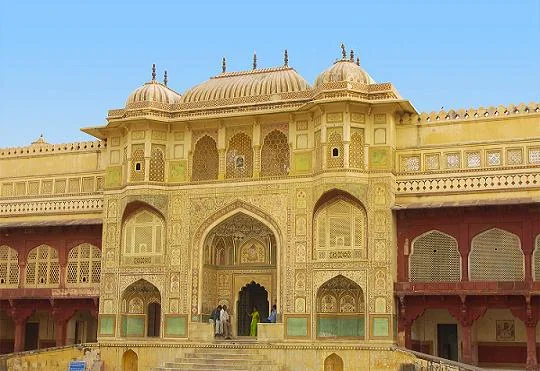
Perched high on a rocky hill in Amer town 11 km north of Jaipur, Amber Fort is a 16th century Rajput marvel built by Raja Man Singh I. Inside, travelers discover the world famous Sheesh Mahal (Mirror Palace), where walls and ceilings are covered with convex Belgian glass mirrors that reflect a single candle into thousands of sparkling stars.
Amber Fort — 16th-Century Hilltop Sandstone Citadel and UNESCO World Heritage Monument
2. Hawa Mahal & 953 Jharokha Honeycomb Palace (1799)
Built in 1799 by Maharaja Sawai Pratap Singh and designed by Lal Chand Ustad, Hawa Mahal (Palace of Winds) resembles the crown of Lord Krishna. Its five story pink sandstone facade features 953 intricately carved stone latticework windows (*jharokhas*) that allowed royal women to observe street festivals below without being seen.
 Hawa Mahal — Five-Story Terracotta Palace of Winds with 953 Intricate Stone Windows
3. City Palace & Chandra Mahal Royal Museum Complex
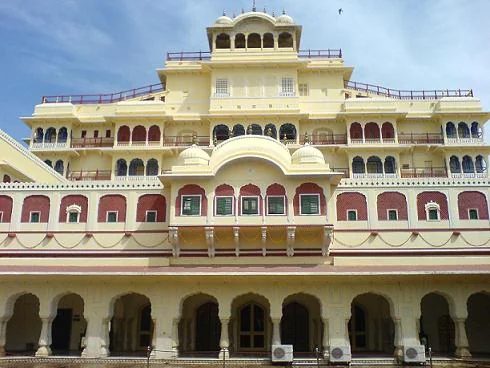
Located in the heart of the walled old city, the City Palace complex was established by Sawai Jai Singh II and remains the royal residence of the Jaipur royal family. The complex houses the seven story *Chandra Mahal*, the *Mubarak Mahal* textile museum, the *Diwan-i-Khas* with its Guinness record giant silver water urns (*Gangajalis*), and the stunning peacock painted *Pritam Niwas Chowk* courtyards.
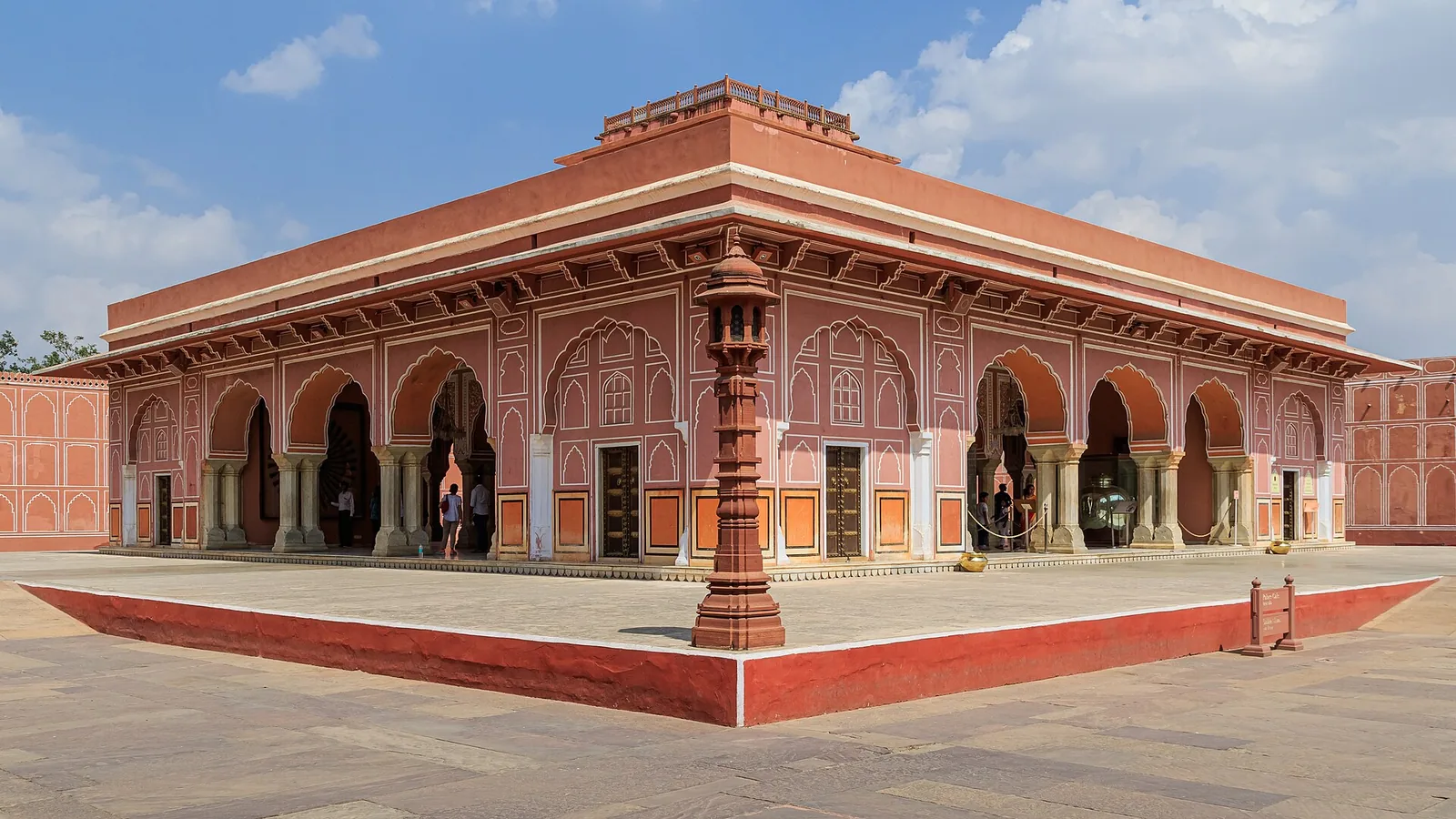 City Palace — Grand Royal Palace Complex and Living Royal Heritage Museum in Jaipur
4. Jantar Mantar Astronomical Observatory & Vrihat Samrat Yantra (1734 UNESCO)
Completed in 1734 by Maharaja Sawai Jai Singh II, Jantar Mantar is an open air astronomical observatory and a UNESCO World Heritage Site. It features 19 monumental stone and brass architectural astronomical instruments, including the world's largest stone sundial — the 27 meter high *Vrihat Samrat Yantra* — accurate to within two seconds.
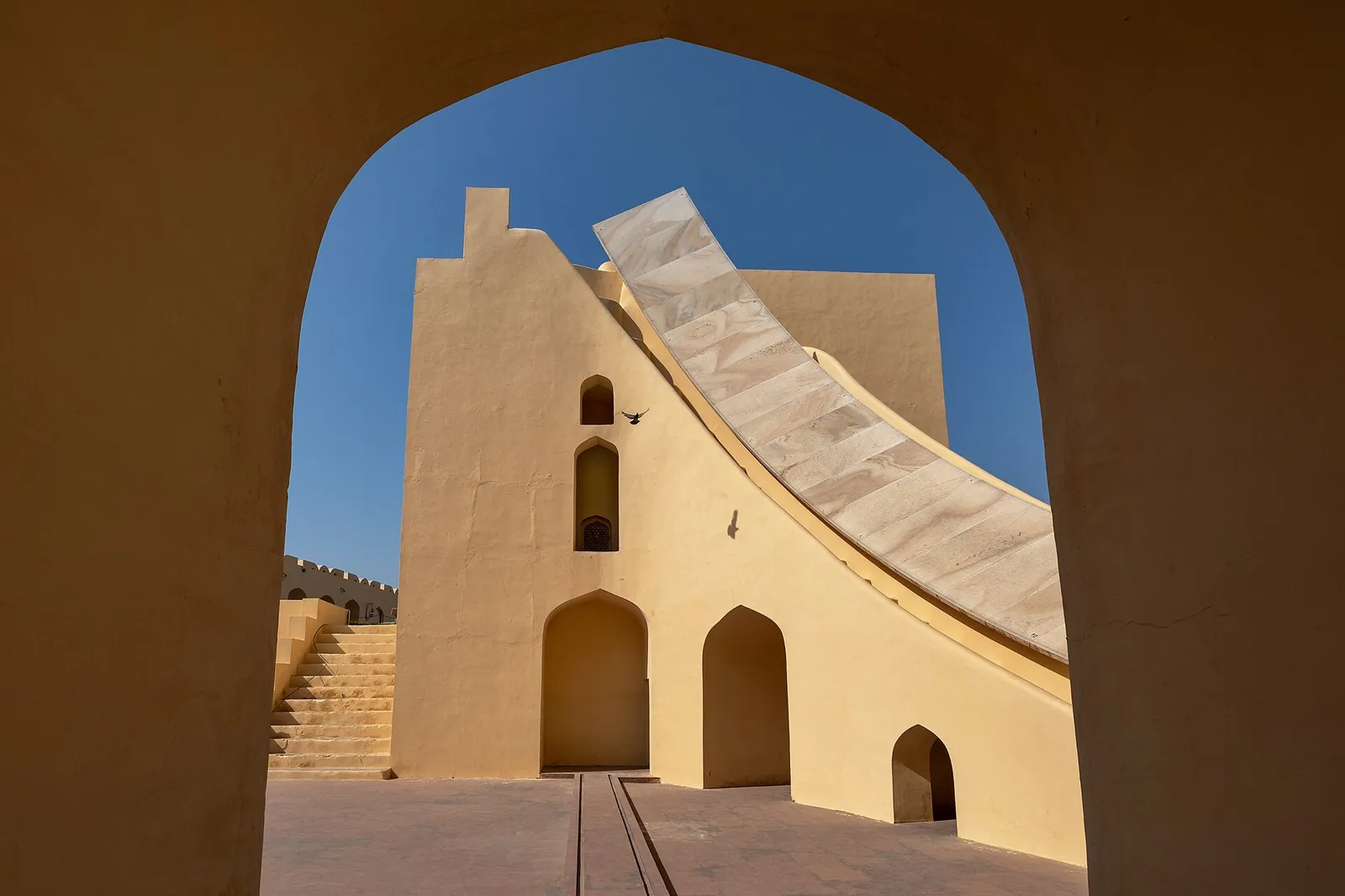 Jantar Mantar — 18th-Century UNESCO Stone Astronomical Observatory in Jaipur
5. Jal Mahal Water Palace on Man Sagar Lake (Amer Road)
Appearing to float magically in the middle of Man Sagar Lake against the backdrop of the Nahargarh hills, Jal Mahal is an 18th century pleasure palace built in pink sandstone. While four of its five stories remain submerged underwater, the palace presents a stunning visual spectacle, especially when illuminated at night.
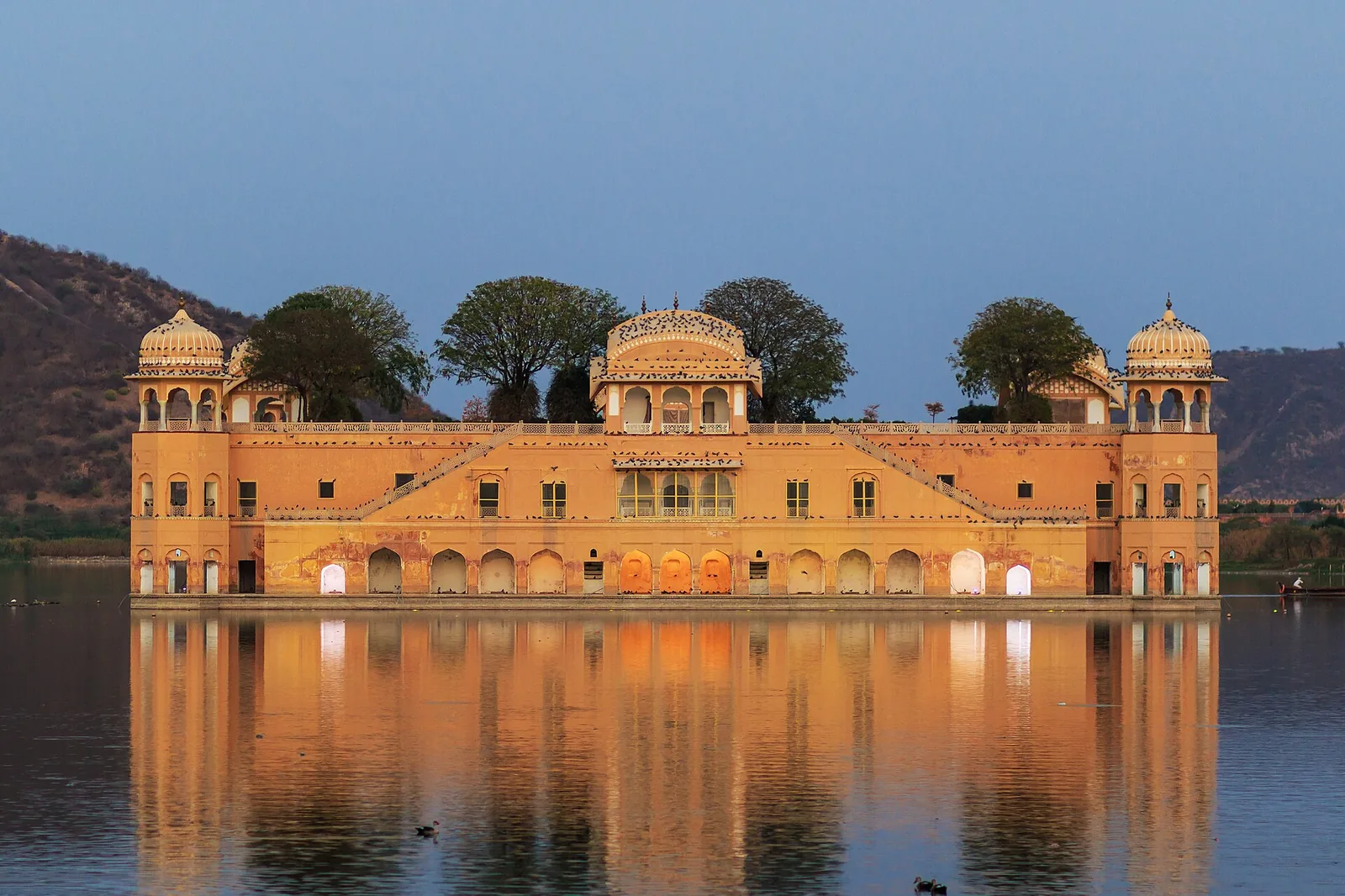 Jal Mahal — 18th-Century Pink Sandstone Water Palace on Man Sagar Lake
6. Nahargarh Fort & Madhavendra Bhawan Sunset Point
Standing on the edge of the Aravalli ridge, Nahargarh Fort (*Abode of Tigers*) was built in 1734 to fortify Jaipur. The fort features the elegant *Madhavendra Bhawan* with identical suites for nine royal queens, offering unmatched panoramic sunset views over the entire pink city.
7. Jaigarh Fort & World's Largest Wheeled Cannon (Jaivana)
Built in 1726 by Sawai Jai Singh II to protect Amber Fort, Jaigarh Fort is connected to Amer by underground subterranean passageways. It houses the legendary *Jaivana Cannon*, the world's largest cannon on wheels cast during the medieval era.
8. Albert Hall Museum & Ram Niwas Indo-Saracenic Gardens (1887)
The oldest state museum in Rajasthan, the Albert Hall Museum is housed in an exquisite Indo Saracenic stone building opened in 1887. The museum displays rich collections of miniature paintings, Persian carpets, Egyptian mummies, metal sculptures, and traditional royal costumes.
9. Galta Ji Sun Temple (Monkey Temple & Sacred Kunds)
Nestled in a narrow mountain pass 10 km east of Jaipur, Galta Ji is an ancient Hindu pilgrimage site featuring natural freshwater springs, carved pink pavilions, and sacred bathing kunds surrounded by hundreds of friendly rhesus macaques.
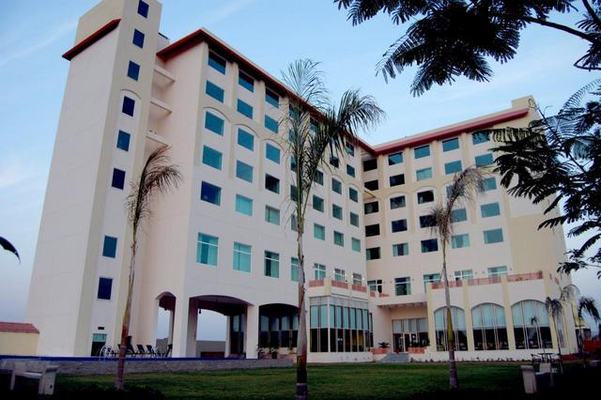
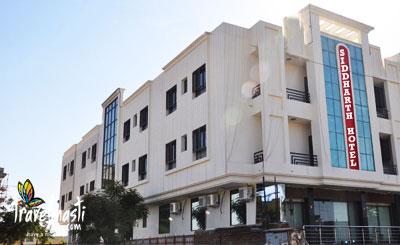
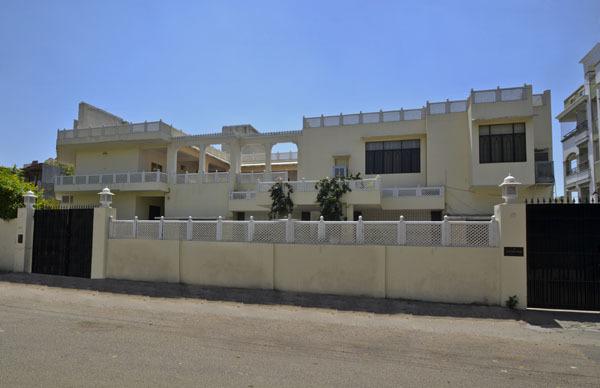
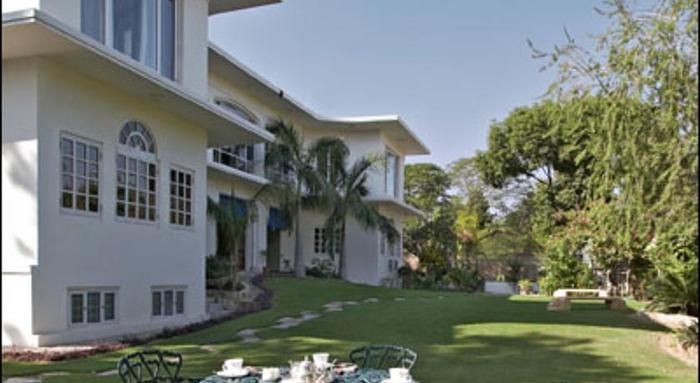
Popular Hotels in Jaipur
 Hotel
Hotel
 Hotel
Hotel
 Hotel
Hotel
 Hotel
Hotel
 Hotel
Hotel
 Hotel
Hotel
 Hotel
Hotel
 Hotel
Hotel
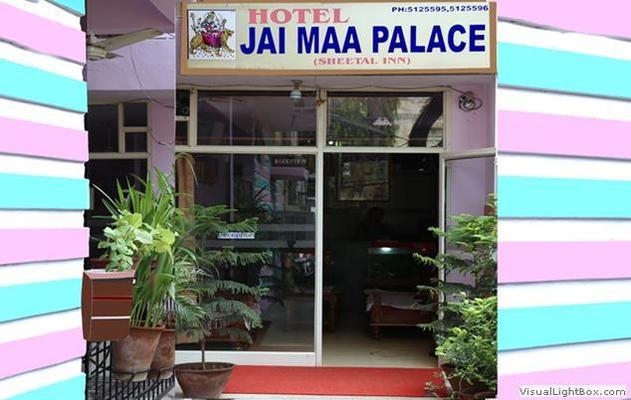 Hotel
Hotel
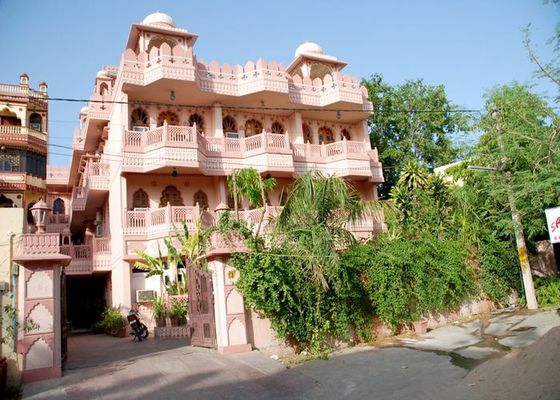 Hotel
Hotel
Tour Packages from Jaipur
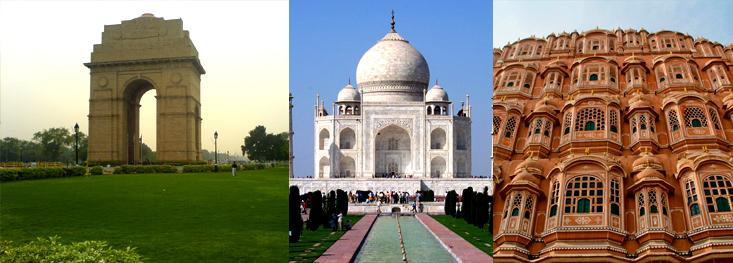 Package
 Package
 Package
 Package
 Package
 Package
Top Places to Visit in Jaipur
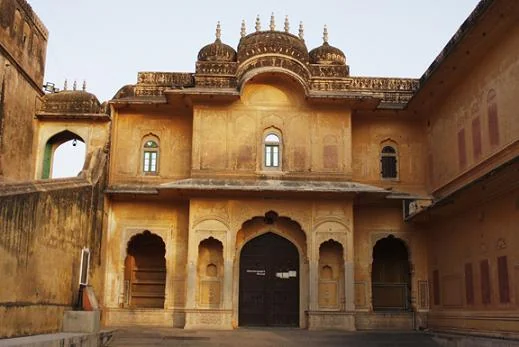
Jaipur Photo Gallery & Attractions
Explore high-resolution photographs of iconic temples, historical monuments, and scenic landmarks in Jaipur.
Plan Your Jaipur Trip Now
Get the best verified hotel deals and customized tour packages. Book directly on EarthTrip and save up to 45%!