- .
- info@earthtrip.in
-
INR
-
USD
INR
USD
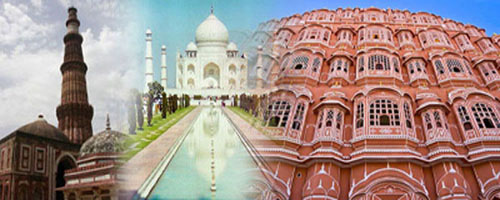
The political center and capital of India, New Delhi makes up one of the cornerstones of the Golden Triangle. The teeming, buzzing souk-like bazaars of Old Delhi with its narrow alleys lead to the grand mosque-Jama Masjid and the colossal Red Fort. Take a cycle rickshaw ride weaving through these lanes i to explore the chaotic charm of Old Delhi. The second city on this route is Jaipur also known as the “Pink City”- a city which harmoniously blends the old and the new. Arrive at Agra to complete the triangle, visit the deserted palaces and pavilions of the Mughal kingdom of Fatehpur Sikri - a World Heritage Site, en-route to the pristine white embodiment of eternal love the magnificent Taj Mahal.
This Golden triangle tour is combined with Rishikesh and Haridwar to get a feel of the spiritual ethos of India. A paradise for nature lovers, Haridwar or the Gateway to God presents a kaleidoscope of Indian culture and civilization. It is also the starting point on the journey to the sacred sources of the rivers Ganga and Yamuna. The evening prayer (Aarti) at dusk offered to Goddess Ganga at Har-Ki-Pauri (steps of God Hara or Shiva) is an enchanting experience and a mesmerizing spectacle to witness. The synchronized ritual of the Aarti and the sounds of the holy chants with thousands of lamps floating in the river is indeed a spellbinding sight.
Day 01: Delhi Arrival
On arrival at Airport / Railway station, meet our representative and proceed to Hotel for Check in.
Delhi is a city built and re-built seven times over several centuries. The capital city today marries the quaint and unique elements of different historical eras with the pace of the bustling, growing economy. At every turn of the road, the past and the present coexist. Later proceed for city Tour of NEW DELHI - drive past the stately government buildings of the British Era designed by Lutyen’s, including the Indian Gate & the Presidential Palace. Continue onto the beautiful Humayun’s tomb of the Mughal era & thereafter visit the towering minaret of Qutab Minar. Overnight at Hotel.
Day 02: Delhi City Tour
After breakfast visit the Jama Masjid, Red Fort and local Bazaar. After breakfast visit Jama Masjid- Jama Masjid, was commissioned to be constructed by the Mughal Emperor Shah Jahan. It holds the distinction of being one of the biggest and the most well known mosque of Old Delhi. Red Fort- The Red Fort is popularly known as the Lal Quila and is representative of the true splendor of the Mughal court. This imposing fort will engulf you with its size and grandeur. Later afternoon visit local market and temples. Overnight at Hotel.
Day 03: Delhi – Haridwar (220 kms / 6 hrs)
After Early Breakfast, drive to Haridwar. Arrive and check in at hotel. Later visit popular temples in Haridwar including Pareshwar Mahadev Temple, Daksha Mahadev Temple and Mansa Devi Temple. Later, visit Har-ki-Pauri (the footstep of God) - one of the most sacred ghats both in Haridwar and in India . Hindus believe that this ghat was built by Vikramaditya in the memory of his brother Bhartrihari. This ghat is also known as Brahmakund. Later witness Ganga Aarti Ceremony of the Holy River Ganges. Aarti is the beautiful ceremony in which deeyas (the oil lamps) are offered to God. Aarti can be done to a deity in the temple or it can be done to a saint also as per tradition. It is performed to God, in any manifestation, or in any form, by any name. The essence of the Ganga Aarti ceremony is a time when we say "thank you," and we offer the light of our thanks, the light of our love and the light of our devotion to the god to seek their blessings. We realize that the small deeya is nothing compared to the divine light which shines on us all day. Overnight at hotel.
Day 04: Haridwar - Rishikesh -Haridwar
After breakfast drive to the holy town of Rishikesh - also known as the 'place of sages', at the confluence of the Chandrabhaga and Ganga rivers. It is believed that God by the name of 'Hrishikesh' had appeared as an reply to the hard penances by Rabhiya Rishi and henceforth the place got its name. It is the starting point for the Chardham yatra pilgrims but also for the people who are interested in meditation, yoga and other aspects of Hinduis tradition. While in Rishikesh, you visit attractions like Laxman Jhula- a hanging bridge on the river Ganga is one of the most famous spot in Rishikesh. According to Indian mythology, Lakshman, the younger brother of Lord Rama crossed the Ganga with the help of hanging bridge made of Jute. The bridge offers impressive views of the river Ganga as it crisscrosses down to Haridwar. Also visit Bharat Mandir - the oldest temple in Rishikesh, near the Triveni Ghat. This temple is dedicated to Bharat, the younger brother of Lord Ram. Optional activities -White water rafting. Overnight at hotel.
Day 05: Haridwar – Agra (390 kms / 7 hrs)
After breakfast drive to Agra. Arrive and check in at Hotel. Akbarabad, as Agra was known during the Mughal era, is home to some of the most magnificent Mughal architectures. Situated on the banks of river Yamuna, the monumental beauty of Agra has inspired countless people around the world. This third largest city of the state of Uttar Pradesh is home to three UNESCO world heritage sites. Later Proceed to Visit to the world - famous Taj Mahal - or literally "Crown of Palaces" was built by Shah Jehan to immortalize the memory of his beloved wife Mumtaz Mahal who died tragically in 1631. After that visit, the Red Fort built by three generations of Mughal Emperors between 1565 and 1573. It housed both the presidential Palaces of the Royal family, and the military quarters. Overnight at Hotel
Day 06: Agra - Jaipur (260 kms / 5 hrs)
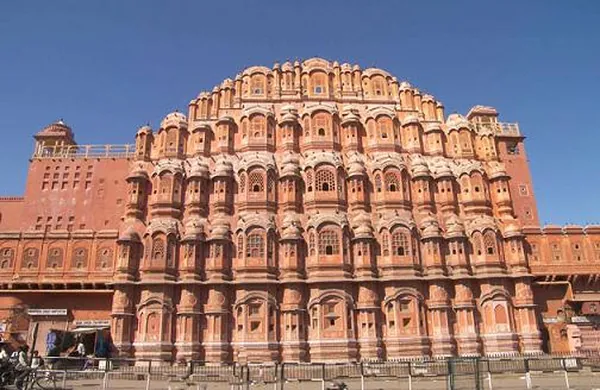
After breakfast drive to Jaipur En-route Fatehpur Sikri - the extraordinary city built by Akbar the Great, deserted 14 years later, but which, during its brief span, exceeded London in both grandeur and population. After visit continue drive to Jaipur. Jaipur: Beautiful palaces, forts and colourful bazaars speak of the pink city’s glorious regal past. Modernity walks hand-in-hand with history in Jaipur. This largest city of Rajasthan, founded by Maharaja Sawai Jai Singh, is famous for its magnanimous hospitality. Later tour of the Pink city visiting the imposing hawa Mahal, Jantar Manter & City Palace now a museum, the ancient Observatory, The exotic Palace of the Winds & the picturesque bazaars of the walled city. Overnight at Hotel.
Day 07: Jaipur City Tour
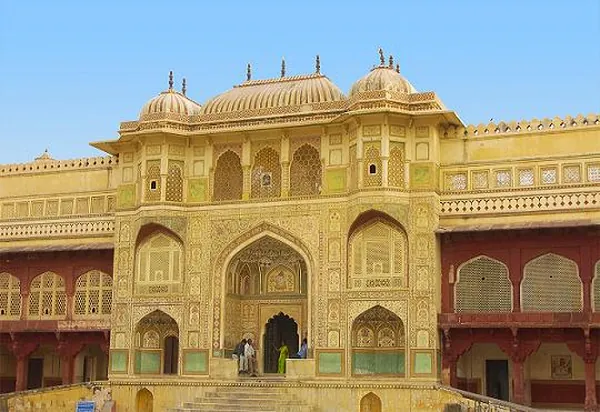
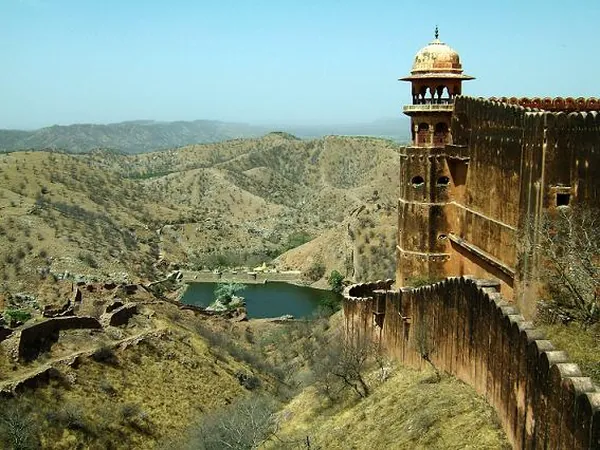
After Breakfast, Visit Amber - the ancient capital of the Rajput Empire reaching the fort on elephant back. It is a deserted palace surrounded by majestic ramparts & the magnificent public & private room's evidence the splendor of the rulers of 16th & 17th century Rajasthan. Jaigarh Fort- Situated on the majestic Chilh-ka-Tola or the hill of eagles, the lofty walls of the Jaigarh Fort spread over a vast expansion of three kilometers. This impregnable fort of the Rajput was built purely for the defense activities. Nahargarh fort- Nahargarh Fort is located on the sheer rugged ridge of Aravali Hills and it forms an impressive northern backdrop of Jaipur. It looks most classy when floodlit at night. The fort overlooks the city and presents a glittering view of the city lights. It was built in 1734 and extended in 1868. Nahargarh meaning abode of the tigers was built by Jai Singh to bolster the defence of Amber. Evening explore the local bazzar. Overnight at Hotel
Day 08: Jaipur – Delhi (250 Kms / 05 hrs)
After Breakfast, drive to Delhi and departure for your onward destination.
Payments policy
Tour Cancilation policy
By Air:
The city is served by Jaipur International Airport (Airport Code: JAI), situated in Sanganer just 12 km south of the city center. Jaipur Airport offers daily non stop flights connecting New Delhi, Mumbai, Bengaluru, Chennai, Hyderabad, Kolkata, Pune, Ahmedabad, and Goa. Direct international flights operate regularly to Dubai, Sharjah, Abu Dhabi, and Muscat. Prepaid airport taxis, app cabs, and luxury car rentals operate around the clock from the arrival terminal.
By Train:
Jaipur Junction Railway Station (Station Code: JP) is the headquarters of the North Western Railway zone, connected by premier superfast and express trains:
By Road:
Jaipur is connected via modern expressways and national highways:
Jaipur features an extraordinary array of UNESCO hill forts, royal palaces, open air observatories, and lake pavilions:
Perched high on a rocky hill in Amer town 11 km north of Jaipur, Amber Fort is a 16th century Rajput marvel built by Raja Man Singh I. Inside, travelers discover the world famous Sheesh Mahal (Mirror Palace), where walls and ceilings are covered with convex Belgian glass mirrors that reflect a single candle into thousands of sparkling stars.
 Amber Fort — 16th-Century Hilltop Sandstone Citadel and UNESCO World Heritage Monument
Built in 1799 by Maharaja Sawai Pratap Singh and designed by Lal Chand Ustad, Hawa Mahal (Palace of Winds) resembles the crown of Lord Krishna. Its five story pink sandstone facade features 953 intricately carved stone latticework windows (*jharokhas*) that allowed royal women to observe street festivals below without being seen.
 Hawa Mahal — Five-Story Terracotta Palace of Winds with 953 Intricate Stone Windows
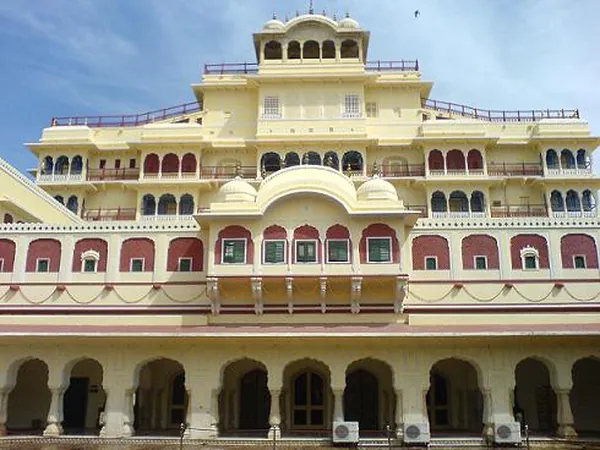
Located in the heart of the walled old city, the City Palace complex was established by Sawai Jai Singh II and remains the royal residence of the Jaipur royal family. The complex houses the seven story *Chandra Mahal*, the *Mubarak Mahal* textile museum, the *Diwan-i-Khas* with its Guinness record giant silver water urns (*Gangajalis*), and the stunning peacock painted *Pritam Niwas Chowk* courtyards.
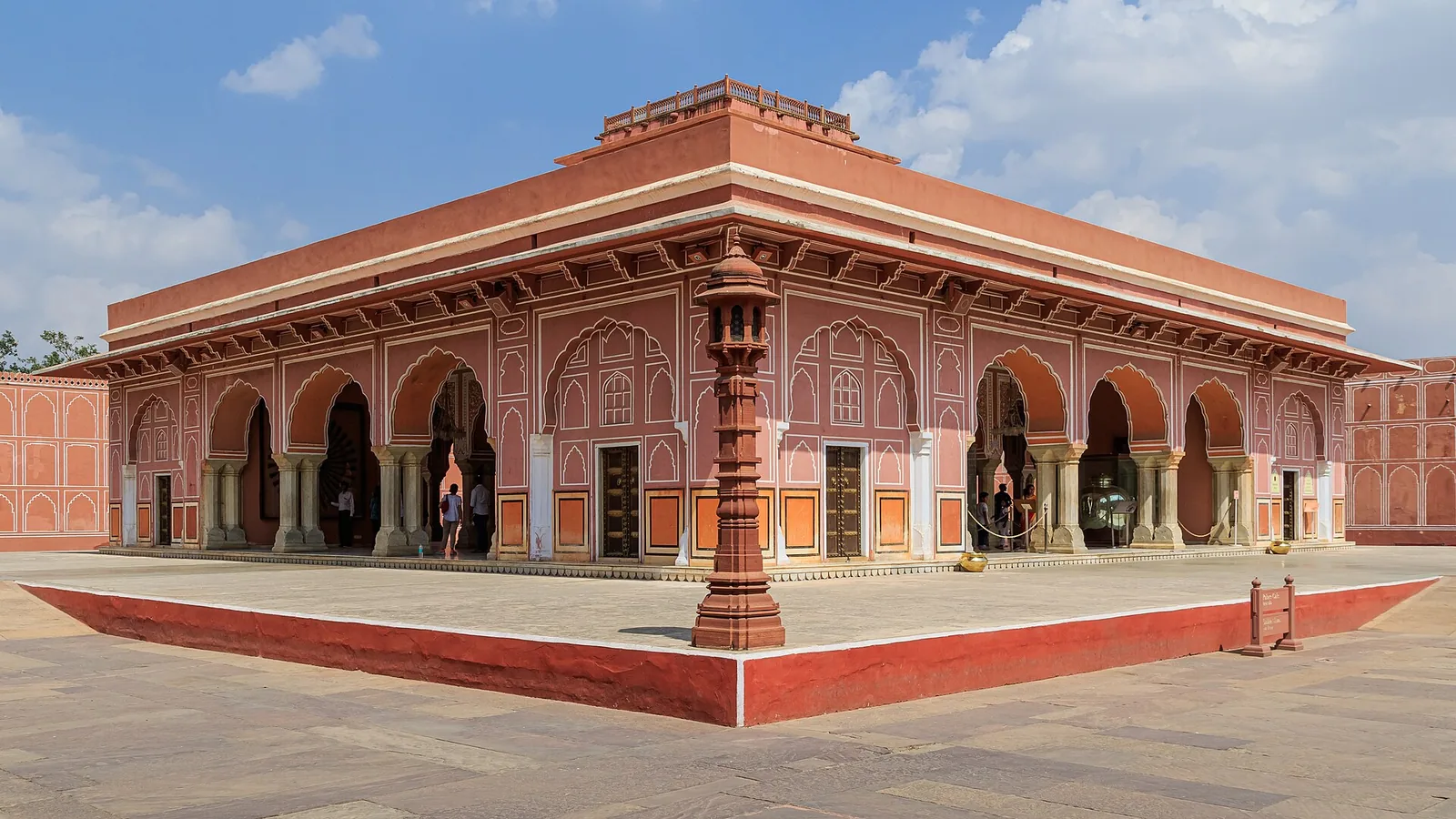 City Palace — Grand Royal Palace Complex and Living Royal Heritage Museum in Jaipur
Completed in 1734 by Maharaja Sawai Jai Singh II, Jantar Mantar is an open air astronomical observatory and a UNESCO World Heritage Site. It features 19 monumental stone and brass architectural astronomical instruments, including the world's largest stone sundial — the 27 meter high *Vrihat Samrat Yantra* — accurate to within two seconds.
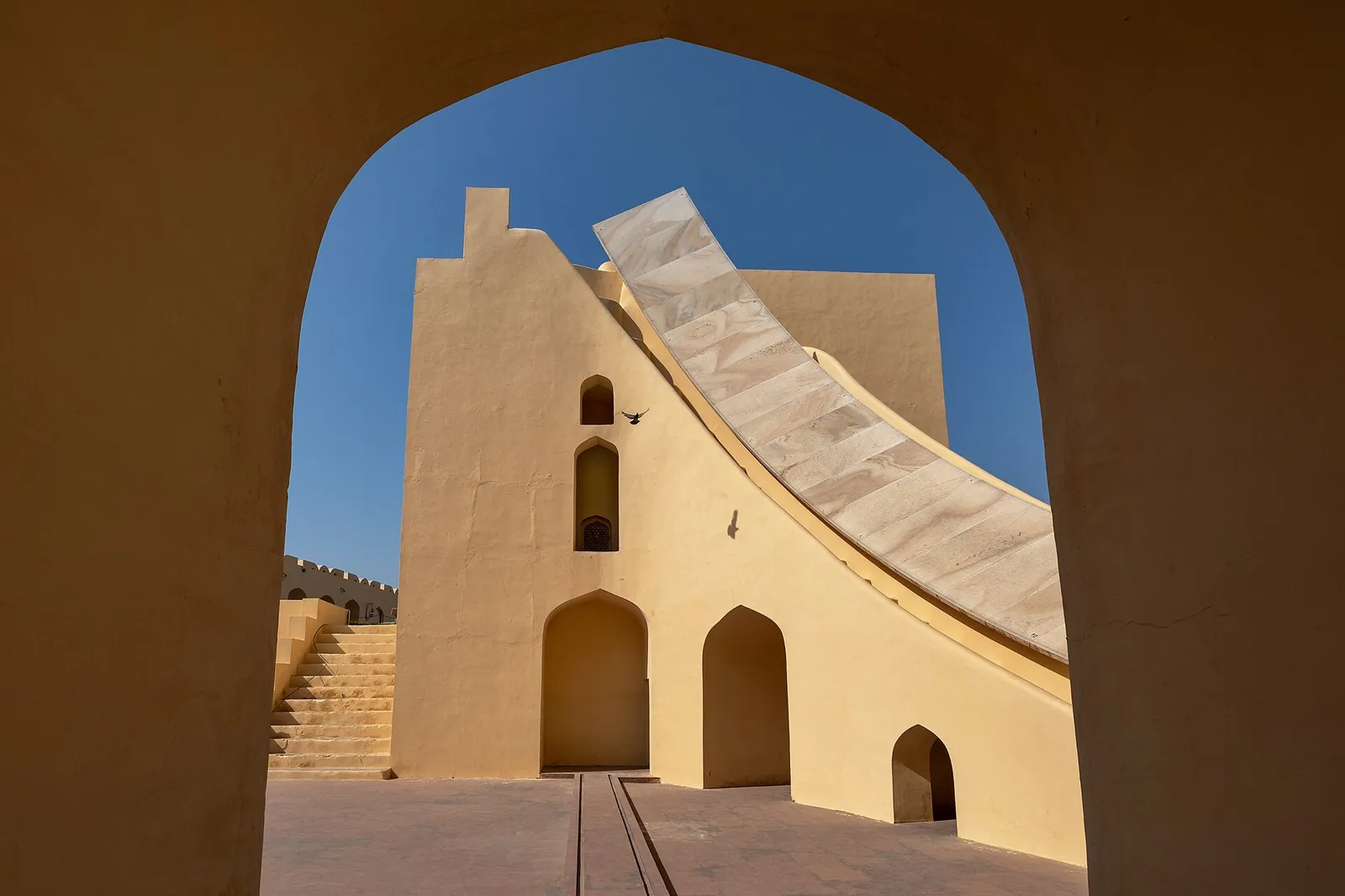 Jantar Mantar — 18th-Century UNESCO Stone Astronomical Observatory in Jaipur
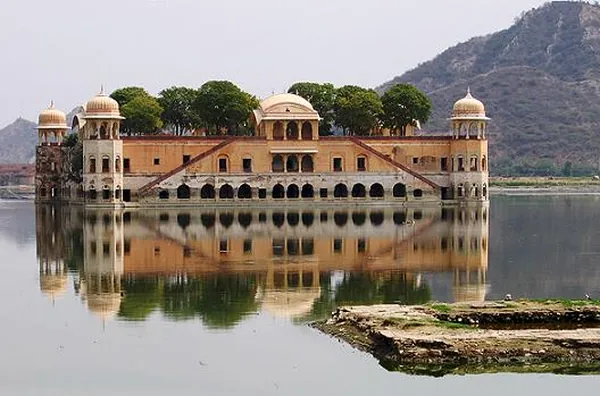
Appearing to float magically in the middle of Man Sagar Lake against the backdrop of the Nahargarh hills, Jal Mahal is an 18th century pleasure palace built in pink sandstone. While four of its five stories remain submerged underwater, the palace presents a stunning visual spectacle, especially when illuminated at night.
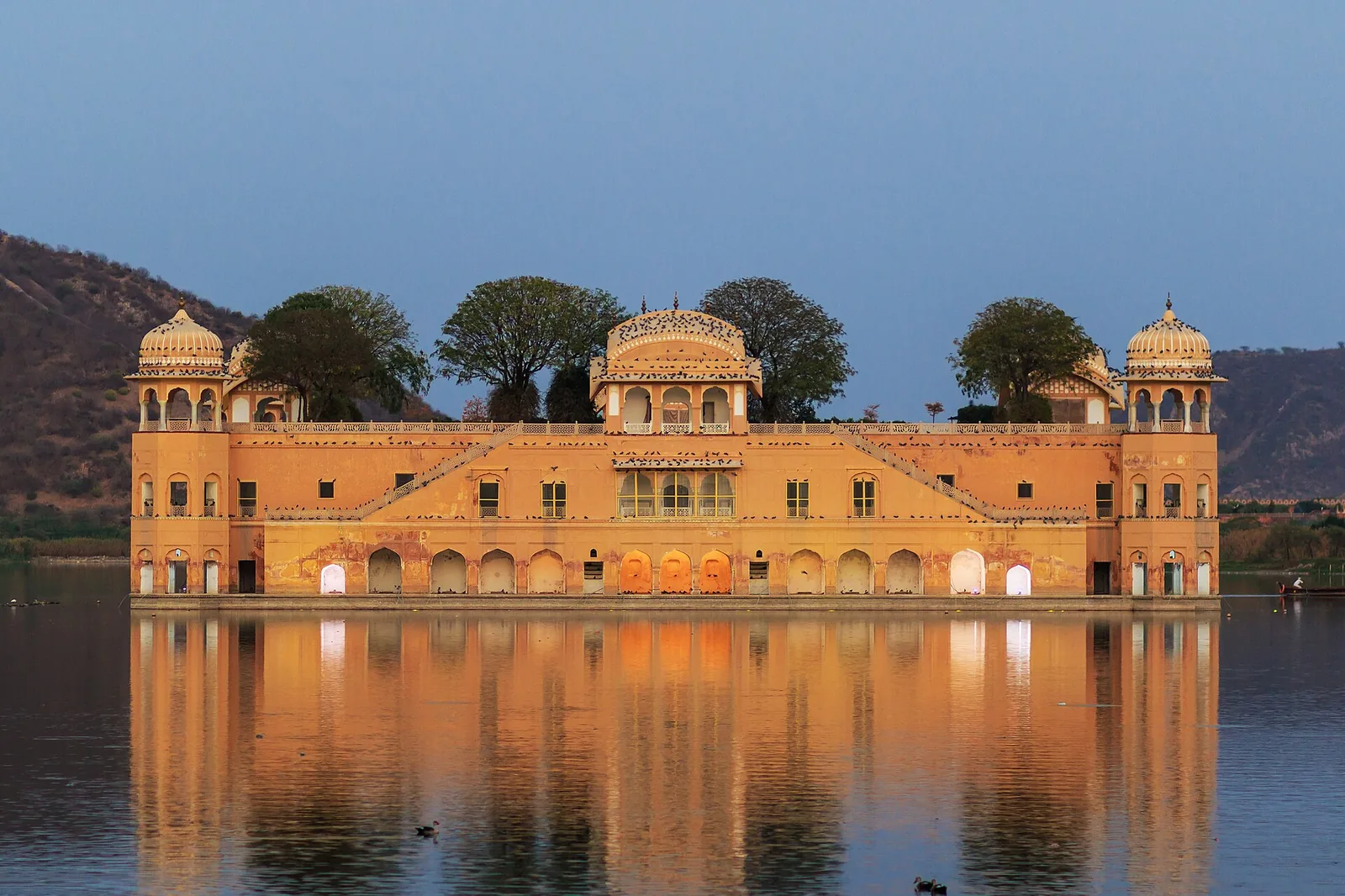 Jal Mahal — 18th-Century Pink Sandstone Water Palace on Man Sagar Lake
Standing on the edge of the Aravalli ridge, Nahargarh Fort (*Abode of Tigers*) was built in 1734 to fortify Jaipur. The fort features the elegant *Madhavendra Bhawan* with identical suites for nine royal queens, offering unmatched panoramic sunset views over the entire pink city.
Built in 1726 by Sawai Jai Singh II to protect Amber Fort, Jaigarh Fort is connected to Amer by underground subterranean passageways. It houses the legendary *Jaivana Cannon*, the world's largest cannon on wheels cast during the medieval era.
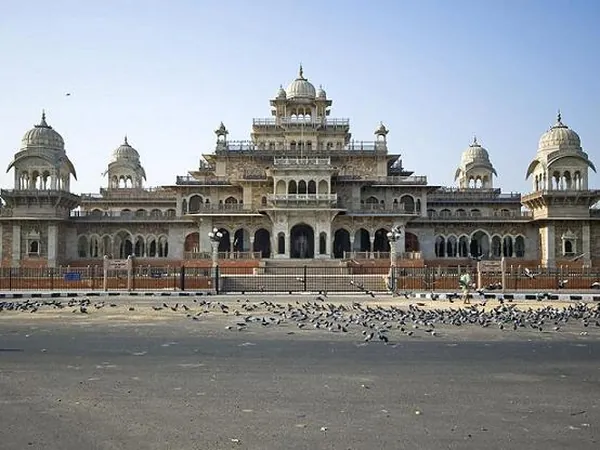
The oldest state museum in Rajasthan, the Albert Hall Museum is housed in an exquisite Indo Saracenic stone building opened in 1887. The museum displays rich collections of miniature paintings, Persian carpets, Egyptian mummies, metal sculptures, and traditional royal costumes.
Nestled in a narrow mountain pass 10 km east of Jaipur, Galta Ji is an ancient Hindu pilgrimage site featuring natural freshwater springs, carved pink pavilions, and sacred bathing kunds surrounded by hundreds of friendly rhesus macaques.
Duration: 7 Nights / 8 Days
 Best Flights
 Best Prices
 Unique Holidays