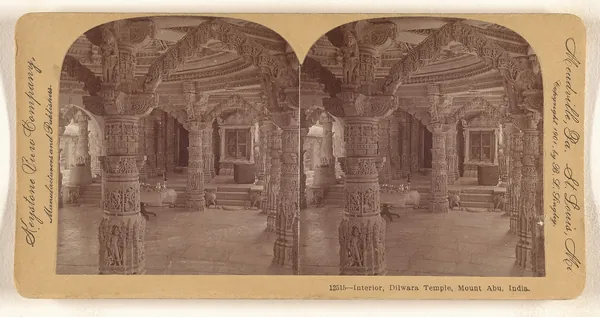
Bikaner — Travel Guide
Bikaner (celebrated as the Camel Country of the Thar Desert and one of the most culturally vibrant desert citadels in Rajasthan), was founded in 1488 CE by the Rathore warrior prince Rao Bika. Built on the ancient desert trade caravan routes connecting Central Asia with the Arabian Sea ports of Gujarat, Bikaner retains an authentic medieval charm with red sandstone mansions, massive desert fortifications, and world renowned desert cuisine.
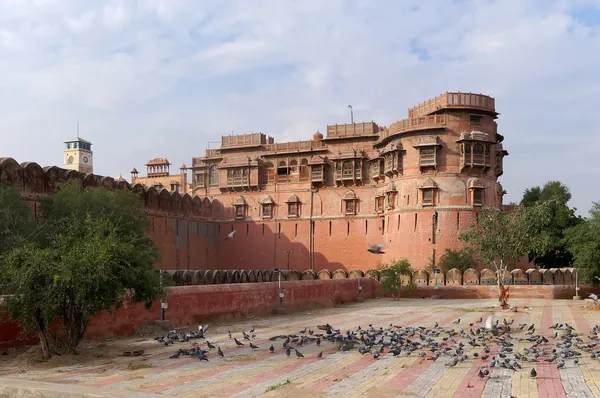
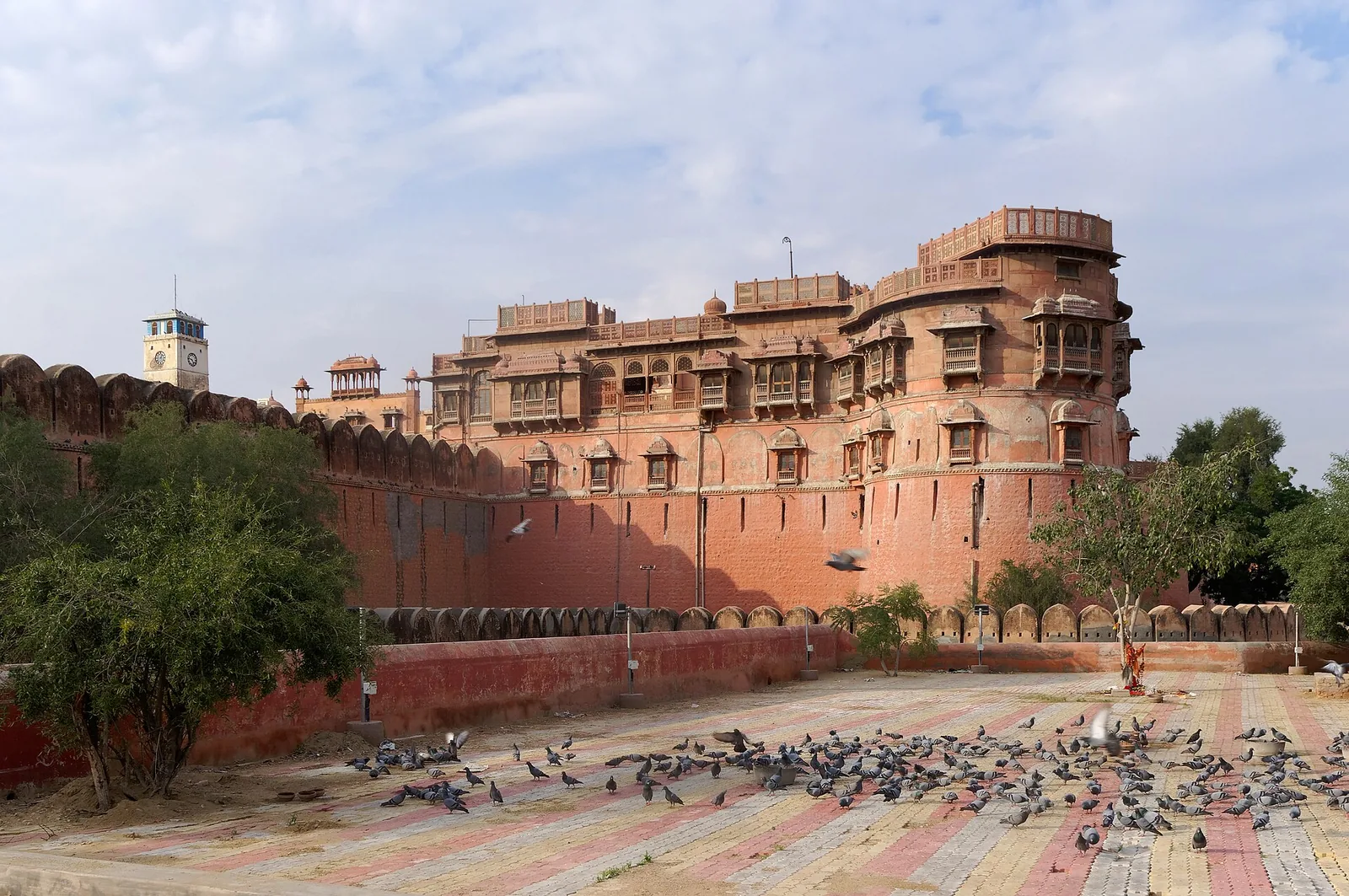 The Imposing 16th-Century Red Sandstone Bastions of the Unconquered Junagarh Fort in Bikaner
Unlike most Rajasthani hill citadels, Bikaner's crown monument — the monumental Junagarh Fort (1589 CE) built by Raja Rai Singh — was constructed on the desert plains. It remained unconquered throughout centuries of medieval warfare. Inside, the gold leaf work of the *Anup Mahal* and the blue cloud murals of *Badal Mahal* leave visitors spellbound.
The city is globally famous for its ornate red sandstone merchant mansions called the Rampuria Havelis, the royal Indo Saracenic architecture of Lalgarh Palace, the lakeside retreat of Gajner Palace, Asia's only dedicated National Research Centre on Camel, and the unique Karni Mata Temple in Deshnoke where thousands of sacred rats are revered.
Positioned along the desert circuit 330 km from Jaipur and 250 km from Jodhpur, Bikaner pairs perfectly with Jaisalmer and Ajmer, offering travelers an authentic taste of royal Thar heritage, GI tagged bhujia, and desert hospitality.
Best Time to Visit Bikaner:
Bikaner offers classic desert experiences best enjoyed during the cooler winter months:
- October to March (Winter / Peak Desert & Camel Festival Season): Daytime temperatures range pleasantly between 10°C and 26°C with clear sunny skies and crisp, cool nights. Perfect for exploring Junagarh Fort, desert camel safaris, haveli walking tours, and attending the world famous International Camel Festival held every January with decorated camel dances, camel races, and folk music performances.
- July to September (Monsoon / Low Desert Showers): Low rainfall (approx. 250 mm) cools the desert heat with overcast days and pleasant evening breezes.
- April to June (Summer / Warm Desert Sun): Temperatures range from 30°C to 44°C with warm desert winds (*Loo*). Best suited for early morning fort visits and indoor museum tours.
Famous Bikaneri Delicacies:
- GI-Tagged Bikaneri Bhujia: World famous crispy savory noodles prepared with moth bean flour, gram flour, black pepper, and Hing (asafoetida).
- Bikaneri Rasgullas & Ghevar: Spongy, syrupy cottage cheese rasgullas and traditional honey soaked Ghevar sweets from Chhappan Bhog and local sweet shops.
- Camel Milk Kulfi & Tea: Creamy, healthy camel milk ice creams and spiced tea served fresh at the National Research Centre on Camel.
By Air:
The city is served by Bikaner Domestic Airport (Nal Airport - Airport Code: BKB), located 13 km west of the city center. Nal Airport operates scheduled flights connecting New Delhi and Jaipur. Major alternate airport gateways include Jodhpur Airport (JDH - 250 km / 4.5 hours drive) and Jaipur International Airport (JAI - 330 km / 5.5 hours drive), which operate extensive domestic and international flight connections.
By Train:
Bikaner Junction Railway Station (Station Code: BKN) and Lalgarh Junction (Station Code: LGH) are major railway division headquarters in Rajasthan, connected by premier express trains:
- Delhi-Bikaner Superfast Express / Intercity: Daily direct trains connecting Delhi Sarai Rohilla (DEE) to Bikaner in 6 to 7 hours.
- Kalka-Bikaner & Howrah-Bikaner Express: Long distance direct express trains connecting Kolkata, Haridwar, Chandigarh, and Mumbai.
- Bikaner-Yesvantpur Express: Direct southern express train connecting Bengaluru and Pune.
- Prepaid auto rickshaws, app cabs, and cycle rickshaws operate round the clock outside Bikaner Junction.
By Road:
Bikaner is connected via modern national highways and the newly developed Amritsar-Jamnagar Economic Corridor (NH-754K), National Highway 11 (NH-11), and National Highway 62 (NH-62):
- From Jodhpur (~250 km / 4.5 hours): Direct drive via Nagaur on NH-62.
- From Jaipur (~330 km / 5.5 hours): Smooth drive along NH-11 via Sikar and Fatehpur Shekhawati.
- From Jaisalmer (~330 km / 5.5 hours): Desert highway drive via Pokhran on NH-11.
- From New Delhi (~450 km / 7.5 hours): Highway drive via Rohtak, Hisar, and Sadulpur on NH-9 and NH-52.
- State Buses: RSRTC operates daily Super Luxury Scania, Volvo AC, and sleeper buses to Bikaner Central Bus Stand from Jaipur, Jodhpur, Delhi, and Ahmedabad.
Shopping in Bikaner is world famous for GI certified savory namkeens, camel leather craft, Usta miniature gold art, and hand woven woollens:
- GI-Certified Bikaneri Bhujia & Papads: Freshly fried spicy moth bean bhujia, moong dal papad, and savory mixtures from Kote Gate and Station Road.
- Traditional Usta Art & Camel Hide Crafts: Intricate 24-karat gold leaf embossing and miniature lacquer paintings on camel leather water bottles (*Kuppi*), wooden jewelry boxes, and wall plates.
- Handcrafted Camel Leather Mojaris: Embroidered leather footwear, handmade camel leather belts, and wallets from King Edward Memorial (KEM) Road.
- Bikaneri Woollen Blankets & Carpets: Hand knotted sheep wool rugs, shawls, and durries woven in traditional geometric desert patterns.
- Rajasthani Miniature Paintings: Delicate court and desert life miniature paintings crafted on camel bone and handmade paper in old city workshops.
Must-Visit Places in Bikaner
Bikaner offers a remarkable collection of unconquered desert forts, red sandstone merchant havelis, sacred shrines, and camel research sanctuaries:
1. Junagarh Fort & Anup Mahal Gold Leaf Courtyards (1589 Fortress)
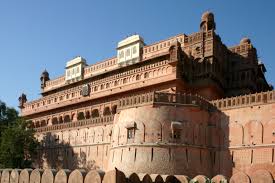
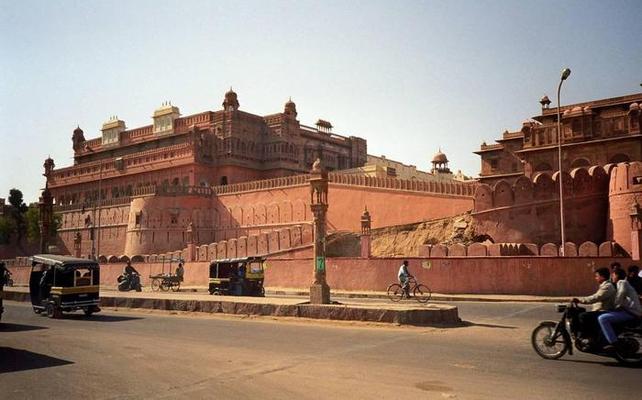
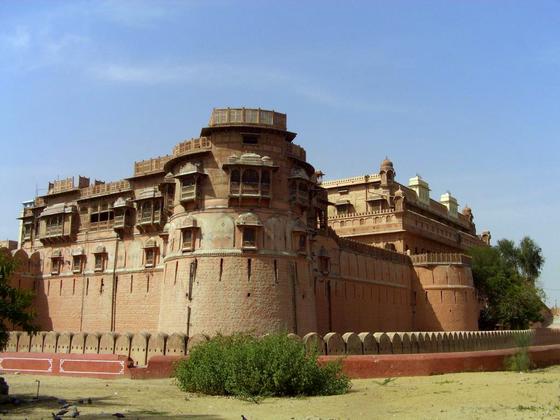
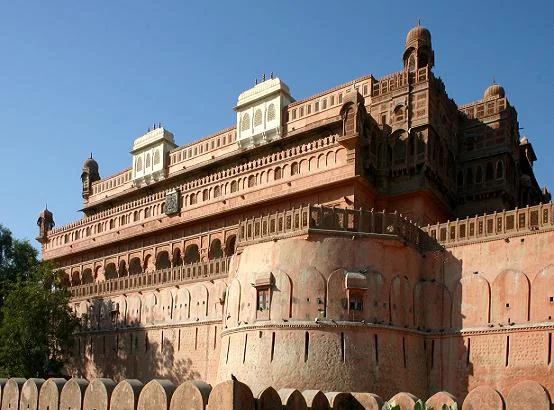
Commissioned in 1589 CE by Raja Rai Singh, Junagarh Fort is a formidable desert plain fortress constructed in red Dulmera sandstone and Italian marble. The fortress encloses opulent royal apartments including the gold embossed *Anup Mahal*, the mirrored *Chandra Mahal*, the cloud painted *Badal Mahal*, and the Prachina Heritage Museum displaying royal coronation robes and World War I biplanes.
Junagarh Fort — 16th-Century Unconquered Red Sandstone Desert Citadel in Bikaner
2. Karni Mata Temple at Deshnoke (Sacred Kaba Temple - 30 km)
Located 30 km south of Bikaner in Deshnoke, the world famous Karni Mata Temple is dedicated to the 14th century female mystic and clan goddess Karni Mata. The temple is home to over 25,000 sacred black and rare white rats (*Kabas*), which roam freely across the marble floors and silver gateways, protected and fed with milk bowls by devotees who consider spotting a white rat an auspicious blessing.
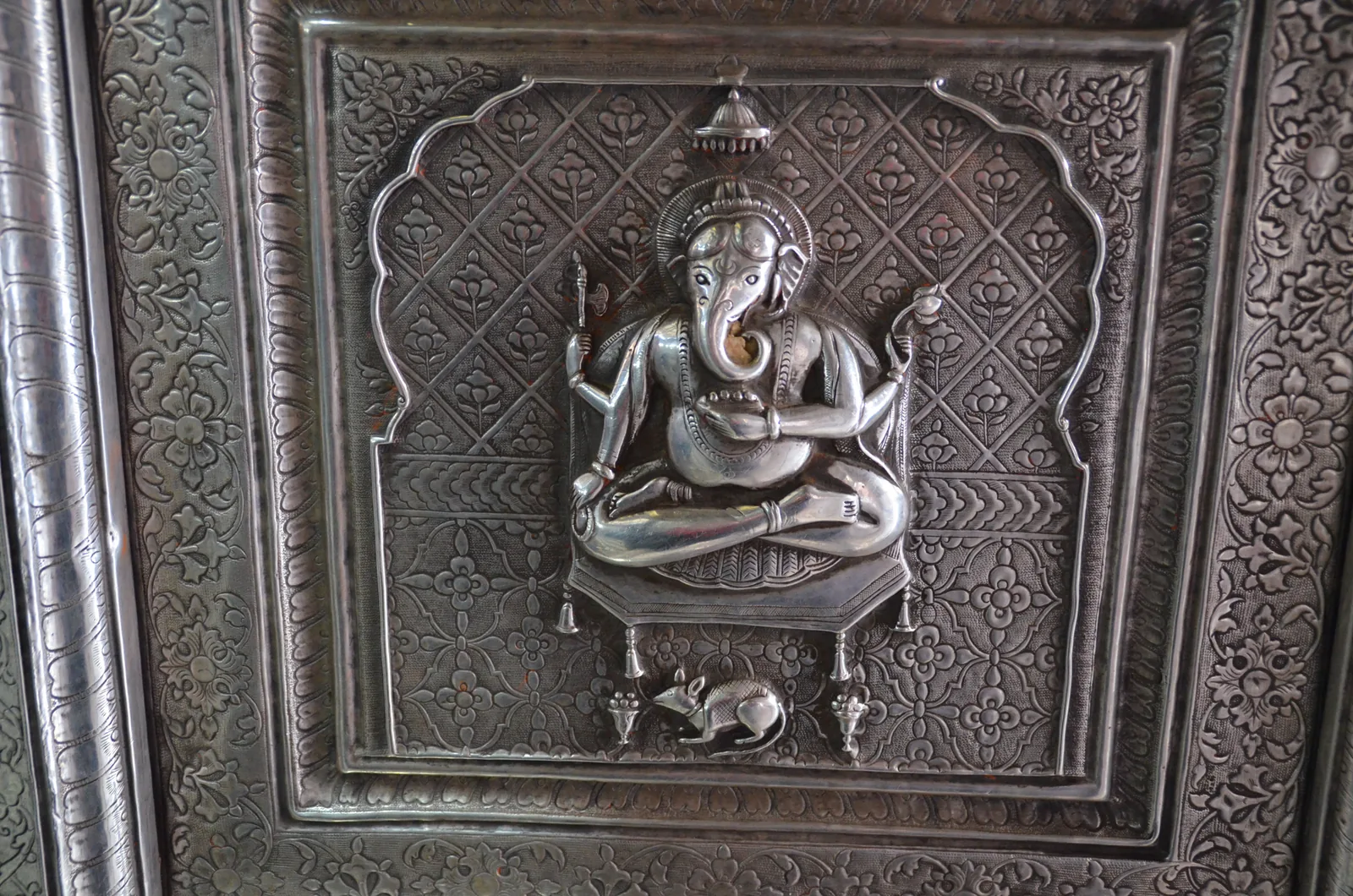 Karni Mata Temple — World-Famous 600-Year-Old Sacred Rat Shrine and Marble Temple at Deshnoke
3. Lalgarh Palace & Sadul Museum (Indo-Saracenic Red Sandstone Estate)
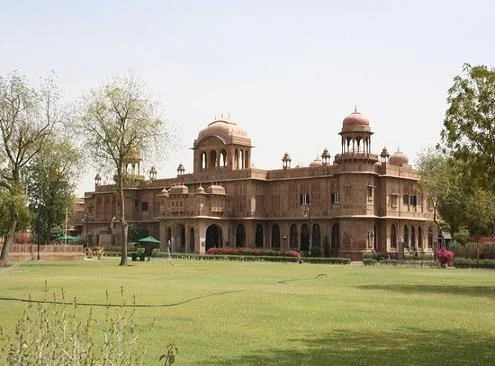
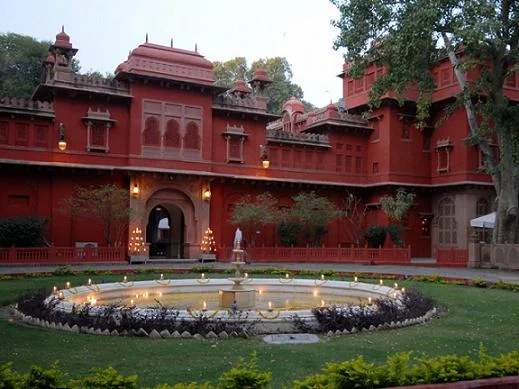
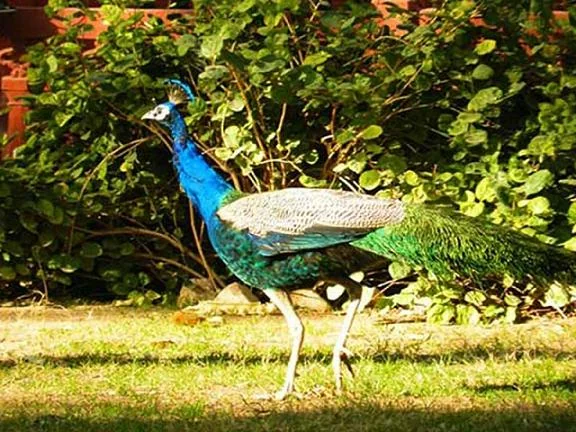
Commissioned in 1902 by Maharaja Ganga Singh in memory of his father Maharaja Lall Singh, Lalgarh Palace is an architectural marvel designed by British architect Sir Samuel Swinton Jacob. The estate features intricate filigree lattice stone jharokhas, terraced lawns with dancing peacocks, the royal *Sadul Museum*, and the world's fourth largest private palace library.
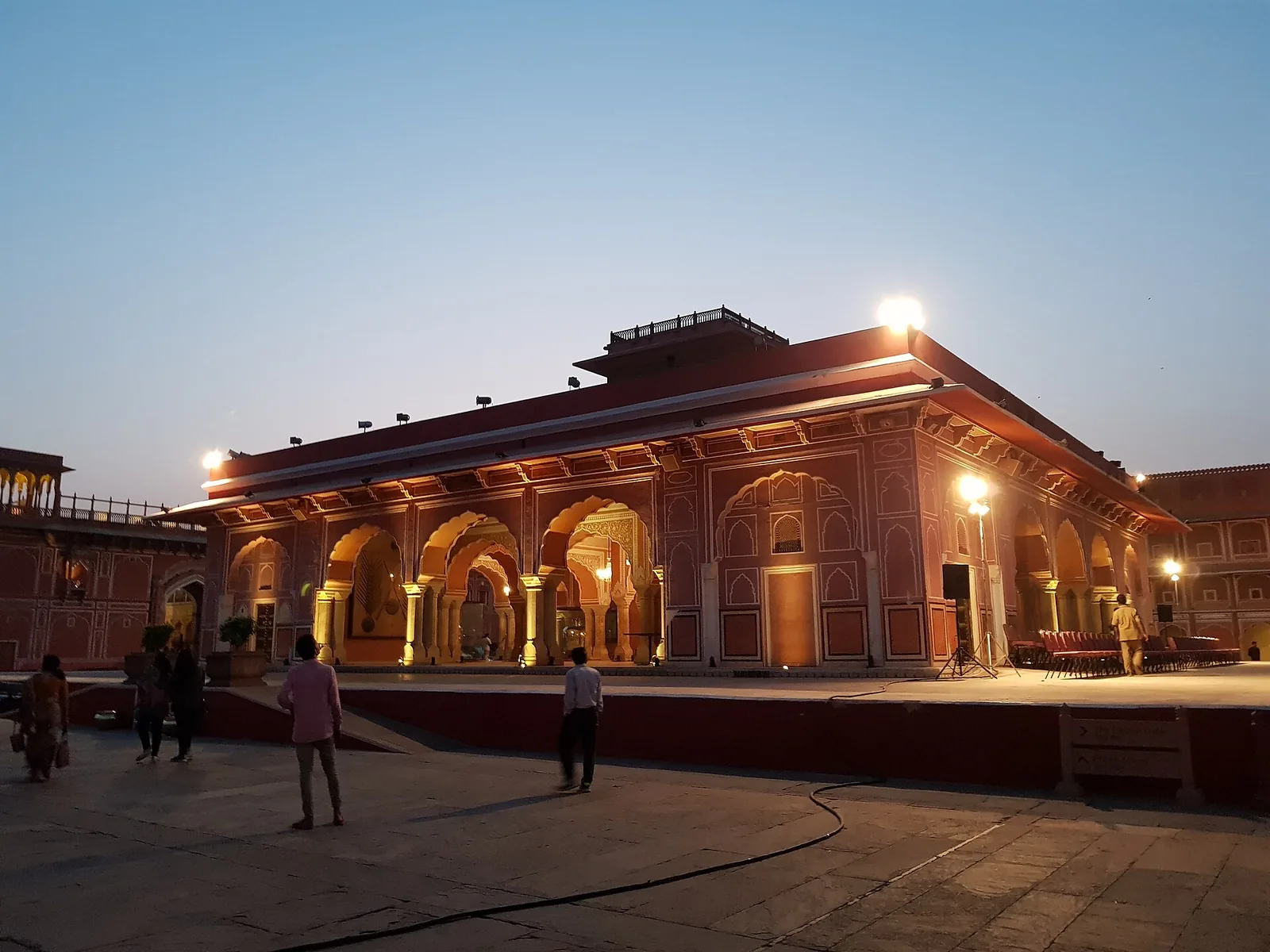 Lalgarh Palace — Grand Indo-Saracenic Red Sandstone Royal Residence and Heritage Museum in Bikaner
4. National Research Centre on Camel (Asia's Camel Farm & Dairy)
Situated 8 km outside the city in Jorbeer, the ICAR National Research Centre on Camel (NRCC) is the premier camel breeding, genetics, and dairy research institution in Asia. Visitors can observe four distinct camel breeds (Bikaneri, Jaisalmeri, Marwari, Mewari), enjoy camel riding across sand dunes, and sample fresh camel milk kulfi, ice cream, and tea at the dairy parlor.
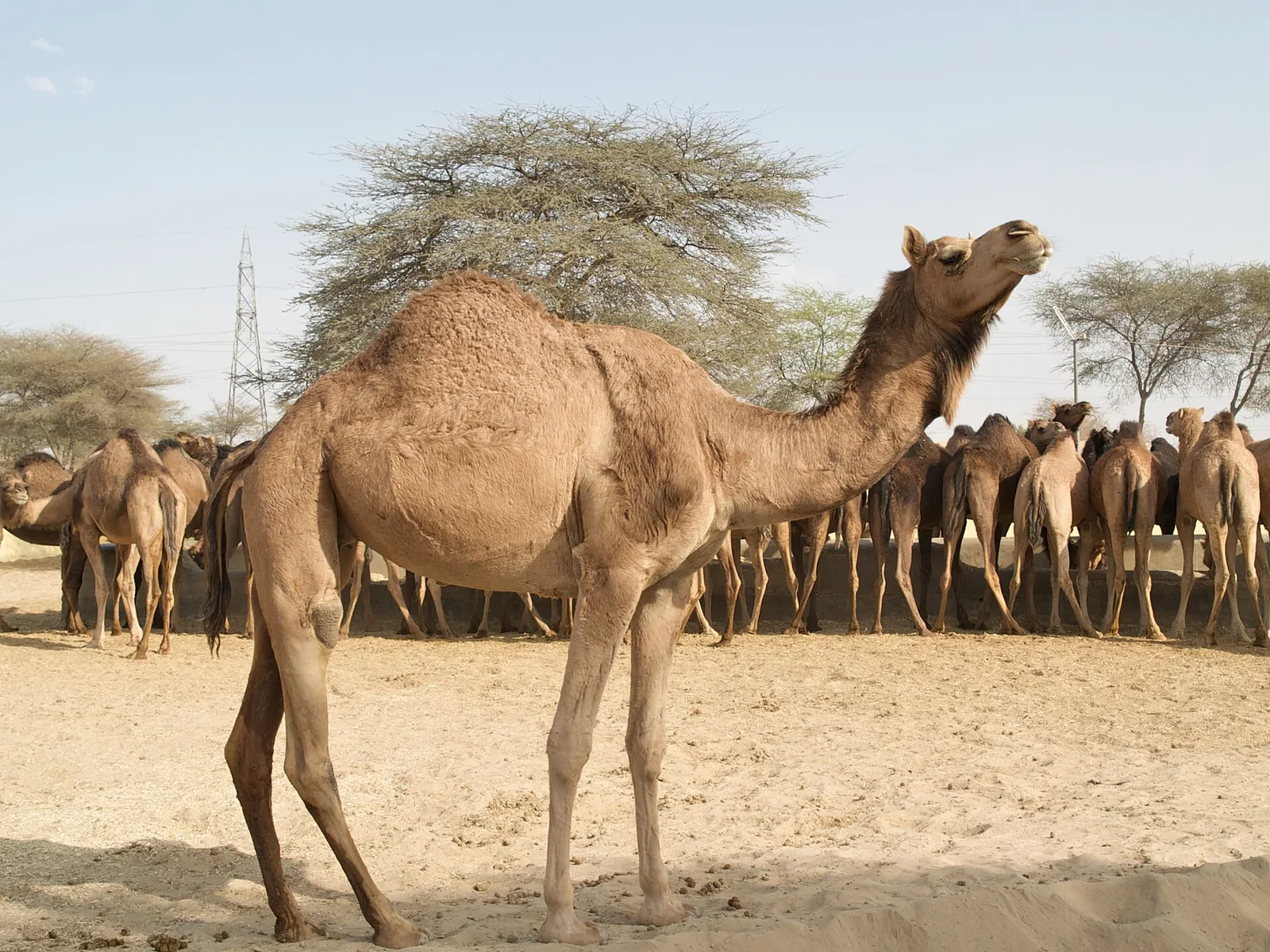 National Research Centre on Camel — Asia's Premier Camel Breeding Institution and Safari Center in Bikaner
5. Rampuria Havelis & Dulmera Red Sandstone Jharokhas (Old City)
Built by the wealthy Rampuria merchant family over three centuries in the old walled city, this cluster of seven interconnected palatial mansions is constructed in red Dulmera sandstone. The havelis showcase an opulent fusion of Victorian, Mughal, and Rajput stone carving, featuring curved bay windows, floral balconies, and ornamental woodwork.
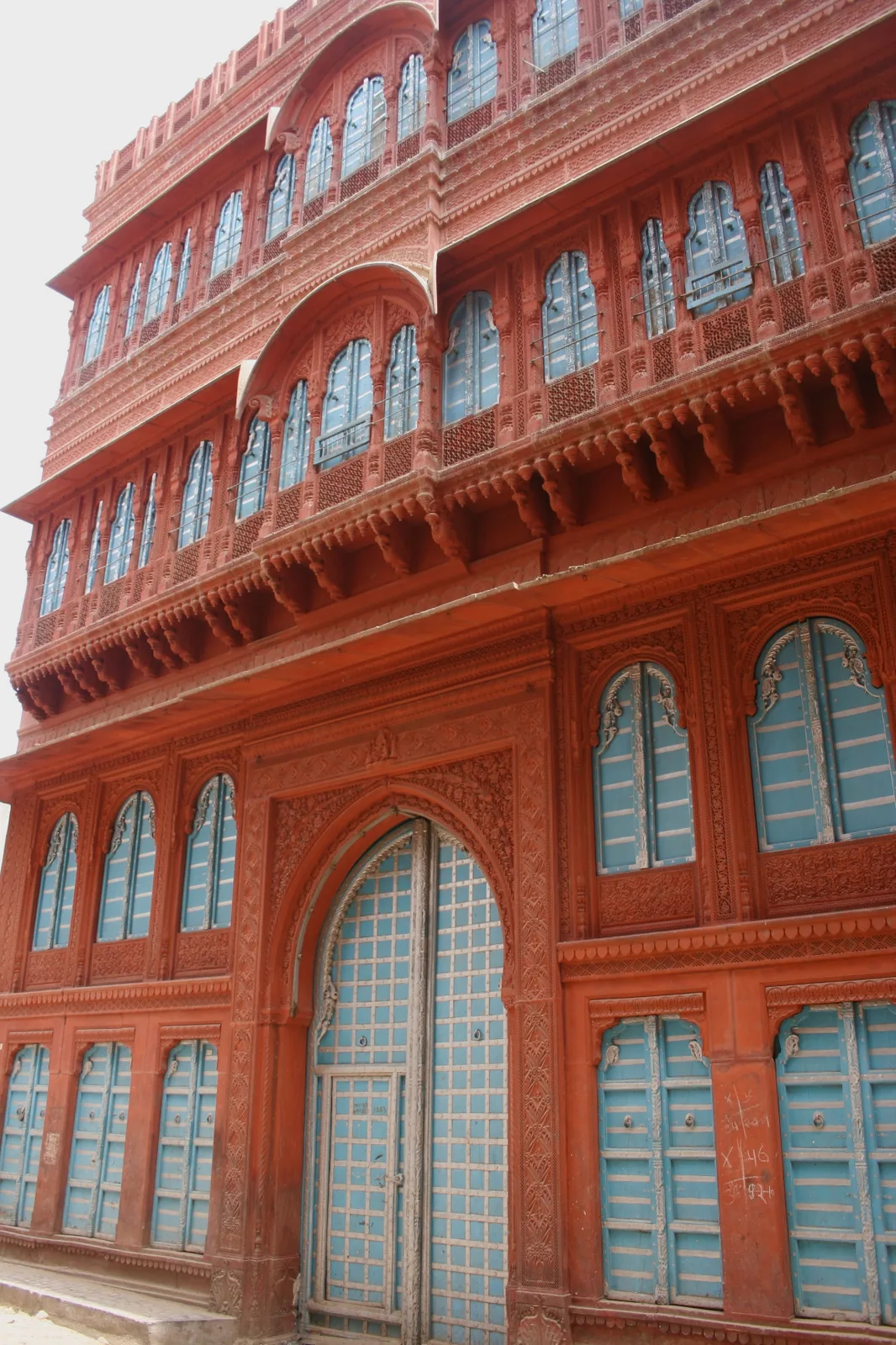 Rampuria Havelis — Ornate 400-Year-Old Red Sandstone Merchant Mansions in Bikaner Old City
6. Bhandasar Jain Temple & Ghee Foundation Shrines (15th Century)
Dedicated to the 5th Tirthankara Lord Sumatinath, this three story 15th century Jain temple was constructed by merchant Bhandasa Oswal using 40,000 kilograms of pure clarified butter (ghee) mixed directly into the mortar foundation. The upper floors feature vibrant leaf gold paintings and mirror work.
7. Gajner Palace & Wildlife Sanctuary on Gajner Lake (32 km)
Set beside a peaceful lake 32 km from Bikaner, Gajner Palace was built in red sandstone as a royal hunting and summer lodge by Maharaja Ganga Singh. The adjoining forest sanctuary is home to blackbucks, nilgai, wild boars, and migratory Imperial sandgrouse.
8. Devi Kund Sagar Royal Cenotaphs (Chhatris of Bikaner Rulers)
Located 8 km east of Bikaner, Devi Kund Sagar is the royal cremation ground of the Rathore rulers. The site features dozens of elaborately carved marble and red sandstone cenotaphs (*chhatris*) adorned with floral carvings, equestrian reliefs, and intricate ceiling murals.
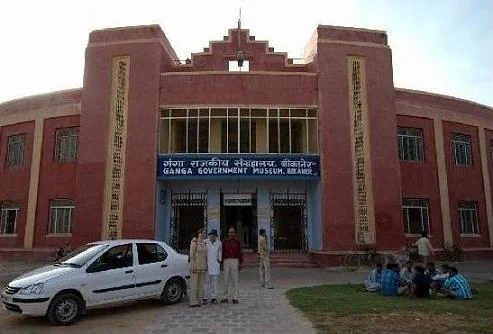
9. Ganga Government State Museum (Harappan Pottery & Royal Armory)
Established in 1937 during Maharaja Ganga Singh's Golden Jubilee, this museum houses extraordinary archaeological artifacts from the Indus Valley / Harappan civilization excavated at Kalibangan, along with medieval Rajput armor, camel hide paintings, and gold coin collections.
Popular Hotels in Bikaner
 Hotel
Hotel
 Hotel
Hotel
 Hotel
Hotel
 Hotel
Hotel
 Hotel
Hotel
 Hotel
Hotel
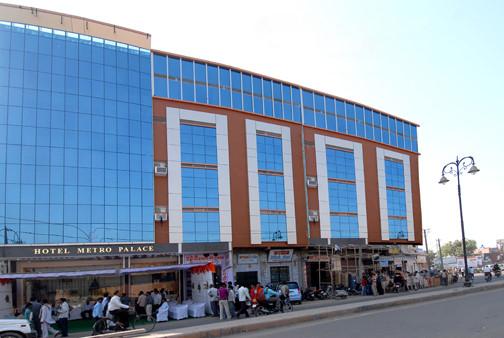 Hotel
Hotel
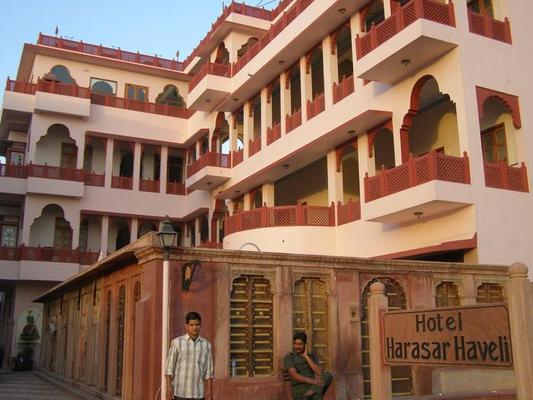 Hotel
Hotel
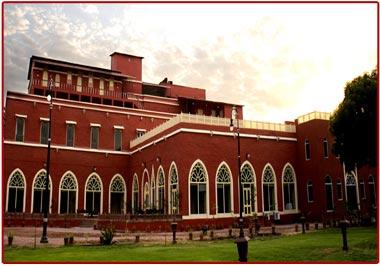 Hotel
Hotel
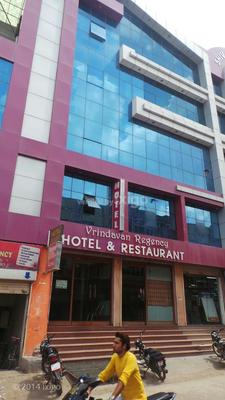 Hotel
Hotel
Tour Packages from Bikaner
 Package
 Package
 Package
Top Places to Visit in Bikaner
Bikaner Photo Gallery & Attractions
Explore high-resolution photographs of iconic temples, historical monuments, and scenic landmarks in Bikaner.
Plan Your Bikaner Trip Now
Get the best verified hotel deals and customized tour packages. Book directly on EarthTrip and save up to 45%!