- .
- info@earthtrip.in
-
INR
-
USD
INR
USD
Jaisalmer, the Golden City of India is full of heritage Haveli’s, forts, beautiful lake & desert area of Sam which offer a rare sun set & rise view. We at Chetram Voyages offers some of the most comfortable and exiting tour packages at a fair price. We offer one day city sightseeing tours and desert safari tours which we enjoy at Sam or Khuri. And in last we have a tour package for Jaisalmer which is filled with luxury and comfort.
Enjoy in the golden sands of Rajasthan to experience its royal flavor. Vibrant city of Rajasthan glitters with majestic forts, royal palaces, sand dunes and world famous wild life reserves. With Jodhpur Jaisalmer Tours explore the richness the city has to offer. Jaisalmer, popularly known as the ‘golden city’ of Rajasthan exhibits its traditions with Jaisalmer Fort. Jaisalmer Tour also includes a visit to splendid forts, Patwon ki Haveli and Salim Singh ki Haveli. The lively city of Jodhpur with its exquisite handicrafts, majestic forts and holy temples exhibits its historic grandeur. Jodhpur Jaisalmer Tours Packages includes visit to Jaswant Thada, Mehrangarh Fort and lovely gardens.
Day 1: Jodhpur Arrival
Arrival at Jodhpur and transfer to Hotel. The second largest city of Rajasthan, Jodhpur was founded in 1459 by RaoJodha, a Rajput chief belonging to the Rathore clan. Jodhpur is also known as the "Sun City" for the bright, sunny weather it enjoys all year and the "Blue City" because most of its houses in the old city are painted indigo. Evening visit Clock Tower and local market of Jodhpur. Overnight at hotel.
Day 2: Jodhpur City Tour
After breakfast proceed to visit the Mehrangarh Fort, situated on a low sandstone Hill, including Moti-Mahal and Phool Mahal. Also visit Jaswant Thada, an imposing Marble Memoriam built in 1899 and the museum located in the Umaid Public Gardens. Overnight at hotel.
Day 3: Jodhpur – Jaisalmer (260 Kms)
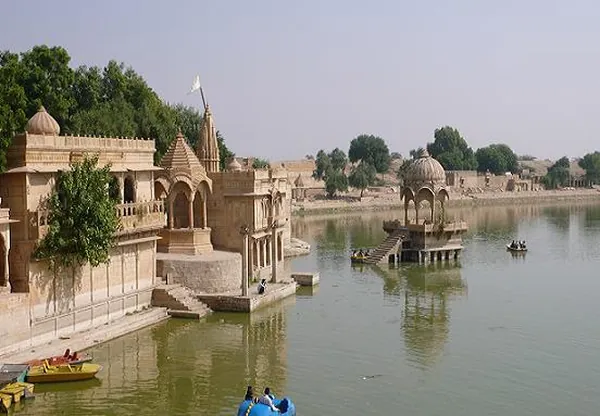
After breakfast, drive to Jaisalmer. Arrive and check in at hotel later visit the manmade lake (Gadiser Lake) Rest of the Day at leisure. Overnight at hotel.
Day 4: Jaisalmer
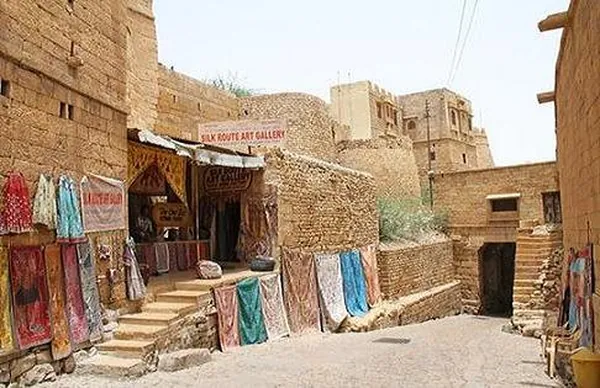
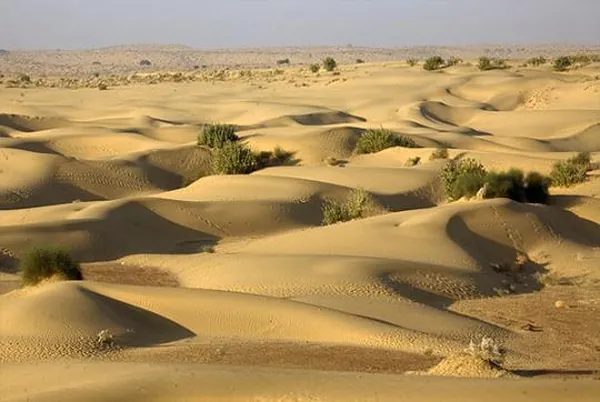
After breakfast visit Jaisalmer. Visit the Fort, Bazars and the old mansions known as "Havelis". People still live in these ancient buildings dating from 12th to 15th century. Every house has exquisite carvings and filigreed work. Evening visit Sam / Khuri sand Dunes.
Overnight at camp.
Day 5: Jaisalmer – Jodhpur departure
After breakfast, proceed for your onwards destination.
Payments policy
Tour Cancilation policy
By Air:
The city is served by Jaisalmer Domestic Airport (Airport Code: JSA), situated 12 km from the city center. JSA operates scheduled commercial flights during the peak tourism season (October to March) connecting New Delhi, Mumbai, Jaipur, and Ahmedabad. Year round major air connections are available via Jodhpur Domestic Airport (Airport Code: JDH - 285 km / 4.5 hours drive via NH-125), which operates daily flights to all Indian metro cities.
By Train:
Jaisalmer Railway Station (Station Code: JSM) is the westernmost rail terminus in Rajasthan, well connected with direct superfast and express trains:
By Road:
Jaisalmer is connected via smooth national highways traversing the Thar Desert along National Highway 11 (NH-11) and National Highway 68 (NH-68):
Jaisalmer offers an extraordinary collection of living UNESCO forts, vast desert sand dunes, carved sandstone merchant havelis, and desert oasis lakes:
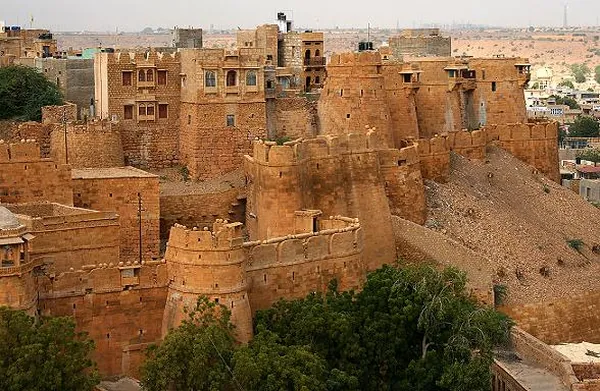
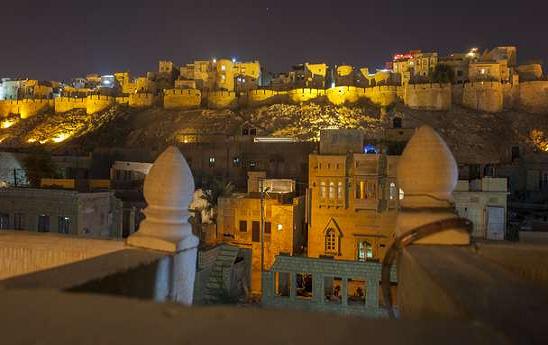
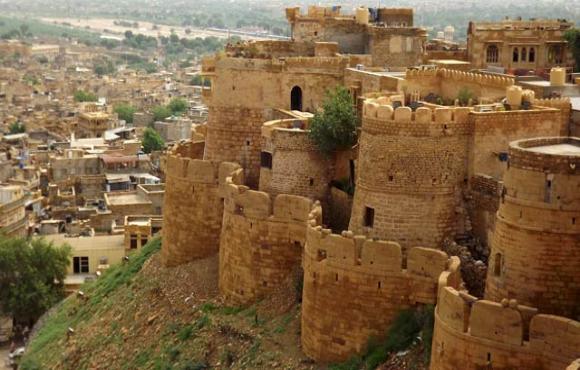
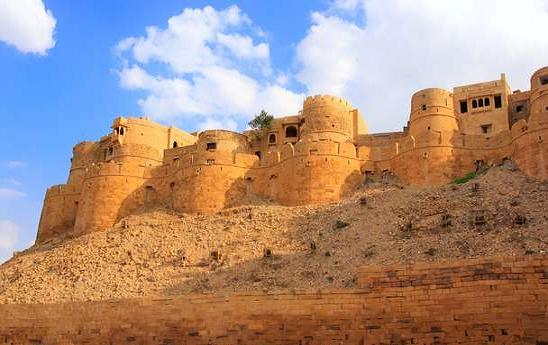
Erected in 1156 CE on Trikuta Hill, Jaisalmer Fort is a UNESCO World Heritage Site and one of the world's most remarkable living fortresses. Its 99 bastions protect a vibrant medieval world of narrow stone alleys, seven intricately carved 12th to 15th century yellow sandstone Jain temples, royal palaces (*Raj Mahal*), and panoramic cannon viewpoints like Cannon Point overlooking the golden city.
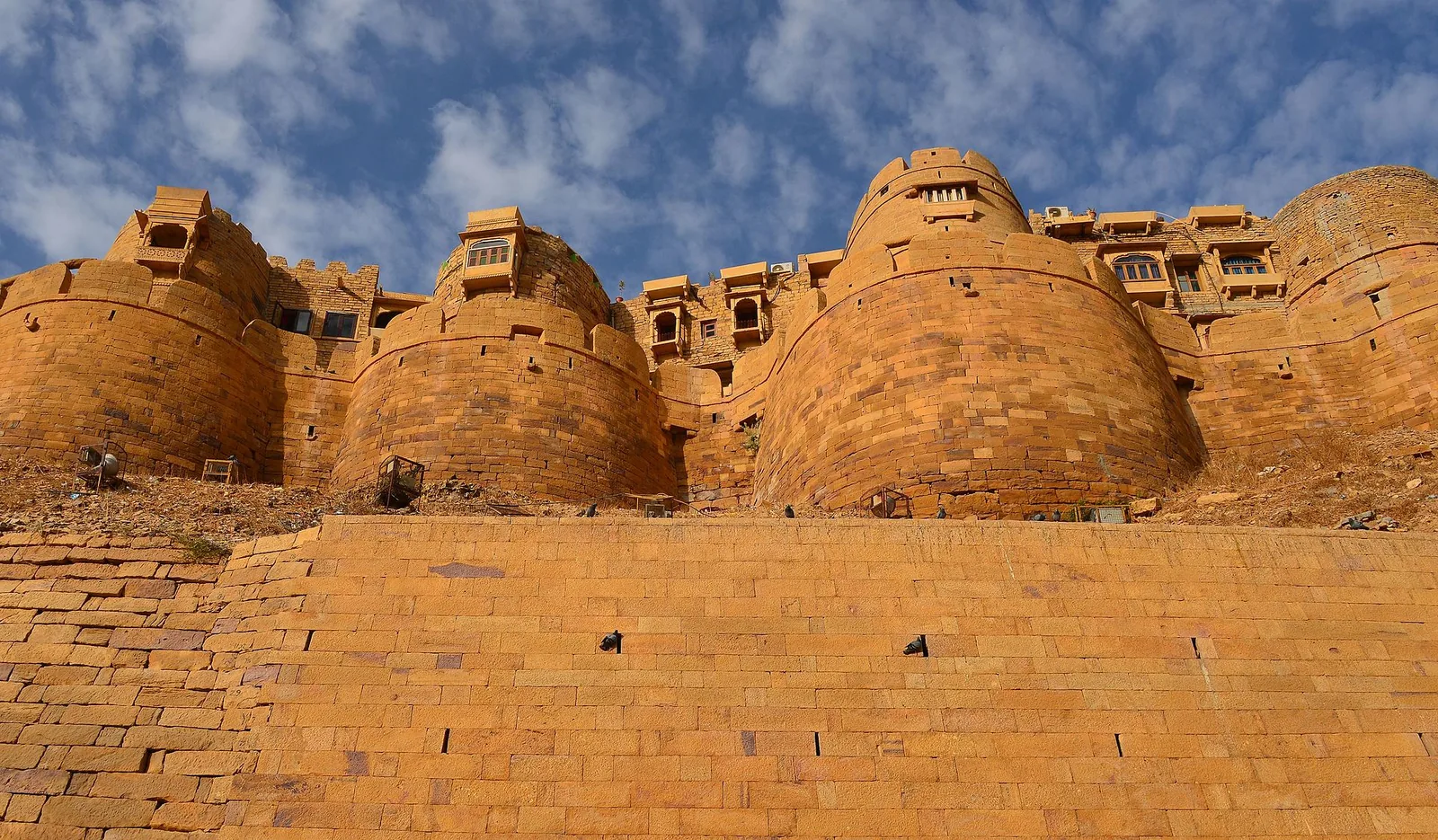 Jaisalmer Fort — 12th-Century Living UNESCO Golden Sandstone Fortress on Trikuta Hill
Located 42 km west of Jaisalmer in the heart of the Thar Desert, the vast rolling sand dunes of Sam Sand Dunes offer authentic desert adventures. Visitors enjoy sunset camel safaris across silk soft ridges, high speed 4x4 open jeep dune bashing, quad biking, and luxury Swiss tent camping with traditional Rajasthani folk dances (Kalbelia) and campfires under the Milky Way.
 Sam Sand Dunes — Rolling Desert Sand Ridges, Camel Safaris, and Starlit Camping in Jaisalmer
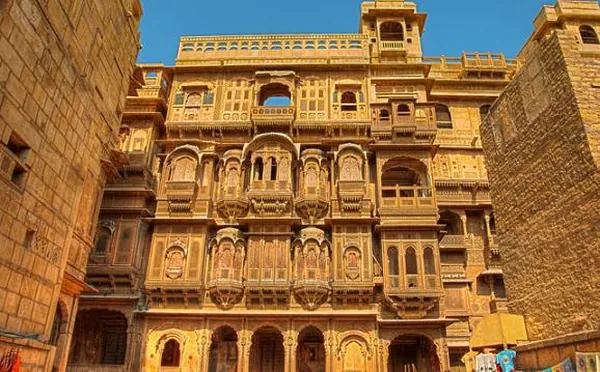
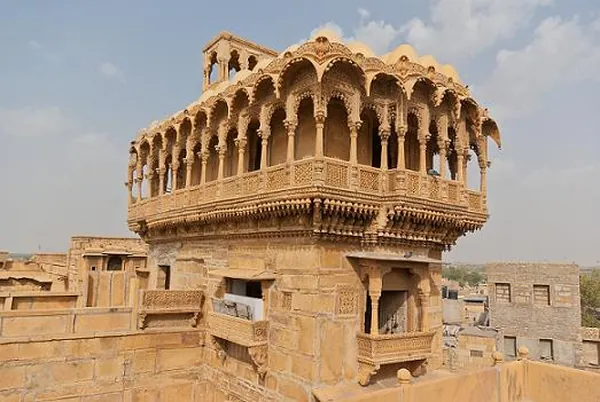
Built between 1805 and 1850 by wealthy brocade and opium merchant Guman Chand Patwa for his five sons, Patwon Ki Haveli is a cluster of five interconnected palatial mansions. Constructed in glowing yellow sandstone, the haveli features over 60 intricately carved jharokha balconies, mirror work murals, and period furniture showcasing 19th century merchant wealth.
 Patwon Ki Haveli — Ornate 19th-Century Five-Story Yellow Sandstone Merchant Palace in Jaisalmer
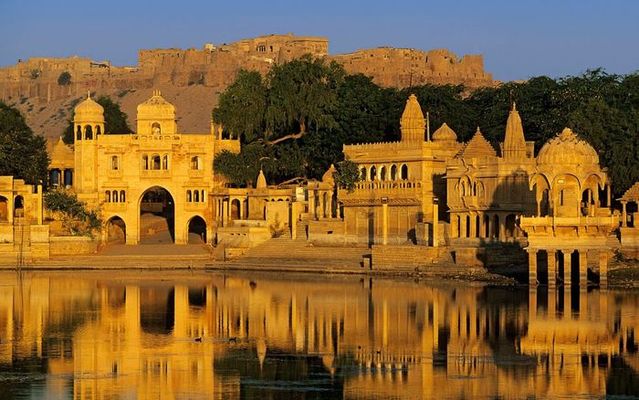
Built in 1367 CE by Maharawal Gadsi Singh as a rainwater conservation reservoir that supplied the entire desert city for centuries, Gadisar Lake is a scenic oasis lined with carved yellow stone temples, bathing ghats, and royal pavilions. Entrance to the lake is through the magnificent double story archway Tilon Ki Pol, built by a famous royal courtesan.
 Gadisar Lake — 14th-Century Historic Desert Oasis Reservoir and Carved Temples in Jaisalmer
Situated 18 km southwest of Jaisalmer, Kuldhara is an abandoned 13th century village once inhabited by prosperous Paliwal Brahmins. Legend recounts that in 1825, all 84 surrounding villages vanished overnight to protect their honor from the tyrannical prime minister Salim Singh, leaving behind eerie roofless stone homes, courtyards, and ancient stepwells.
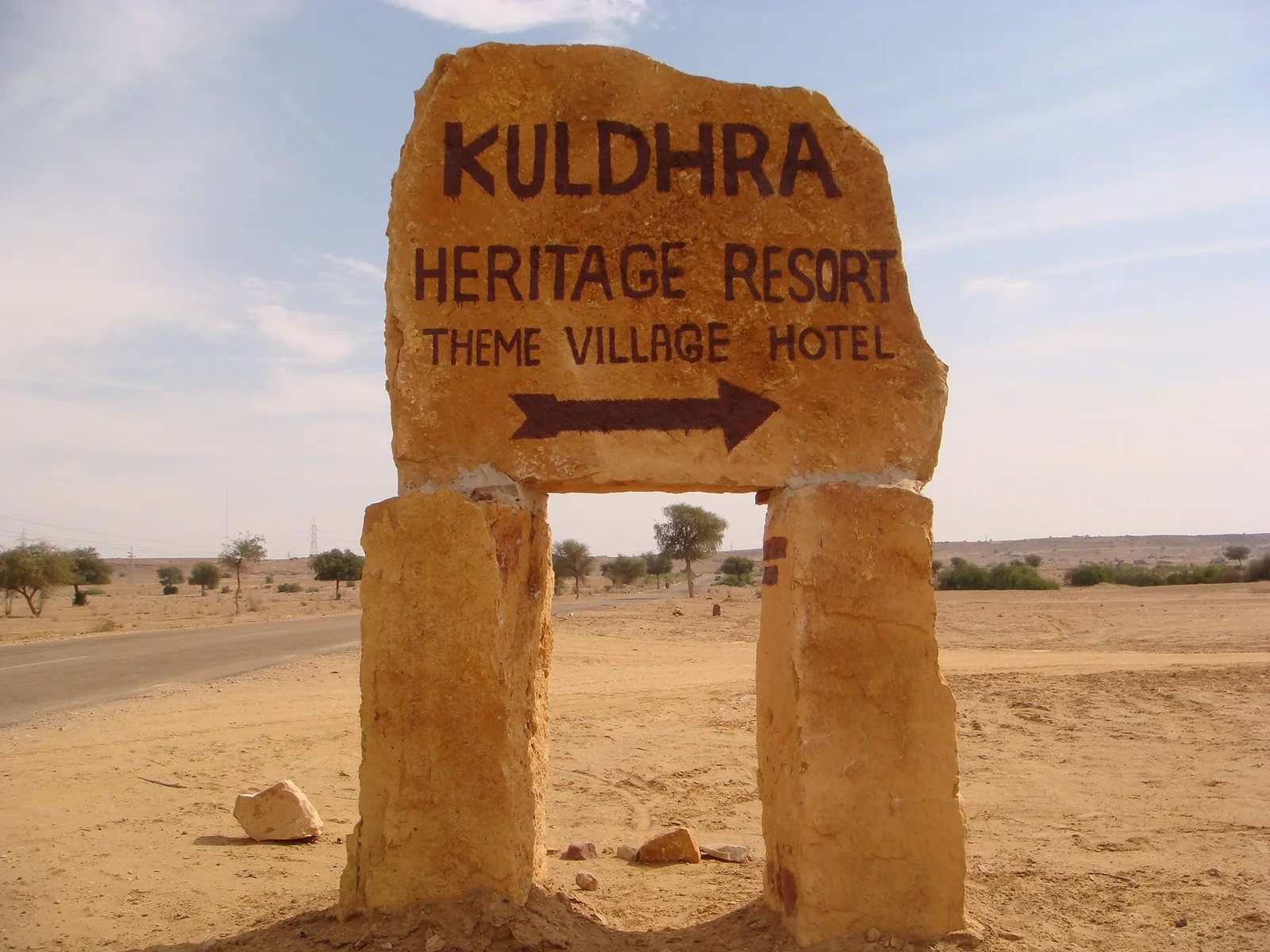 Kuldhara — 13th-Century Abandoned Heritage Ghost Village and Ancient Stone Ruins near Jaisalmer
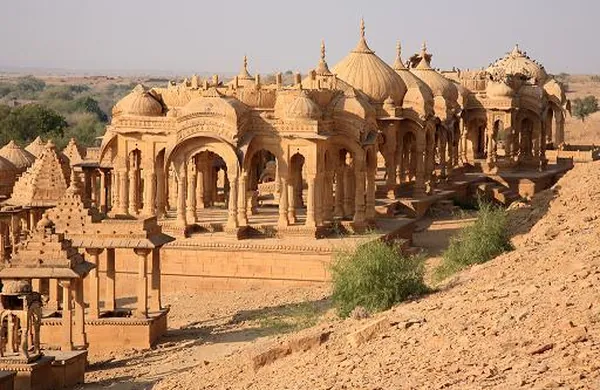
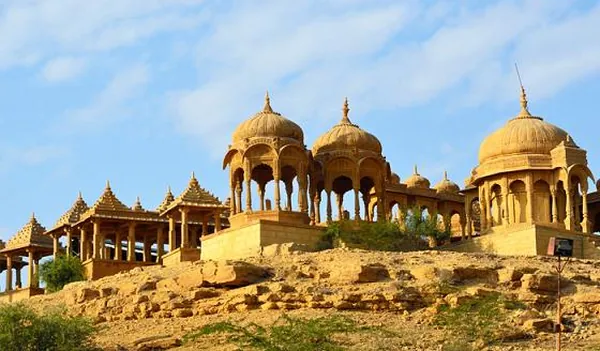
Located 6 km north of Jaisalmer on a desert ridge, Bada Bagh (Big Garden) features a series of majestic royal cenotaphs (*chhatris*) constructed in golden sandstone for the Maharawals of Jaisalmer, offering spectacular sunset photography against modern wind turbine farms.
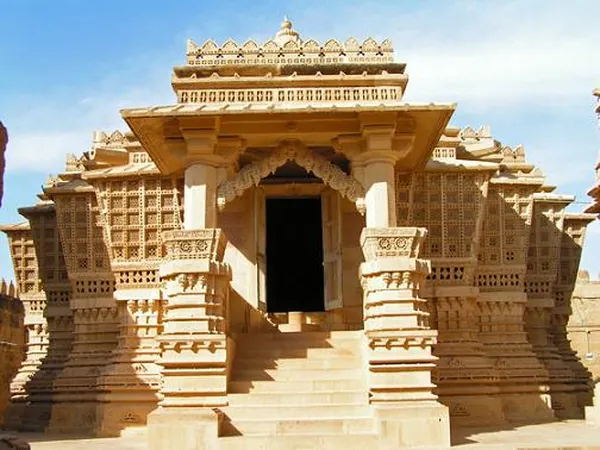
Enclosed within the fort bastions is a cluster of seven interconnected yellow sandstone Jain temples built between the 12th and 15th centuries. The temples feature ceilings carved with celestial dancers, torana arches, and the world famous *Gyan Bhandar* library containing rare 11th century palm leaf manuscripts.
Constructed in 1815 with a narrow ground floor that opens up into an elaborate top floor shaped like a dancing peacock, this haveli features 38 balconies supported by stone brackets shaped like leaping horses and elephants.
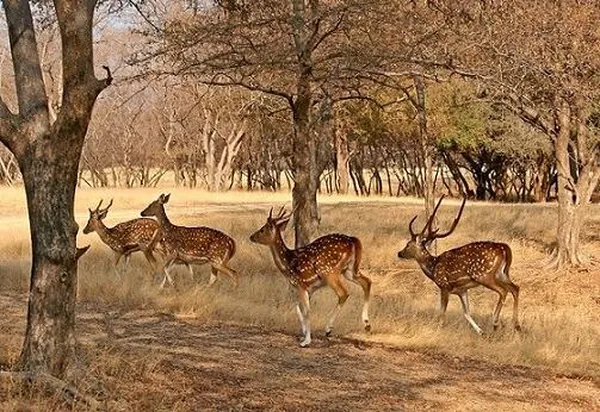
Covering over 3,162 sq km of Thar sand dunes and thorny scrubland, this national park is one of the last remaining refuges of the critically endangered *Great Indian Bustard (Godawan)*, desert foxes, Bengal foxes, chinkaras, and migratory imperial eagles.
Duration: 4 Nights / 5 Days
 Best Flights
 Best Prices
 Unique Holidays