- .
- info@earthtrip.in
-
INR
-
USD
INR
USD
Darrah Wildlife Sanctuary near Kota (celebrated across India as an integral ecological core of the Mukundara Hills Tiger Reserve, historically preserved as...
Darrah Wildlife Sanctuary near Kota (celebrated across India as an integral ecological core of the Mukundara Hills Tiger Reserve, historically preserved as the exclusive royal hunting game reserve / Shikar Gah of the Maharajas of Kota since the 18th century, sprawling across two parallel forested mountain ridges along the Chambal and Ahu river basins), situated just 50 km southeast of Kota in Rajasthan, is one of Western India's premier tiger and wildlife conservation sanctuaries.
Established as a state wildlife sanctuary in 1955 and upgraded into Rajasthan's third National Park and Tiger Reserve in 2013 across an expansive 250 sq km rugged territory, this dense dry deciduous forest reserve encompasses rolling Mukundara mountain passes (Darrah meaning 'pass' in local dialect), seasonal rocky ravines, and perennial river gorges.
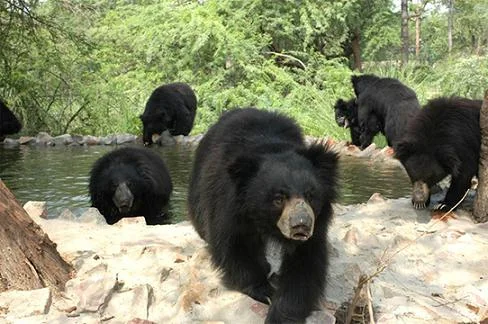
It's the home of apex predators including Royal Bengal tigers, Indian leopards, sloth bears, striped hyenas, and wolves, large herbivores such as sambar deer, spotted deer (chital), nilgai (blue bull), and wild boars, the historic 8th century Jhalawar Gagron border mountain routes where Rajput and Maratha warriors marched, the ancient Chandrabhaga stone temple ruins and 17th century royal hunting watchtowers (burjs) hidden deep within the forest canopy, over 250 species of resident and migratory birds including painted storks, crested serpent eagles, and yellow footed green pigeons, and an intensely tranquil wilderness atmosphere where the calls of barking deer echo through dense teak, dhok, and tendu woods.
It represents a rich Hadoti royal hunting heritage, Project Tiger conservation biology, and Mukundara mountain ridge ecology where Bengal tigers, ancient mountain passes, Chambal river tributaries, and dense dhok forests unite in Darrah Wildlife Sanctuary Kota.
Located along National Highway NH 52 (Kota Jhalawar Highway), it sits just 50 km from Kota Junction Railway Station (KOTA), 35 km from Jhalawar, 15 km from Gagron Fort (UNESCO World Heritage Site), and 240 km from Jaipur International Airport (JAI), easily accessible by private cabs, express buses, and guided jungle safari jeeps.

For centuries, the dense mountain passes of Darrah were fiercely protected by the royal rulers of Kota State as private hunting reserves for wild game.
This strict royal protection prevented deforestation and farmland encroachment, preserving an intact forest corridor that now provides an essential ecological link between Ranthambore Tiger Reserve and the forests of Central India.
Truth is, tracking tiger pugmarks through the historic stone walled game passes while listening to jungle alarm calls is an electrifying safari experience.
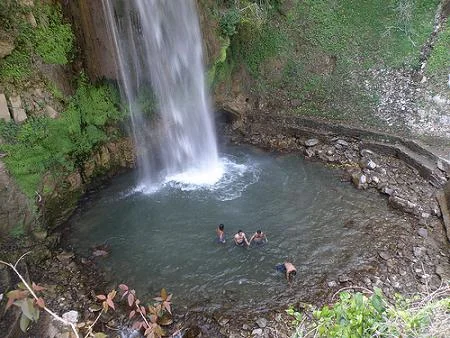
Predators & Herbivores: Beyond tigers and leopards, the sanctuary supports thriving populations of Indian wolves, jackals, jungle cats, chinkaras (Indian gazelles), and marsh crocodiles along river banks.
Medicinal Flora: The forest canopy is dominated by Anogeissus pendula (Dhok), Tendu, Kadam, and Gurjan trees, alongside valuable traditional medicinal herbs utilized by local Hadoti tribes.
Royal Watchtowers: Visitors can spot medieval stone pavilions and sniper platforms constructed by Kota kings to observe wildlife during royal monsoon camps.
Nearby Heritage: The sanctuary harmoniously integrates with the Hadoti heritage circuit, situated close to the UNESCO water fort of Gagron and the 8th century Sun Temple in Jhalrapatan.
After exploring Darrah Wildlife Sanctuary, take a boat safari through Chambal River Gorge at Garadia Mahadev, tour Kota Garh City Palace, or explore the water battlements of Gagron Fort.
Reaching Darrah Wildlife Sanctuary from Kota is very simple across Kota in Rajasthan.
Best Time to Visit:
Explore more famous wildlife sanctuaries, tiger reserves, and river gorges across Rajasthan.
 Family
 Family
 Family
 Family
 Family
 Family
 ★★★ Hotel
Hotel The Leisure Inn is established in the year 2013. At Hotel The Leisure Inn, we provid…
View Hotel Details ★★★ Hotel
Situated within walking distance of the City Palace of Kota, Rajasthan. Palkiya Haveli is …
View Hotel Details ★★ Hotel
Welcome to Hotel Surya Prime Kota, here we provide the finest hotel Kota services. There i…
View Hotel Details ★★★ Hotel
The Surya plaza Hotel in Kota, one of the finest luxury hotels in Kota is situated at Guma…
View Hotel Details ★★★ Hotel
Surya Royal Hotel Kota welcomes you to experience a completely delightful and wonderful st…
View Hotel Details ★★★ Hotel
Hotel Rallentino houses an outdoor pool and a restaurant. It offers complimentary WiFi acc…
View Hotel Details Attraction
Seven Wonders Park in Kota (celebrated across India as an extraordinary, globally inspired…
Explore Seven Wonders Park Attraction
Chambal Gardens in Kota (celebrated across Rajasthan as one of the state's most expansive,…
Explore Chambal Gardens Attraction
Jagmandir Palace and Kishore Sagar Lake in Kota (celebrated across Rajasthan as one of the…
Explore Jagmandir Palace and Kishore Lake Attraction
Sri Godavari Dham Temple in Kota (celebrated across Rajasthan as one of the most spiritual…
Explore Godavari Dham TempleExplore high-resolution photographs of iconic landmarks, temples, and scenic spots in Kota.
Essential visitor information regarding timings, entry tickets, location, nearby attractions, and travel guide in Kota.
Darrah Wildlife Sanctuary is famous as the core zone of Mukundara Hills Tiger Reserve, housing Bengal tigers, leopards, sloth bears, and deer herds.
Darrah Wildlife Sanctuary is famous as the core zone of Mukundara Hills Tiger Reserve, housing Bengal tigers, leopards, sloth bears, and deer herds.
It was historically preserved as the exclusive royal hunting game reserve (Shikar Gah) of the Maharajas of Kota since the 18th century.
It was historically preserved as the exclusive royal hunting game reserve (Shikar Gah) of the Maharajas of Kota since the 18th century.
It is located 50 km southeast of Kota city along National Highway NH-52 (Kota-Jhalawar Road), taking about 1 hour by car.
It is located 50 km southeast of Kota city along National Highway NH-52 (Kota-Jhalawar Road), taking about 1 hour by car.
Safaris operate daily from 6:00 AM to 10:00 AM and from 3:00 PM to 6:30 PM (October to June) with nominal forest entry and vehicle fees.
Safaris operate daily from 6:00 AM to 10:00 AM and from 3:00 PM to 6:30 PM (October to June) with nominal forest entry and vehicle fees.
Yes, Darrah was combined with Chambal Sanctuary and Jaswant Sagar to form the Mukundara Hills Tiger Reserve in 2013.
Yes, Darrah was combined with Chambal Sanctuary and Jaswant Sagar to form the Mukundara Hills Tiger Reserve in 2013.
Get a customized itinerary and the best deals on packages and hotels.
Enquire Now