- .
- info@earthtrip.in
-
INR
-
USD
INR
USD
Lohagarh Fort in Bharatpur (celebrated across military history as the 'Iron Fort' and universally acknowledged as the only truly invincible fort in Indian ...
Lohagarh Fort in Bharatpur (celebrated across military history as the 'Iron Fort' and universally acknowledged as the only truly invincible fort in Indian history, renowned for having never been captured by any invading army despite surviving thirteen ferocious sieges by the British East India Company under General Lord Lake in 1805), situated in the center of Bharatpur in Rajasthan, is one of India's supreme citadels of military engineering and Jat martial pride.
Constructed in 1732 AD by the legendary Jat ruler Maharaja Suraj Mal (the 'Plato of the Jat Tribe'), this colossal fortress was engineered with a double ring of fortifications: an outer earthen mud rampart over 100 feet thick that absorbed and neutralized British cannonballs without shattering, surrounded by a 250 foot-wide and 20 foot-deep deep water moat (Moti Jheel / Sujan Ganga Canal) fed by seasonal rivers.
It's the home of the historic Ashtadhatu Gateway (an eight metal spiked door originally brought from Delhi's Red Fort by Jawahar Singh in 1765 after defeating the Mughals), the soaring victory towers of Jawahar Burj and Fateh Burj commemorating historic military triumphs over the Mughals and British armies, the Government Museum inside the royal Kachahari Kalan hall exhibiting priceless 2nd century Kushan sculptures and royal Jat armory, the palatial Mahal Khas and Kamra Khas with carved sandstone pavilions and mural frescoes, the sacred twin shrines of Ganga Mandir and Laxmana Temple, and an intensely inspiring historical atmosphere that celebrates unyielding bravery and brilliant defensive tactics.
It represents a rich Bharatpur Jat martial history, 18th century mud bastion defensive architecture, and military invincibility where Ashtadhatu gates, Jawahar Burj victory towers, Sujan Ganga moats, and stone palaces unite in Lohagarh Fort Bharatpur.
Located in the center of Bharatpur town, it sits just 3 km from Bharatpur Junction Railway Station (BTE), 5 km from Keoladeo National Park (UNESCO World Heritage Site), 55 km from Agra Airport (AGR), and 180 km from Jaipur International Airport (JAI), easily accessible by auto rickshaws, taxis, and heritage walking tours.

In 1805, British Commander in-Chief Lord Lake laid siege to Lohagarh Fort for over four months with heavy artillery, but the thick mud ramparts swallowed the exploding cannonballs harmlessly.
After losing over 3,000 soldiers in repeated failed assaults, the British Army was forced to sign a peace treaty with Maharaja Ranjit Singh, cementing Lohagarh's reputation as the only impregnable fort in India.
Truth is, standing atop the massive mud reinforced bastions where British artillery was repelled is an exhilarating lesson in strategic military innovation.
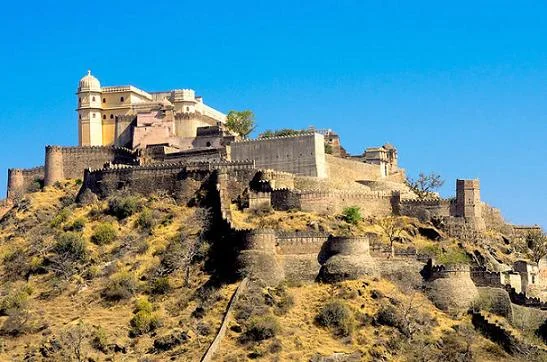
Ashtadhatu Gate: In 1765, Maharaja Jawahar Singh captured Delhi and brought back the legendary eight metal gate originally looted from Chittorgarh by Alauddin Khilji, installing it permanently at Lohagarh's northern entrance.
Jawahar & Fateh Burj: The high victory towers were erected to commemorate the defeat of the Mughal imperial armies in 1765 and the British forces in 1805.
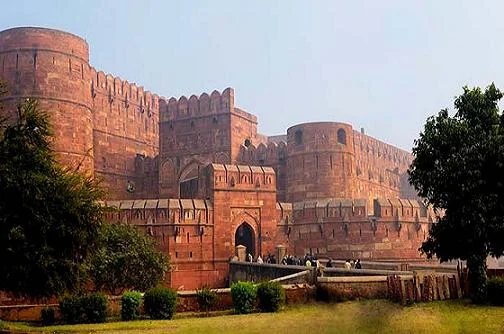
State Museum: The museum preserves an extraordinary collection of ancient sculptures from Mathura and Bharatpur dating back to the 2nd century BC, alongside royal battle armory.
Palace Complex: Visitors can tour Mahal Khas and Badan Singh's palace, featuring carved sandstone jharokhas, marble fountains, and historic court durbars.

After exploring Lohagarh Fort, visit the Government Museum, offer prayers at Ganga Mandir, or spend the afternoon watching migratory birds at Keoladeo National Park.
Reaching Lohagarh Fort in Bharatpur is very simple across Bharatpur in Rajasthan.
Best Time to Visit:
Explore more famous mud forts, bird sanctuaries, and palaces across Rajasthan.
 Golden Triangle
 Golden Triangle
 ★★★ Hotel
Hotel Sonar Haveli- is ideally located on Jaipur-Agra highway (NH-11) away from the hustle…
View Hotel Details ★★★ Hotel
Our hotel has established a reputation for redefining the paradigm of luxury and excellenc…
View Hotel Details ★★★ Hotel
Geetanjali edifice have twenty six furnished , spacious rooms and suites. the complete pla…
View Hotel Details ★ Hotel
Sanctuary tourist Lodge is a budget Guest House approved from Department of Tourism, Gover…
View Hotel Details ★★★★ Hotel
Laxmi Vilas Palace is the ideal point of departure for your excursions in Bharatpur. With …
View Hotel Details ★★★ Hotel
The Birder's Inn is the perfect perch. Located a mere stone's throw from the entrance to t…
View Hotel DetailsKeoladeo National Park in Bharatpur (celebrated globally as a UNESCO World Heritage Site, …
Explore Bharatpur National Park Attraction
Sri Ganga Mandir in Bharatpur (celebrated across Northern India as one of the most archite…
Explore Ganga Temple Attraction
Sri Banke Bihari Temple in Bharatpur (celebrated across the Braj region as one of Rajastha…
Explore Banke Bihari Temple Attraction
Sri Laxmana Temple in Bharatpur (celebrated across Northern India as one of the rarest, ol…
Explore Laxmana TempleExplore high-resolution photographs of iconic landmarks, temples, and scenic spots in Bharatpur.
Essential visitor information regarding timings, entry tickets, location, nearby attractions, and travel guide in Bharatpur.
It is known as the Iron Fort (Lohagarh) because of its impregnable strength; it survived thirteen British sieges and was never captured in battle.
It is known as the Iron Fort (Lohagarh) because of its impregnable strength; it survived thirteen British sieges and was never captured in battle.
Lohagarh Fort was built in 1732 AD by the famous Jat king Maharaja Suraj Mal using innovative mud-layered ramparts and a deep water moat.
Lohagarh Fort was built in 1732 AD by the famous Jat king Maharaja Suraj Mal using innovative mud-layered ramparts and a deep water moat.
The Ashtadhatu Gate is an eight-metal door brought from Delhi's Red Fort by Maharaja Jawahar Singh in 1765 after defeating Mughal forces.
The Ashtadhatu Gate is an eight-metal door brought from Delhi's Red Fort by Maharaja Jawahar Singh in 1765 after defeating Mughal forces.
The fort grounds are open daily from sunrise to sunset with free entry; the Government Museum inside is open 9:45 AM to 5:15 PM (ticket ?20).
The fort grounds are open daily from sunrise to sunset with free entry; the Government Museum inside is open 9:45 AM to 5:15 PM (ticket ?20).
The Government Archaeological Museum is housed in the royal Kachahari Kalan hall displaying ancient Kushan sculptures, weapons, and coins.
The Government Archaeological Museum is housed in the royal Kachahari Kalan hall displaying ancient Kushan sculptures, weapons, and coins.
Get a customized itinerary and the best deals on packages and hotels.
Enquire Now