- .
- info@earthtrip.in
-
INR
-
USD
INR
USD
Jantar Mantar, standing as a monumental UNESCO World Heritage open air stone observatory in the historic Walled City of Jaipur in Rajasthan, represents the...
Jantar Mantar, standing as a monumental UNESCO World Heritage open air stone observatory in the historic Walled City of Jaipur in Rajasthan, represents the pinnacle of 18th century Rajput astronomical science and architectural brilliance.
Designed and constructed between 1728 and 1734 AD by Jaipur's visionary founder, the astronomer king Maharaja Sawai Jai Singh II, this extraordinary scientific complex features 19 monumental architectural instruments (Yantras) sculpted from local sandstone and white marble for naked eye celestial tracking.
It's the home of the colossal 27 meter-tall Vrihat Samrat Yantra standing as the world's largest stone sundial accurate to within two seconds, the dual sunken hemispherical bowls of the Jai Prakash Yantra, 12 zodiac constellation instruments of the Rashivalaya Yantra, and the monumental Ram Yantra for measuring celestial altitudes.
It represents a rich scientific sanctuary where ancient Vedic astronomy, Islamic astrolabe mathematics, European geometry, and grand Rajasthani stonecraft unite in the heart of the Pink City.
Located directly opposite the City Palace entrance and just a five minute walk from Hawa Mahal, it sits 5 km from Jaipur Junction Railway Station (JP) and 13 km from Jaipur International Airport (JAI), easily accessible by metro (Chhoti Chaupar station), auto rickshaw, or tourist cab.
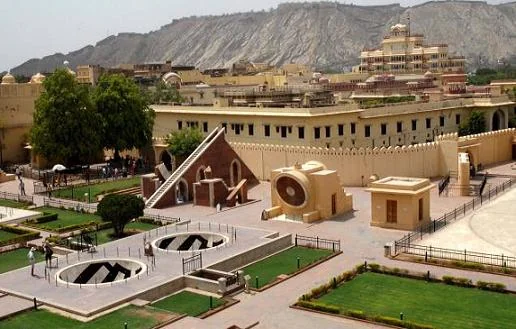
In the early 1700s, Maharaja Sawai Jai Singh II studied Ptolemaic Greek astronomy, Persian Zij tables, and European planetary calculations, concluding that small brass instruments were prone to physical distortion and measurement errors.
To achieve unprecedented precision, he commissioned colossal stone and marble instruments anchored deeply in stone foundations across five royal cities, with Jaipur's Jantar Mantar serving as his grandest and best preserved observatory.
Truth is, despite being built nearly three centuries ago, these architectural instruments remain fully functional, accurately predicting solar eclipses, tracking planetary transits, and calculating local Jaipur solar time.
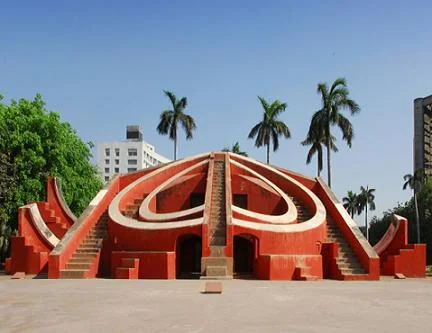
Vrihat Samrat Yantra: Towering 27 meters (90 feet) high, this giant equinoctial sundial casts a shadow that visibly sweeps across its calibrated marble quadrant at 1 millimeter per second, measuring local time with a precision of 2 seconds.
Jai Prakash Yantra: Composed of two sunken subterranean hemispherical marble bowls mapped with inverted celestial coordinates, observers walk inside along stone passages to line up stars with crosswires stretched overhead.

Rashivalaya Yantras: A circle of 12 distinct instruments, each angled precisely toward one of the 12 zodiac constellations (Aries, Taurus, Gemini, etc.), enabling royal astrologers to draft exact horoscopes the moment a sign crossed the meridian.
Evening Sound & Light Show: At nightfall, an engaging audio visual show illuminates the stone yantras, narrating the scientific passions of Jai Singh II under the starry desert sky.

After exploring Jantar Mantar, step across the square into the royal courtyards of City Palace, photograph the iconic honeycombed facade of Hawa Mahal, or journey to the hilltop ramparts of Amber Fort.
Reaching Jantar Mantar in Jaipur is simple and convenient across Jaipur in Rajasthan.
Best Time to Visit:
Explore more UNESCO World Heritage monuments and historic royal palaces across Rajasthan.
 Family
 Family
 Family
 Golden Triangle
 Family
 ★★★★★ Hotel
The Ananta Udaipur Resort, located in Monsoon Palace, Udaipur, is a popular choice for t…
View Hotel Details ★★★ Hotel
Providing 16 nicely decorated guestrooms, this hotel is nestled along the gentle mountain …
View Hotel Details ★★★ Hotel
Aaram Baagh Udaipur Hotel is a great base from which to explore this vibrant city. Only …
View Hotel Details ★★★ Hotel
Hotel Kurabar Kothi provides a most conducive spot for you to take a break from your busy …
View Hotel Details ★★★★ Hotel
Lake Nahargarh Palace - A Justa Resort is a great base from which to explore this vibran…
View Hotel Details ★★★★ Hotel
The striking architecture of the Rajputana Udaipur – A Justa Resort is accentuated by th…
View Hotel Details Attraction
Located in the historic destination of Udaipur, the remarkable City Palace stands as an …
Explore City Palace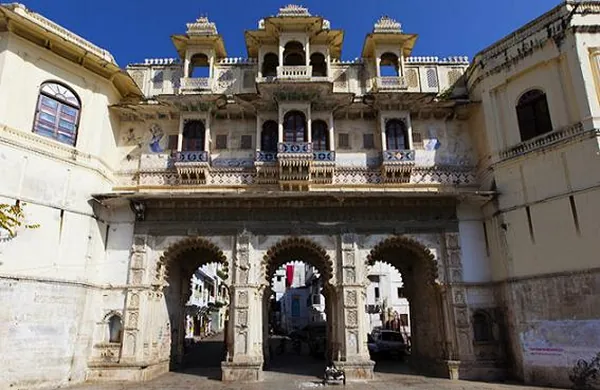 Attraction
Located in the historic destination of Udaipur, the remarkable Bagore Ki Haveli stands a…
Explore Bagore Ki Haveli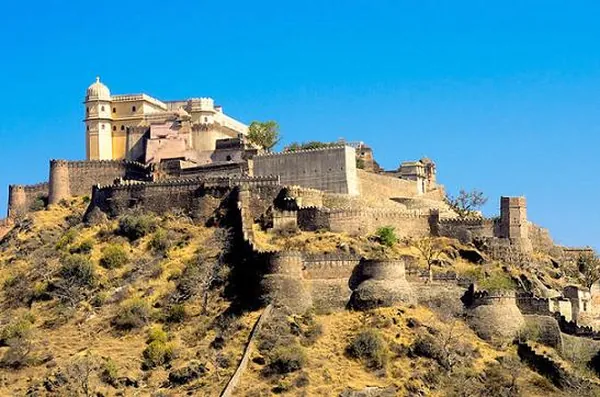 Attraction
Located in the historic destination of Udaipur, the remarkable Kumbhalgarh Fort stands a…
Explore Kumbhalgarh Fort Attraction
Located in the historic destination of Udaipur, the remarkable Lake Pichola stands as an…
Explore Lake Pichola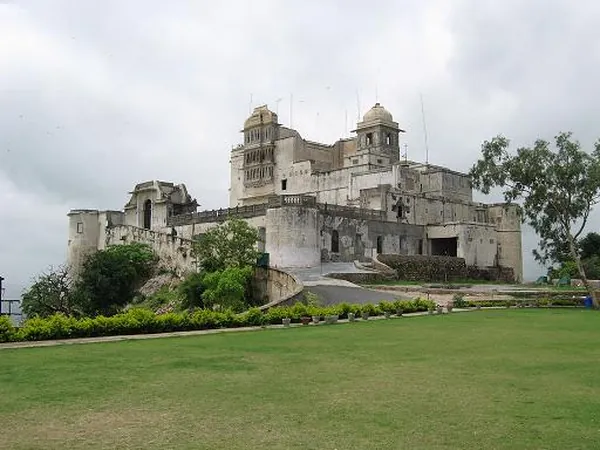 Attraction
Located in the historic destination of Udaipur, the remarkable Sajjan Garh (Mansoon Pala…
Explore Sajjan Garh (Mansoon Palace) Attraction
Located in the historic destination of Udaipur, the remarkable Ambrai Ghat stands as an …
Explore Ambrai Ghat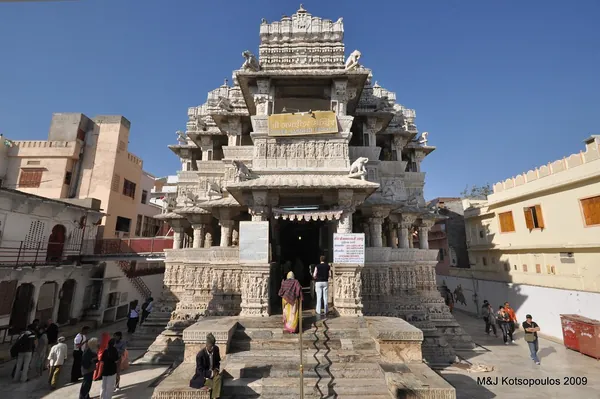 pilgrimage
Located in the historic destination of Udaipur, the remarkable Jagdish Temple stands as …
Explore Jagdish Temple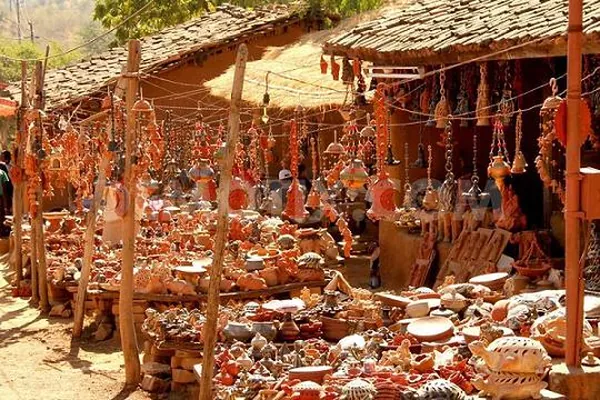 Attraction
Located in the historic destination of Udaipur, the remarkable Shilpgram stands as an la…
Explore Shilpgram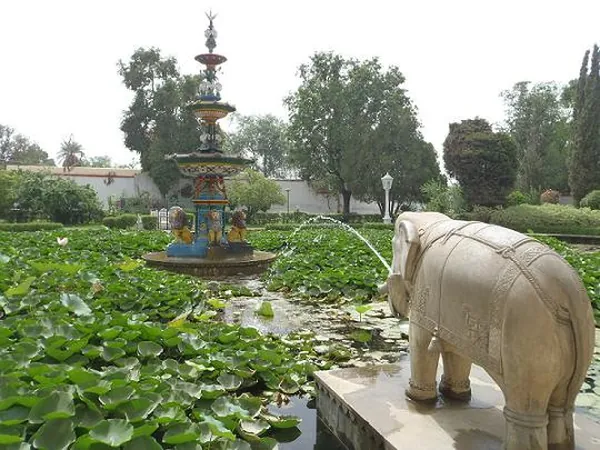 Attraction
Located in the historic destination of Udaipur, the remarkable Saheliyon Ki Bari stands …
Explore Saheliyon Ki BariExplore high-resolution photographs of iconic landmarks, temples, and scenic spots in Udaipur.
Essential visitor information regarding timings, entry tickets, location, nearby attractions, and travel guide in Udaipur.
Built between 1728 and 1734 AD by Maharaja Sawai Jai Singh II, Jantar Mantar is a UNESCO World Heritage Site featuring 19 stone astronomical instruments including the world's largest stone sundial.
Built between 1728 and 1734 AD by Maharaja Sawai Jai Singh II, Jantar Mantar is a UNESCO World Heritage Site featuring 19 stone astronomical instruments including the world's largest stone sundial.
The Vrihat Samrat Yantra is the world's largest stone sundial (27 meters tall). Its shadow moves at 1 mm per second to measure local solar time with an accuracy of 2 seconds.
The Vrihat Samrat Yantra is the world's largest stone sundial (27 meters tall). Its shadow moves at 1 mm per second to measure local solar time with an accuracy of 2 seconds.
The Rashivalaya Yantras are a set of 12 distinct stone instruments, each aligned with one of the 12 zodiac constellations to measure horoscope and astrological coordinates.
The Rashivalaya Yantras are a set of 12 distinct stone instruments, each aligned with one of the 12 zodiac constellations to measure horoscope and astrological coordinates.
Jantar Mantar is open daily from 9:00 AM to 5:00 PM. Tickets cost ?50 for Indian visitors (?15 for students) and ?200 for foreign visitors (?100 for students).
Jantar Mantar is open daily from 9:00 AM to 5:00 PM. Tickets cost ?50 for Indian visitors (?15 for students) and ?200 for foreign visitors (?100 for students).
Midday between 11:30 AM and 1:30 PM is the best time because the sun is directly overhead, allowing you to observe clear shadow movements on the sundials.
Midday between 11:30 AM and 1:30 PM is the best time because the sun is directly overhead, allowing you to observe clear shadow movements on the sundials.
Get a customized itinerary and the best deals on packages and hotels.
Enquire Now