Pushkar — Travel Guide
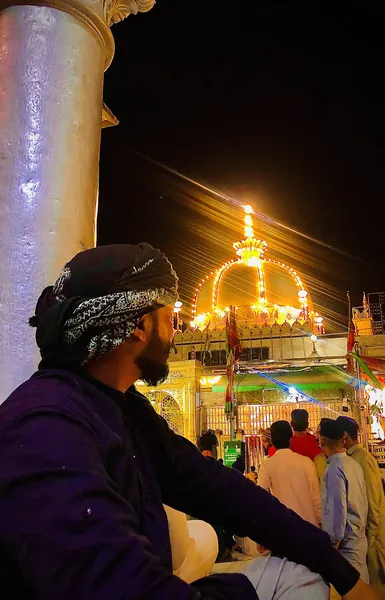
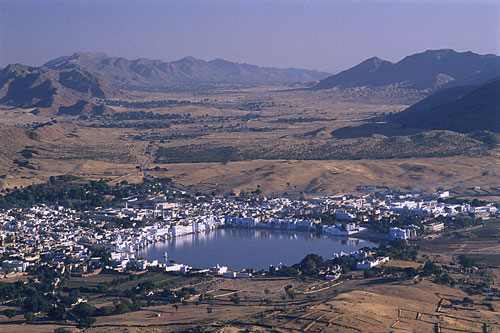
Pushkar (revered in ancient Vedic texts as Tirtharaj — the King of all Hindu Pilgrimage Sites), is an ancient sacred town resting along the edge of the Thar Desert in Rajasthan. Encircled by the rocky ridges of the Aravalli hills and the holy Nag Pahar, Pushkar is steeped in mythological significance, home to over 500 Hindu temples and one of the world's few sanctums dedicated to Lord Brahma.
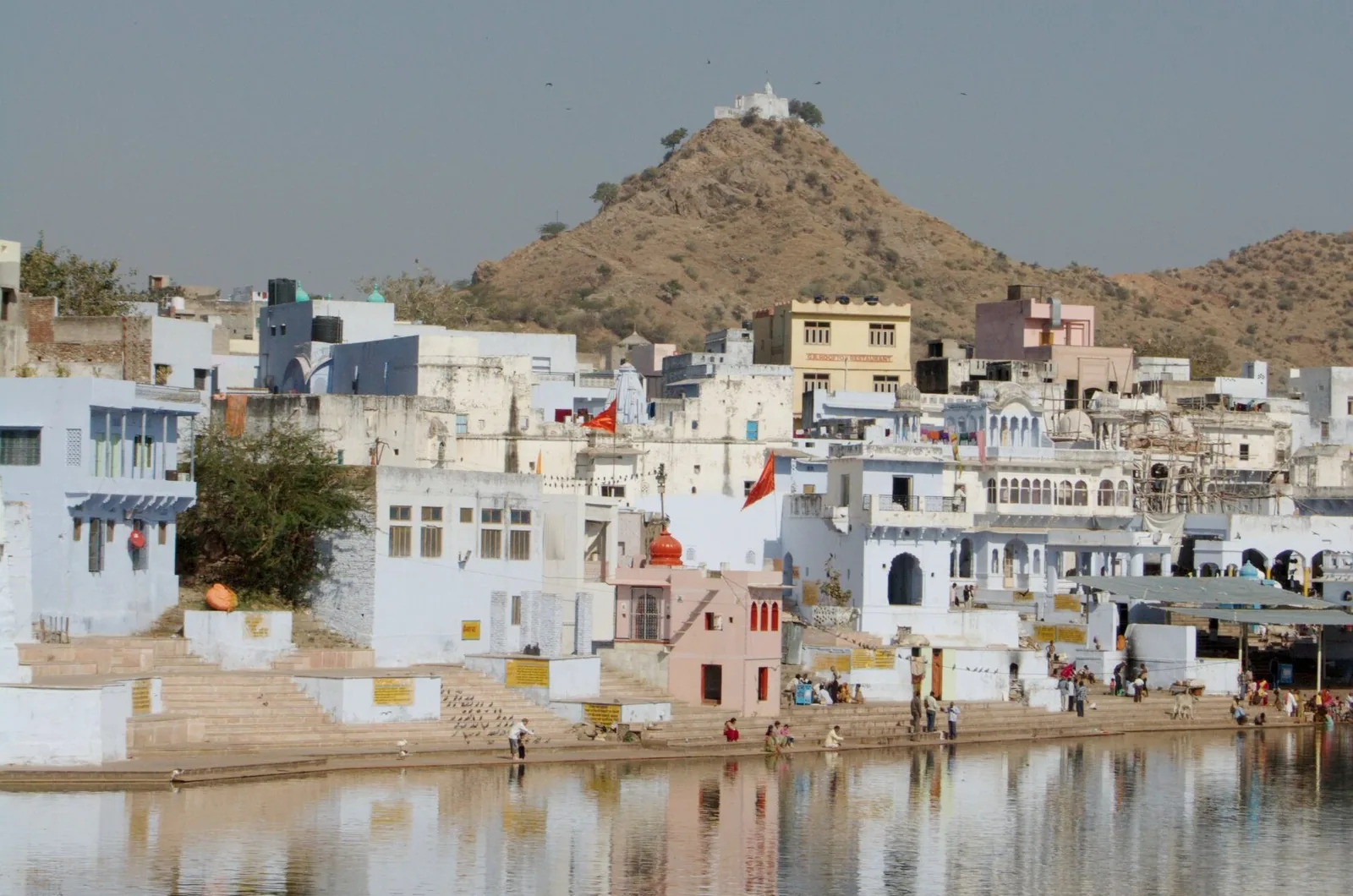
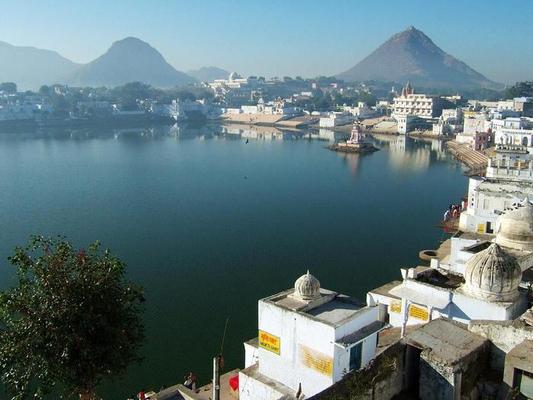
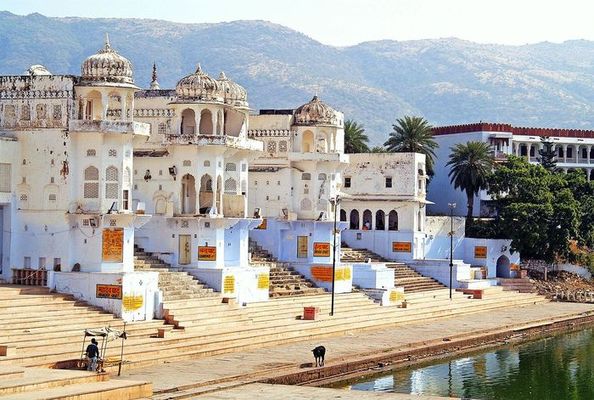
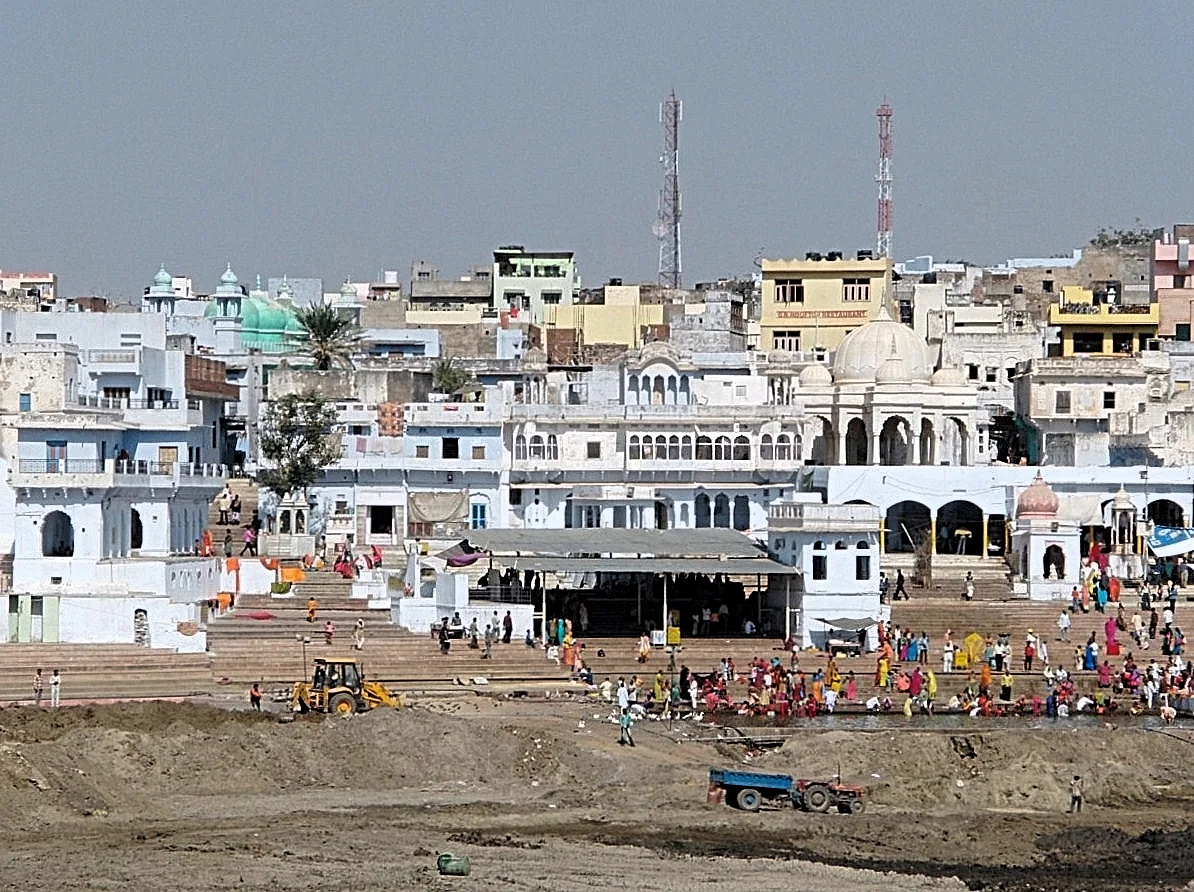 The Sacred Waters and Whitewashed Pavilions of the 52 Bathing Ghats Surrounding Pushkar Lake
According to legend, the holy Pushkar Lake emerged when a lotus petal dropped from the hands of Lord Brahma. Today, pilgrims gather along its 52 Sacred Bathing Ghats to take purifying ritual dips and witness the evening *Maha Aarti*, when oil lamps float on the water while temple bells echo across the hills.
The town's centerpiece is the 14th century Jagatpita Brahma Temple with its distinct red shikhara spire. Above the town on Ratnagiri Hill sits the Savitri Devi Temple, reached by scenic ropeway for panoramic desert sunrises. Every autumn, the town transforms into a colorful spectacle during the world famous Pushkar Camel Fair, drawing traders, folk dancers, and travelers from around the globe.
Located just 14 km from Ajmer and 145 km from Jaipur, Pushkar connects smoothly with Jodhpur and Udaipur, offering travelers an enchanting blend of spiritual devotion, organic rose gardens, desert dunes, and bohemian cafe culture.
Best Time to Visit Pushkar:
Pushkar is best experienced during the cooler autumn and winter months:
- October to March (Winter / Peak Pilgrimage & Camel Fair Season):** Daytime temperatures range pleasantly between 10°C and 25°C with clear sunny skies, cool breezes, and comfortable nights. Perfect for temple darshans, taking holy dips in Pushkar Lake, riding the Savitri ropeway, desert safaris, and attending the world famous Pushkar Camel Fair (Pushkar Mela) during Kartik Purnima in October/November.
- July to September (Monsoon / Lush Aravalli Hills):** Seasonal rains (approx. 500 mm) rejuvenate Pushkar Lake and turn the surrounding Nag Pahar hills emerald green.
- April to June (Summer / Warm Desert Sun):** Temperatures range from 28°C to 41°C. Best suited for early morning lake walks and peaceful, uncrowded temple darshans.
Famous Pushkar Culinary Delicacies:
- Pushkar Malpua: Crispy edged, syrup soaked pancakes prepared with rich thickened milk (rabri), pure desi ghee, and saffron at heritage sweet shops like Sarveshwar Sweets and Radhey Radhey Sweets.
- Gulkand Lassi & Rabri Falooda: Thick creamy yogurt lassi infused with organic rose petal preserve (*Gulkand*) and topped with rich mawa rabri.
- Pure Vegetarian International Cafe Fare: Wood fired pizzas, Israeli falafel platters, shakshuka, and organic herbal teas served in lakeside rooftop cafes.
By Air:
The closest operational airport is Kishangarh Airport (Airport Code: KQH - 42 km / 1 hour drive via NH-48 and Pushkar Bypass), which operates scheduled flights to New Delhi, Ahmedabad, Hyderabad, and Surat. The primary major international and domestic gateway is Jaipur International Airport (Airport Code: JAI - 145 km / 2.5 hours drive via the 6-lane NH-48 highway), offering non stop flights to all major Indian state capitals and Gulf destinations. Prepaid taxis and private cabs connect both airports directly to Pushkar.
By Train:
Ajmer Junction Railway Station (Station Code: AII), situated just 14 km east across the scenic Nag Pahar mountain pass (about 30 minutes drive), is the primary railway hub:
- Vande Bharat Express (Train 20977/20978):** Semi high speed express connecting Delhi Cantonment to Ajmer/Pushkar in just 5 hours 15 minutes.
- Ajmer Shatabdi Express:** Daily superfast Shatabdi connecting New Delhi in 6 hours 45 minutes.
- Direct Express Trains:** Daily trains connect Ajmer directly to Mumbai Central, Ahmedabad, Kolkata Howrah, and Bengaluru.
- Taxis, auto rickshaws, shared jeeps, and RSRTC mountain buses operate continuously between Ajmer Railway Station and Pushkar bus stand.
By Road:
Pushkar is connected via National Highway 58 (NH-58) and the well paved Nag Pahar mountain pass road:
- From Ajmer (~14 km / 30 minutes):** Short scenic drive through the Nag Pahar mountain pass.
- From Jaipur (~145 km / 2.5 hours):** 6-lane expressway drive via NH-48.
- From Jodhpur (~215 km / 4 hours):** Highway drive via Beawar on NH-25.
- From Udaipur (~275 km / 5 hours):** Smooth drive via Bhilwara on NH-48.
- State Buses:** RSRTC operates daily Super Luxury Volvo AC and sleeper buses to Pushkar from Jaipur, Delhi ISBT Kashmere Gate, Jodhpur, and Bikaner.
Shopping in Pushkar is world famous for natural rose products, bohemian clothing, handcrafted silver jewellery, and leather crafts:
- Organic Pushkar Rose Water & Gulkand: 100% pure distilled Damask rose water, rose face mists, and sweet organic *Gulkand* from local rose farm distilleries.
- Bohemian Apparel & Tie Dye Fabrics: Flowing cotton harem pants, mirrorwork jackets, printed silk scarves, and handmade embroidered bags from Sadar Bazaar.
- Handcrafted Silver Jewellery: Traditional tribal silver earrings, oxidized rings, nose pins, and semi precious stone pendants from Main Bazaar.
- Handmade Leather Journals & Mojaris: Embossed camel leather notebooks, vintage leather bags, and colorful embroidered shoes.
- Hand Rolled Incense (*Agarbatti*) & Ittar: Sandalwood, rose, and jasmine natural fragrances sold in glass decanters.
Must-Visit Places in Pushkar
Pushkar offers a unique blend of sacred temple shrines, mythological bathing ghats, desert camel dunes, and hilltop sunrise viewpoints:
1. Pushkar Lake & 52 Sacred Bathing Ghats (Tirtharaj Sanctum)
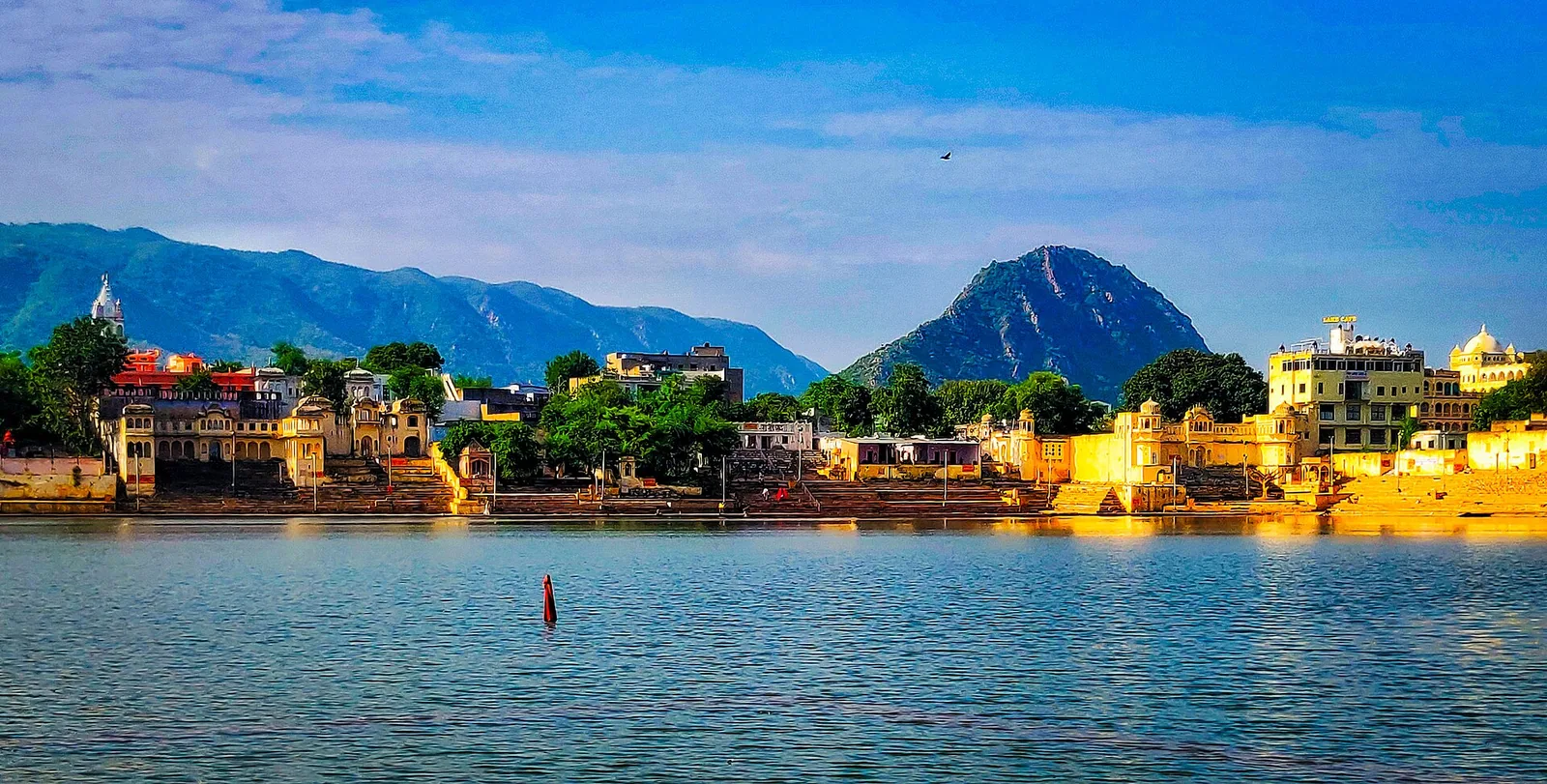
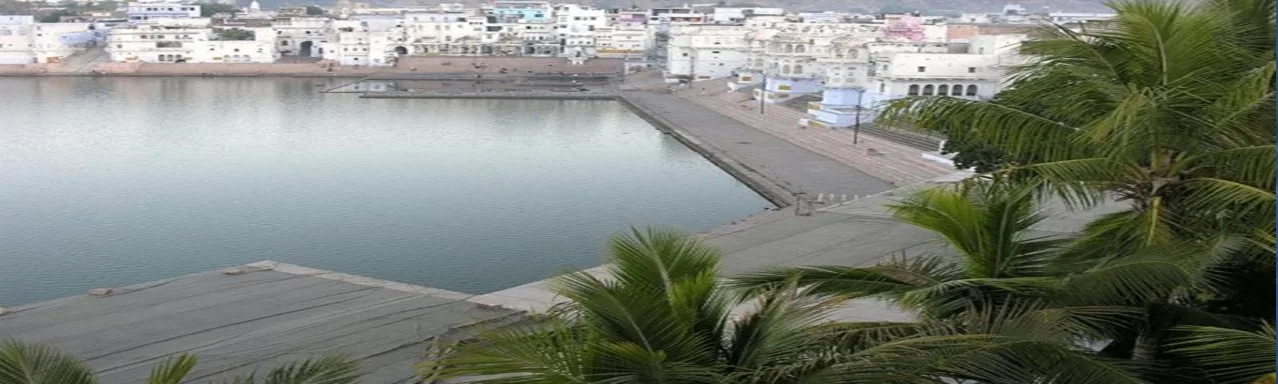
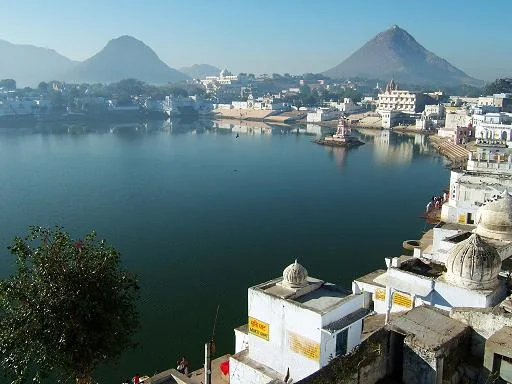
The spiritual focal point of the town, Pushkar Lake is a natural crescent shaped sacred lake surrounded by 52 historic bathing ghats and over 500 whitewashed temples. Key ghats include *Brahma Ghat* (where Lord Brahma performed yajna), *Varaha Ghat*, and *Gau Ghat* (where Mahatma Gandhi's ashes were immersed). At sunset, the lake comes alive with the sound of blowing conch shells, chanting, and floating oil diyas during the evening Maha Aarti.
Pushkar Lake — 52 Sacred Bathing Ghats and Whitewashed Temples in Pushkar
2. Jagatpita Brahma Temple & Red Shikhara Sanctum (14th Century)
Standing as one of the extremely rare temples dedicated to the creator god Lord Brahma in the world, the Brahma Temple dates back to the 14th century with foundations believed to be 2,000 years old. Built in stone slabs and marble, the temple features an iconic bright red spire (*shikhara*), a silver coin studded floor, and a life sized four faced idol of Lord Brahma (*Chaturmukhi Brahma*).
 Jagatpita Brahma Temple — Rare 14th Century Temple with Red Spire Dedicated to Lord Brahma
3. Savitri Devi Temple & Ratnagiri Hill Passenger Ropeway
Perched high atop the steep Ratnagiri Hill overlooking Pushkar, the Savitri Temple is dedicated to Goddess Savitri, the estranged first consort of Lord Brahma. Accessible either via a scenic 15 minute passenger aerial ropeway (*Pushkar Cable Car*) or an uphill climb of 1,100 stone steps, the hilltop shrine offers breathtaking 360-degree sunrise and sunset views across Pushkar Lake and the Thar sand dunes.
 Savitri Devi Temple — Hilltop Temple on Ratnagiri Hill Accessible via Scenic Passenger Ropeway
4. Pushkar Camel Fair Grounds & Desert Mela Celebrations (Kartik Purnima)
Held annually during the auspicious Hindu month of Kartik (October/November), the Pushkar Camel Fair (Pushkar Mela) is one of the world's largest livestock fairs. Over 50,000 decorated camels, horses, and cattle converge on the desert dunes alongside thrilling camel races, turban tying competitions, moustache contests, and Rajasthani folk music performances under the full moon.
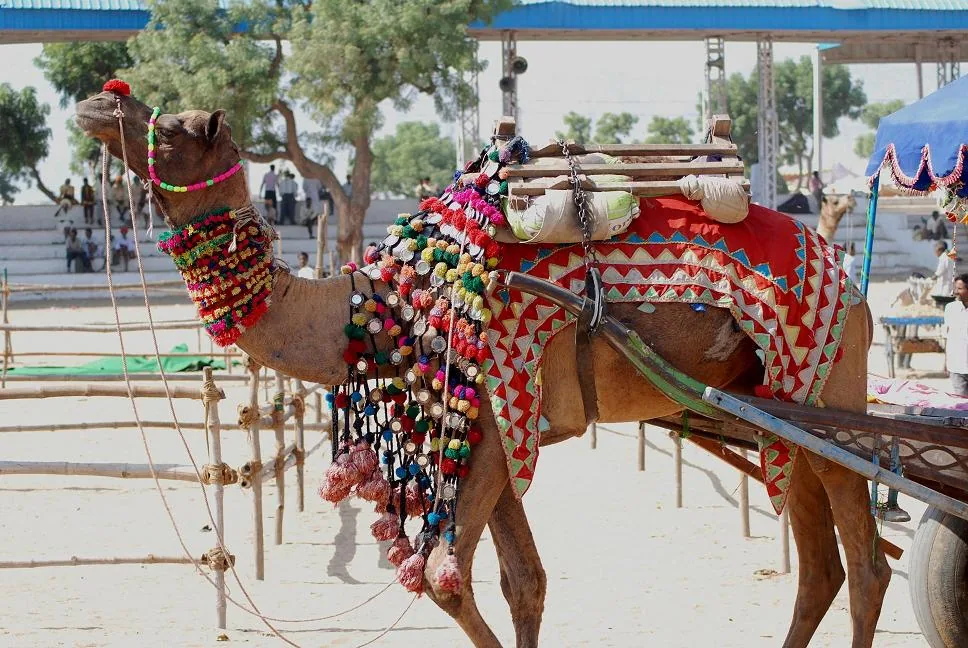 Pushkar Camel Fair — World Famous Annual Cultural and Livestock Desert Festival in Pushkar
5. Varaha Temple & 12th Century Vishnu Boar Incarnation Shrine
Constructed in the 12th century by Chauhan ruler King Anaji Chauhan, the Varaha Temple is the oldest and largest temple in Pushkar. Dedicated to Lord Vishnu's third incarnation as a wild boar (*Varaha*), the fortified stone temple features impressive medieval stone carvings and fortified entry gates that withstood historical sieges.
 Varaha Temple — 12th Century Ancient Shrine Dedicated to Lord Vishnu's Boar Incarnation
6. Old Rangji Temple & Dravidian Rajput Fusion Architecture (1823)
Commissioned in 1823 by Seth Puran Mal Ganeriwal, this temple dedicated to Lord Rangji (Lord Vishnu) features a towering South Indian Dravidian gopuram gateway blended with traditional Rajput arches and pagodas.
7. Pap Mochani Temple & Gayatri Hill Sunrise Point
Situated atop Gayatri Hill north of Pushkar, this ancient pink shrine dedicated to Goddess Gayatri is revered for liberating devotees from cardinal sins, offering tranquil sunrise views overlooking the sacred valley.
8. Desert Sand Dunes Safari & Sunset Camel Rides (Thar Outskirts)
On the western desert fringes of Pushkar, rolling golden sand dunes provide the perfect setting for afternoon camel safaris, quad biking, desert camping, and vibrant Kalbelia campfire dance performances.
9. Pushkar Main Bazaar & Rose Garden Walking Circuits
The bustling central street of Pushkar is lined with vibrant shops selling organic rose oil, pure gulkand, handcrafted leather notebooks, tie dye bohemian apparel, silver jewellery, and famous local sweet shops.
Popular Hotels in Pushkar
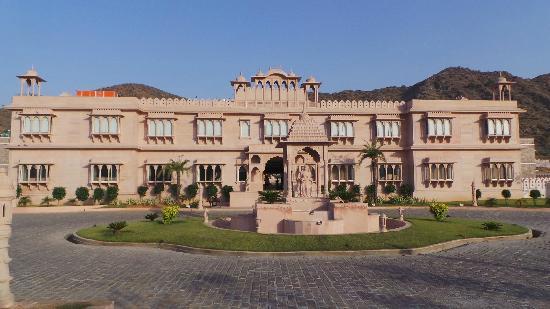 Hotel
Hotel
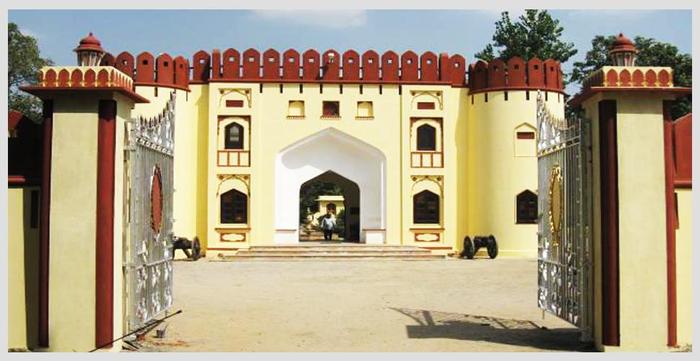 Hotel
Hotel
 Hotel
Hotel
 Hotel
Hotel
 Hotel
Hotel
 Hotel
Hotel
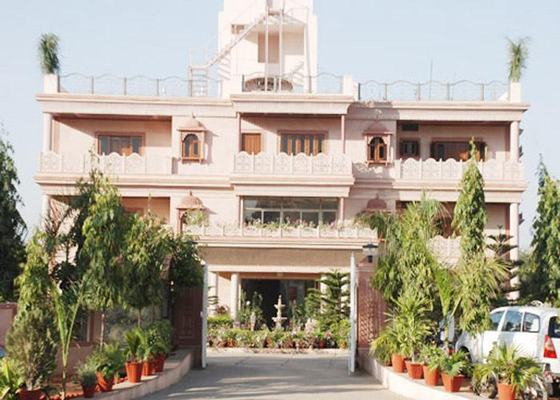 Hotel
Hotel
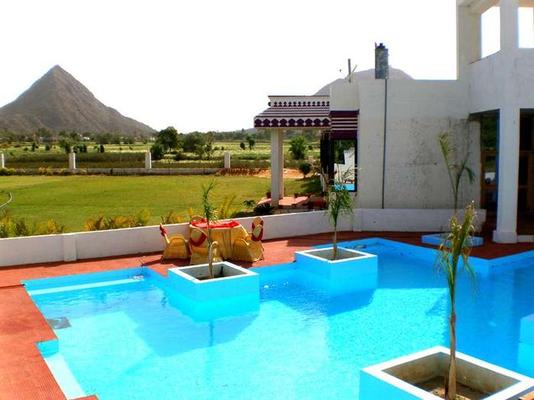 Hotel
Hotel
 Hotel
Hotel
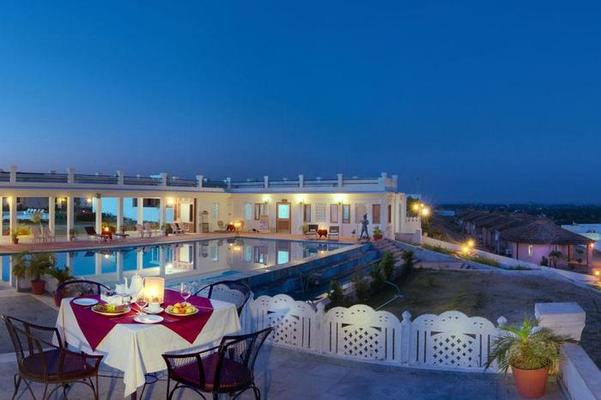 Hotel
Hotel
Tour Packages from Pushkar
 Package
 Package
 Package
Top Places to Visit in Pushkar
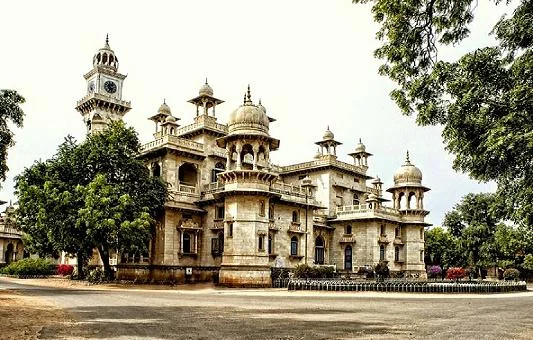
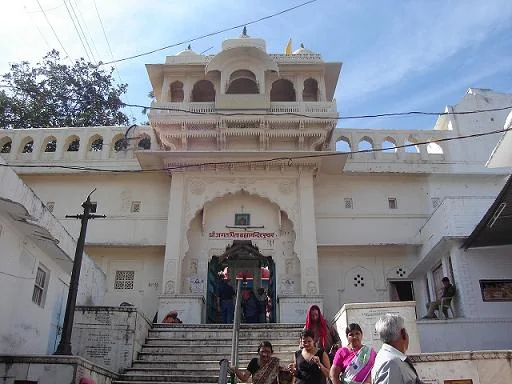
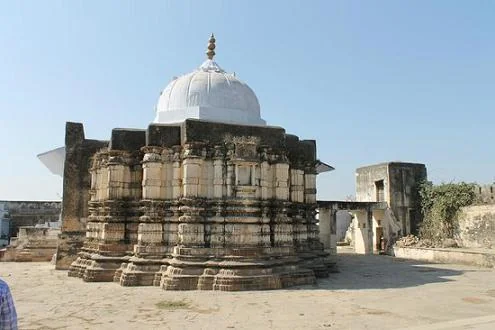
Pushkar Photo Gallery & Attractions
Explore high-resolution photographs of iconic temples, historical monuments, and scenic landmarks in Pushkar.
Plan Your Pushkar Trip Now
Get the best verified hotel deals and customized tour packages. Book directly on EarthTrip and save up to 45%!