- .
- info@earthtrip.in
-
INR
-
USD
INR
USD
Sanchi Stupa, crowning a peaceful hilltop near Bhopal and Vidisha in Madhya Pradesh, is one of India's oldest and best preserved Buddhist stone sanctuaries...
Sanchi Stupa, crowning a peaceful hilltop near Bhopal and Vidisha in Madhya Pradesh, is one of India's oldest and best preserved Buddhist stone sanctuaries, recognized globally as a UNESCO World Heritage Site.
Commissioned in the 3rd century BC by Mauryan Emperor Ashoka the Great, this sacred complex preserves over 1,300 years of unbroken Buddhist art, monastic learning, and imperial history from the Mauryan era through the Shunga, Satavahana, and Gupta empires.
It's the home of the monumental 54 foot high Great Stupa (Stupa 1) encasing sacred relics of Lord Buddha, four elaborately carved stone Torana gateways narrating Jataka tales, Stupa 3 housing the holy relics of chief disciples Sariputta and Mahamoggallana, polished Ashokan sandstone pillars, and ancient rock monasteries overlooking the fertile Betwa River valley.
It represents a rich cultural proof of early Indian stone carving and Buddhist philosophy, where pilgrims, scholars, and world travelers come to study ancient dharma along the hillside.
Located 9 km southwest of Vidisha and 45 km northeast of Bhopal, it sits directly along National Highway 146, accessible within an hour's drive from Raja Bhoj Airport.

Emperor Ashoka chose this quiet hilltop around 250 BC after embracing Buddhism following the Kalinga war. His decision was personal as well. Ashoka had served as governor of Ujjayini and married Devi, the daughter of a wealthy merchant from neighboring Vidisha.
Devi established the hilltop as a monastic sanctuary. The original brick stupa built by Ashoka was later encased in dressed sandstone blocks during the Shunga period, doubling its size and adding an elevated circular circumambulation path (pradakshina patha).
Truth is, the four grand Torana gateways were sculpted in the 1st century BC by master ivory and stone carvers from Vidisha under the patronage of Satavahana rulers. Their work remains among the most detailed figurative relief art in the ancient world.

The Great Stupa features a solid hemispherical stone dome (Anda) measuring 120 feet in diameter. At its summit sits a square railed balcony (Harmika) enclosing a three tiered stone umbrella (Chattra) that represents the Three Jewels of Buddhism: the Buddha, the Dharma (teachings), and the Sangha (community).
The four Torana gateways facing North, South, East, and West display intricate narrative friezes. Because early Buddhist art avoided depicting the Buddha in human form, you'll see him represented through sacred symbols: footprints (Paduka), the Bodhi tree, the Wheel of Law (Dharmachakra), an empty throne, and the umbrella.
The East Gateway features the famous bracket figure of the tree nymph Shalabhanjika, while the South Gateway illustrates the seven incarnations of the Buddha and Emperor Ashoka's royal visit to the Bodhi Tree at Bodh Gaya.
Stupa 3 & Chethiyagiri Vihara: Located just north of Stupa 1, Stupa 3 preserved the bone relics of the Buddha's foremost disciples Sariputta and Mahamoggallana, rediscovered in 1851 by British archaeologist Alexander Cunningham.
Temple 17: A flat roofed Gupta era stone temple dating to the 5th century AD, hailed by art historians as the structural prototype of all classical Hindu temple architecture in India.
Sanchi Archaeological Museum: Situated at the base of the hill, housing the famous 3rd century BC polished sandstone Ashokan Lion Capital, ancient monastic seals, and early terracotta artifacts.
Visiting in the early morning or late afternoon lets you experience peaceful hilltop breezes, listen to distant temple bells, and watch the setting sun cast long golden shadows across the ancient stone gateways.
Reaching Sanchi Stupa from Bhopal and Vidisha is simple thanks to excellent air, rail, and highway connectivity across Madhya Pradesh.
Best Time to Visit:
Timings: Open daily from Sunrise to Sunset (6:30 AM to 6:30 PM). Entry Fee: ?40 for Indian citizens, ?600 for foreign visitors (Free for children below 15). Explore more heritage across Madhya Pradesh.
 Family
 Pilgrimage
 Family
 Family
 Pilgrimage
 Adventure
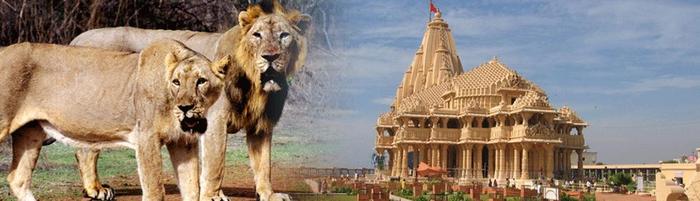
Explore high-resolution photographs of iconic landmarks, temples, and scenic spots in Gir National Park.
Essential visitor information regarding timings, entry tickets, location, nearby attractions, and travel guide in Gir National Park.
Sanchi Stupa is open daily from Sunrise to Sunset (6:30 AM to 6:30 PM). The entry fee is ?40 for Indian citizens and ?600 for foreign tourists. Children under 15 enter free.
Sanchi Stupa is open daily from Sunrise to Sunset (6:30 AM to 6:30 PM). The entry fee is ?40 for Indian citizens and ?600 for foreign tourists. Children under 15 enter free.
The Great Stupa was originally commissioned in the 3rd century BC by Mauryan Emperor Ashoka to enshrine the relics of Lord Buddha. It was later expanded by the Shunga and Satavahana dynasties.
The Great Stupa was originally commissioned in the 3rd century BC by Mauryan Emperor Ashoka to enshrine the relics of Lord Buddha. It was later expanded by the Shunga and Satavahana dynasties.
The four Torana gateways carved in the 1st century BC depict scenes from the Buddha's life and Jataka tales. Because early Buddhist art was aniconic, the Buddha is represented through symbols like footprints, an empty throne, and the Bodhi tree.
The four Torana gateways carved in the 1st century BC depict scenes from the Buddha's life and Jataka tales. Because early Buddhist art was aniconic, the Buddha is represented through symbols like footprints, an empty throne, and the Bodhi tree.
Stupa 3 preserved the bone relics of the Buddha's two foremost chief disciples, Sariputta and Mahamoggallana, discovered by Alexander Cunningham in 1851 and now housed in the Chethiyagiri Vihara.
Stupa 3 preserved the bone relics of the Buddha's two foremost chief disciples, Sariputta and Mahamoggallana, discovered by Alexander Cunningham in 1851 and now housed in the Chethiyagiri Vihara.
Sanchi is located on NH-146, 45 km northeast of Bhopal (approx 1 hour drive) and 9 km southwest of Vidisha (15 minutes drive). Local buses, trains, and taxis connect Sanchi continuously.
Sanchi is located on NH-146, 45 km northeast of Bhopal (approx 1 hour drive) and 9 km southwest of Vidisha (15 minutes drive). Local buses, trains, and taxis connect Sanchi continuously.
Get a customized itinerary and the best deals on packages and hotels.
Enquire Now