- .
- info@earthtrip.in
-
INR
-
USD
INR
USD
The Indian Wild Ass Sanctuary, sprawling across 4,954 square kilometers of shimmering saline mudflats, seasonal marshes, and elevated desert islands in the...
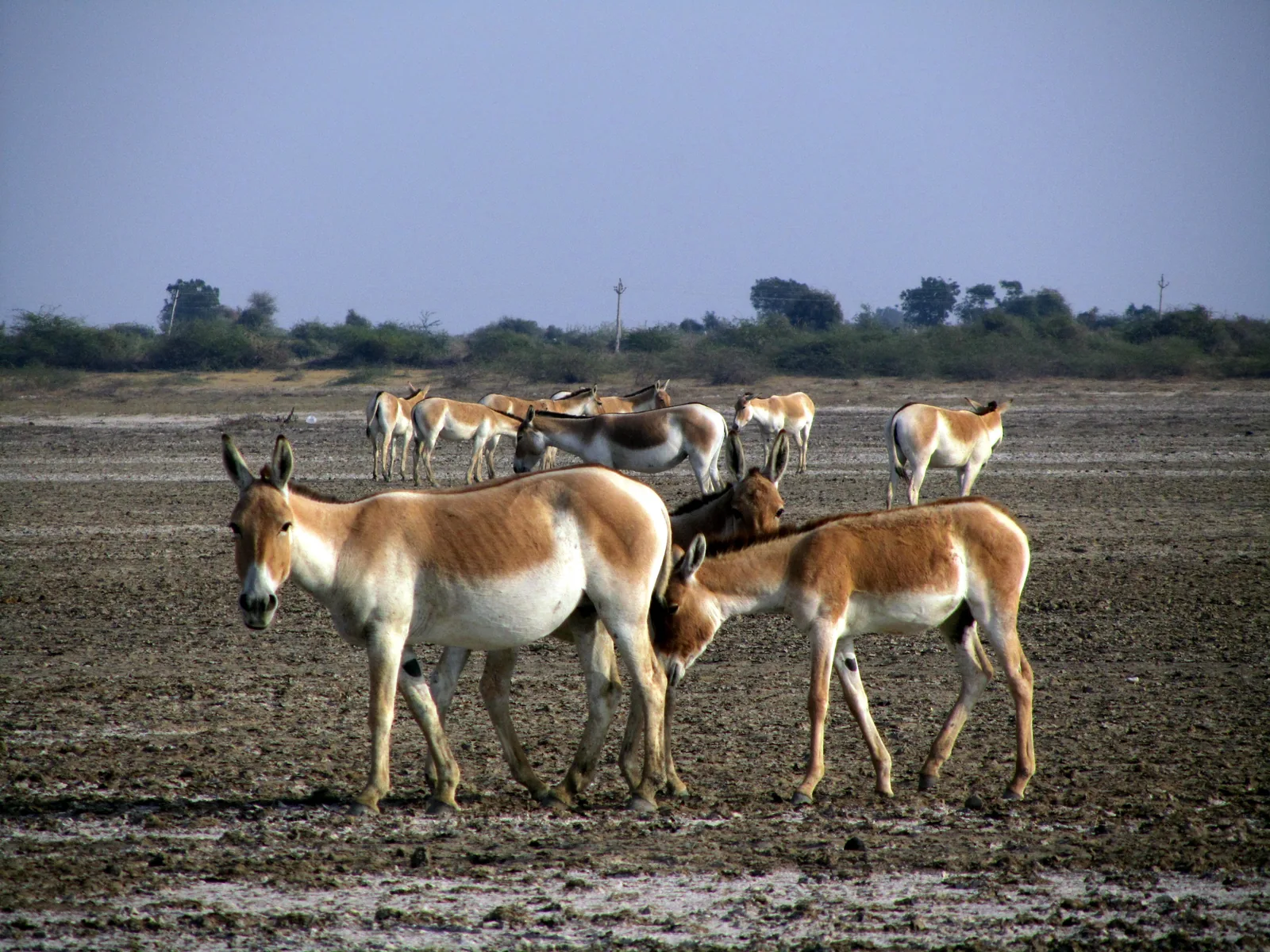
The Indian Wild Ass Sanctuary, sprawling across 4,954 square kilometers of shimmering saline mudflats, seasonal marshes, and elevated desert islands in the Little Rann of Kutch, is the only place on Earth where the endangered Indian Wild Ass (Equus hemionus khur), locally known as the Khur or Ghudkhur, survives in the wild.
Established in 1972 under the Wildlife Protection Act, this unique desert biosphere in Gujarat represents one of the largest protected wildlife reserves in India, sheltering over 6,000 wild asses, desert foxes, wolves, and hundreds of thousands of migratory flamingos.
It's the home of vast geometric cracked mud horizons stretching into mirages, herds of chestnut coated wild asses sprinting across hard salt pans at speeds up to 50 km/h, elevated scrub islands (bets) providing refuge for blackbucks and chinkaras, and traditional Agariya families harvesting sea salt crystals under the open sun.
It represents a rich ecological crossroads where harsh desert survival, wetland bird migrations, indigenous salt farming culture, and thrilling 4x4 open desert safaris unite across the Saurashtra borderlands.
Accessed primarily from Dasada, Zainabad, Bajana, and Dhrangadhra, it sits 130 km west of Ahmedabad, 110 km northeast of Rajkot, and 90 km from Mehsana.
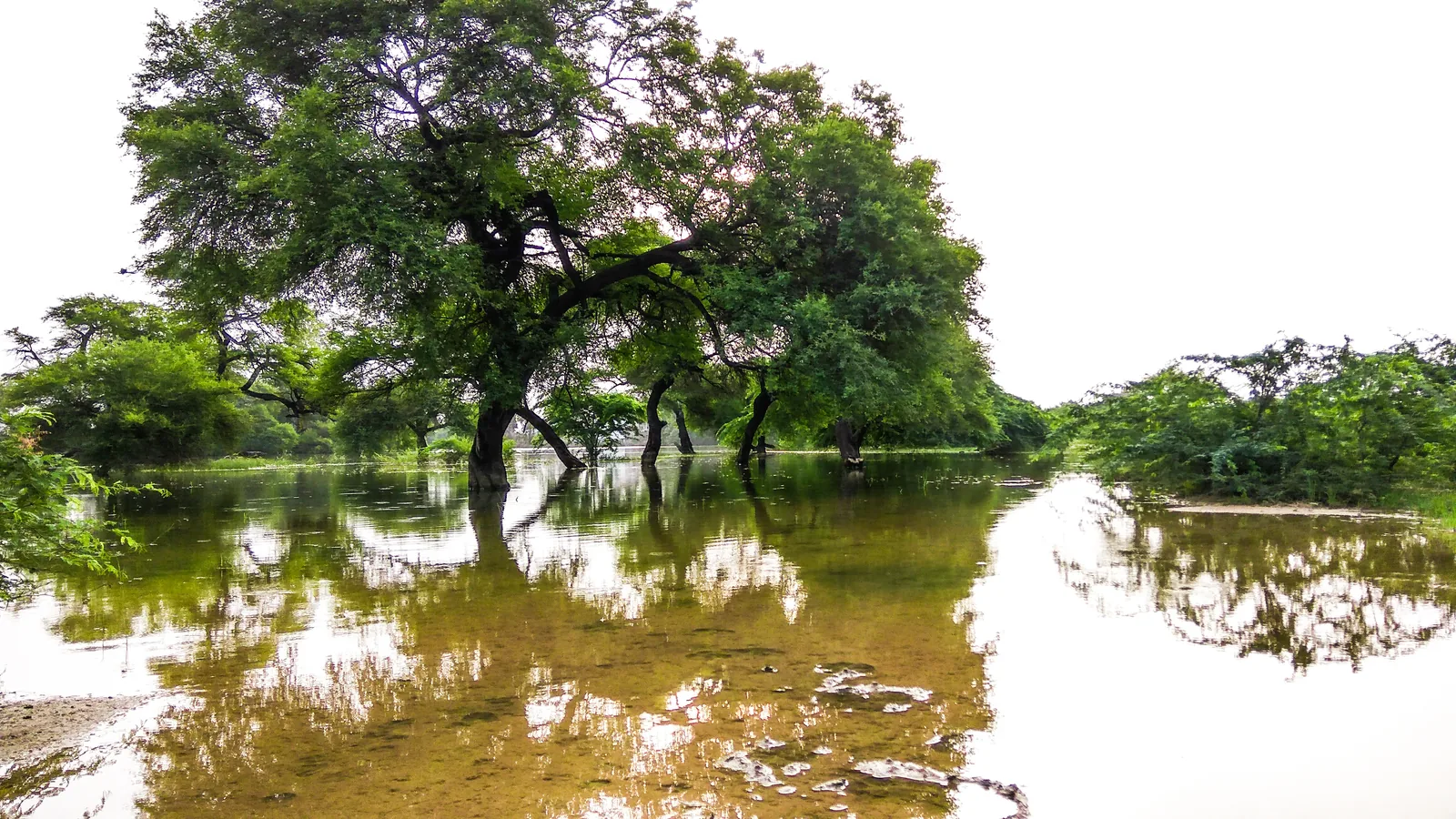
During the southwest monsoon between July and September, seawater pushed in from the Gulf of Kutch mixes with river runoff from the Banas and Rupen rivers, flooding the entire basin into a shallow, massive brackish inland lake.
As waters evaporate under the dry winter heat from October onward, the lake recedes, leaving behind a hard crust of white salt flats and cracked clay plains that stretch smoothly to the horizon.
Truth is, about 74 elevated plateaus or islands known as "Bets" remain un flooded throughout the year. Pung Bet and Mardak Bet, covered in thorny acacia, prosopis, and scrub grasses, provide vital perennial grazing grounds and freshwater springs for wildlife.

Open 4x4 cross country desert safaris depart morning and evening from safari lodges in Dasada and Bajana. Cruising across the vast salt desert feels like traversing another planet, with endless blue skies reflecting off shimmering heat mirages.
You will easily spot herds of wild asses grazing near the edges of the bets. These agile animals are easily recognized by their white bellies, reddish brown coats, and dark dorsal stripes running down their spines.
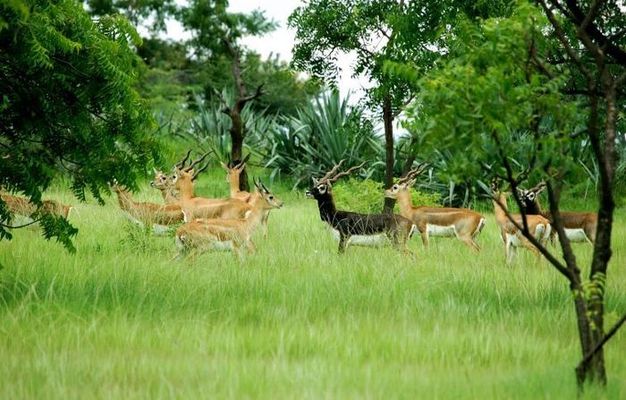
The sanctuary is also home to desert carnivores including the Indian desert fox, golden jackal, striped hyena, desert cat, caracal, and the endangered Indian wolf. Large herds of Blackbuck antelopes, Nilgai, and Chinkara gazelles graze along the outer grasslands.
Avian Winter Migrations: Bajana Lake, Nawa Talaab, and wetland creeks inside the sanctuary transform into global birding hotspots from November to March. Thousands of Greater and Lesser Flamingos, Dalmatian pelicans, Common cranes, Demoiselle cranes, and Houbara bustards gather here.
The Agariya Community: For generations, indigenous Agariya families have lived in temporary mud and tin huts on the rann during winter, pumping underground brine into shallow pans to produce over 70% of India's inland salt.
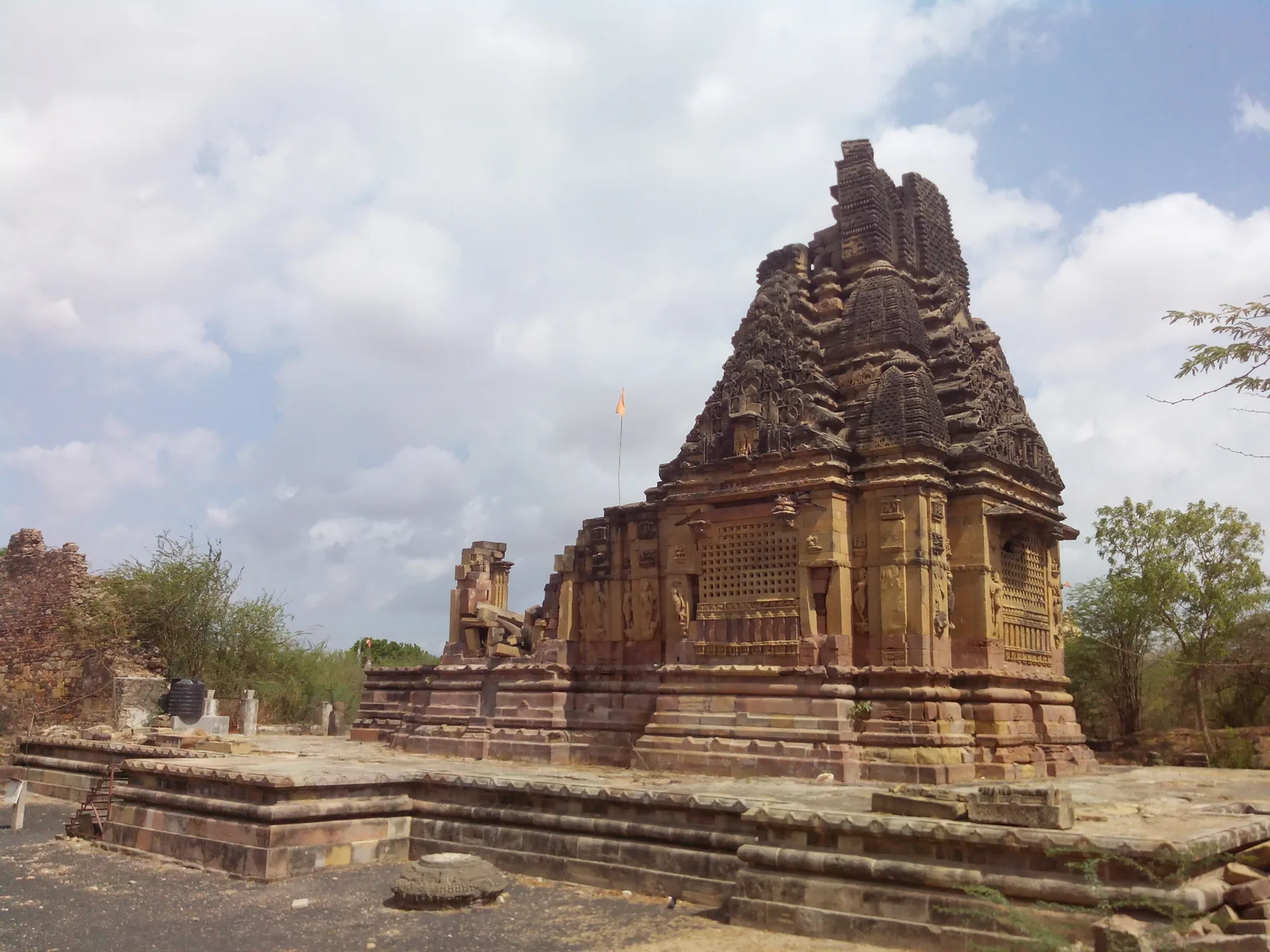
Visiting in the late afternoon rewards you with dramatic sunset views as the sky turns orange and purple over the endless white salt horizon. Combine your trip with visits to the Sun Temple at Modhera and Rani ki Vav in Patan for a complete heritage journey.
Reaching the Wild Ass Sanctuary in the Little Rann of Kutch is straightforward from central and northern Gujarat.
Best Time to Visit:
Explore more wildlife and natural wonders across Gujarat.
 Family
 Pilgrimage
 Family
 Family
 Pilgrimage
 Adventure
 Viewpoint
Gir Forest National Park, sprawling across 1,412 square kilometers of rugged hills, rocky …
Explore Kala Dungar (Black Hill) Heritage
Indus Valley Civilization archaeological site. One of the top Heritage tourist attractions…
Explore Dholavira
Wildlife
Home to Indian Wild Ass. One of the top Wildlife tourist attractions in Rann of Kutch, Guj…
Explore Wild Ass SanctuaryExplore high-resolution photographs of iconic landmarks, temples, and scenic spots in Rann of Kutch.
Essential visitor information regarding timings, entry tickets, location, nearby attractions, and travel guide in Rann of Kutch.
The sanctuary is the world's only natural habitat for the endangered Indian Wild Ass (Ghudkhur). It is also globally renowned for vast saline desert flats, desert foxes, and winter flamingo congregations.
The sanctuary is the world's only natural habitat for the endangered Indian Wild Ass (Ghudkhur). It is also globally renowned for vast saline desert flats, desert foxes, and winter flamingo congregations.
Desert safaris operate daily in two shifts: Morning (6:00 AM to 9:30 AM) and Afternoon (3:30 PM to 6:30 PM). Forest permits and vehicle entry fees can be booked at Bajana or Dhrangadhra checkposts.
Desert safaris operate daily in two shifts: Morning (6:00 AM to 9:30 AM) and Afternoon (3:30 PM to 6:30 PM). Forest permits and vehicle entry fees can be booked at Bajana or Dhrangadhra checkposts.
The sanctuary is closed annually during the monsoon from July to mid-October because seasonal rainwater and Arabian Sea surges flood the cracked mudflats into a shallow inland sea.
The sanctuary is closed annually during the monsoon from July to mid-October because seasonal rainwater and Arabian Sea surges flood the cracked mudflats into a shallow inland sea.
Visitors can see desert foxes, golden jackals, striped hyenas, caracals, wolves, blackbucks, chinkara gazelles, and over 300 bird species including Greater Flamingos, cranes, and pelicans.
Visitors can see desert foxes, golden jackals, striped hyenas, caracals, wolves, blackbucks, chinkara gazelles, and over 300 bird species including Greater Flamingos, cranes, and pelicans.
The main base villages with eco-resorts are Dasada, Zainabad, and Bajana, located about 130 km west of Ahmedabad (approx 2.5 hours drive via Sanand/Viramgam along SH-19).
The main base villages with eco-resorts are Dasada, Zainabad, and Bajana, located about 130 km west of Ahmedabad (approx 2.5 hours drive via Sanand/Viramgam along SH-19).
Get a customized itinerary and the best deals on packages and hotels.
Enquire Now
Viewpoint
Wildlife