Mahabalipuram — Travel Guide
Mahabalipuram (historically known as Mamallapuram), situated on the scenic Coromandel Coast of the Bay of Bengal in the Chengalpattu district of Tamil Nadu, is an internationally celebrated open-air gallery of ancient stone architecture and a UNESCO World Heritage Site. Named after the legendary 7th-century Pallava king Narasimhavarman I (titled *Mamalla* or *The Great Wrestler*), this historic maritime port city was the vibrant gateway through which South Indian culture, Buddhism, and Dravidian art sailed across Southeast Asia.
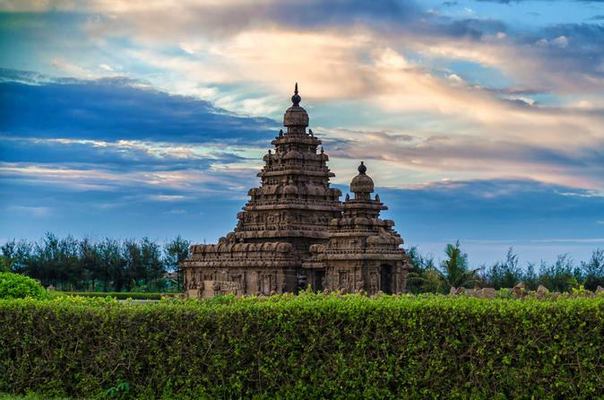
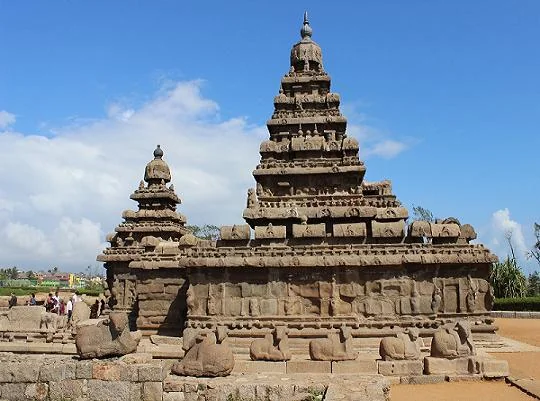
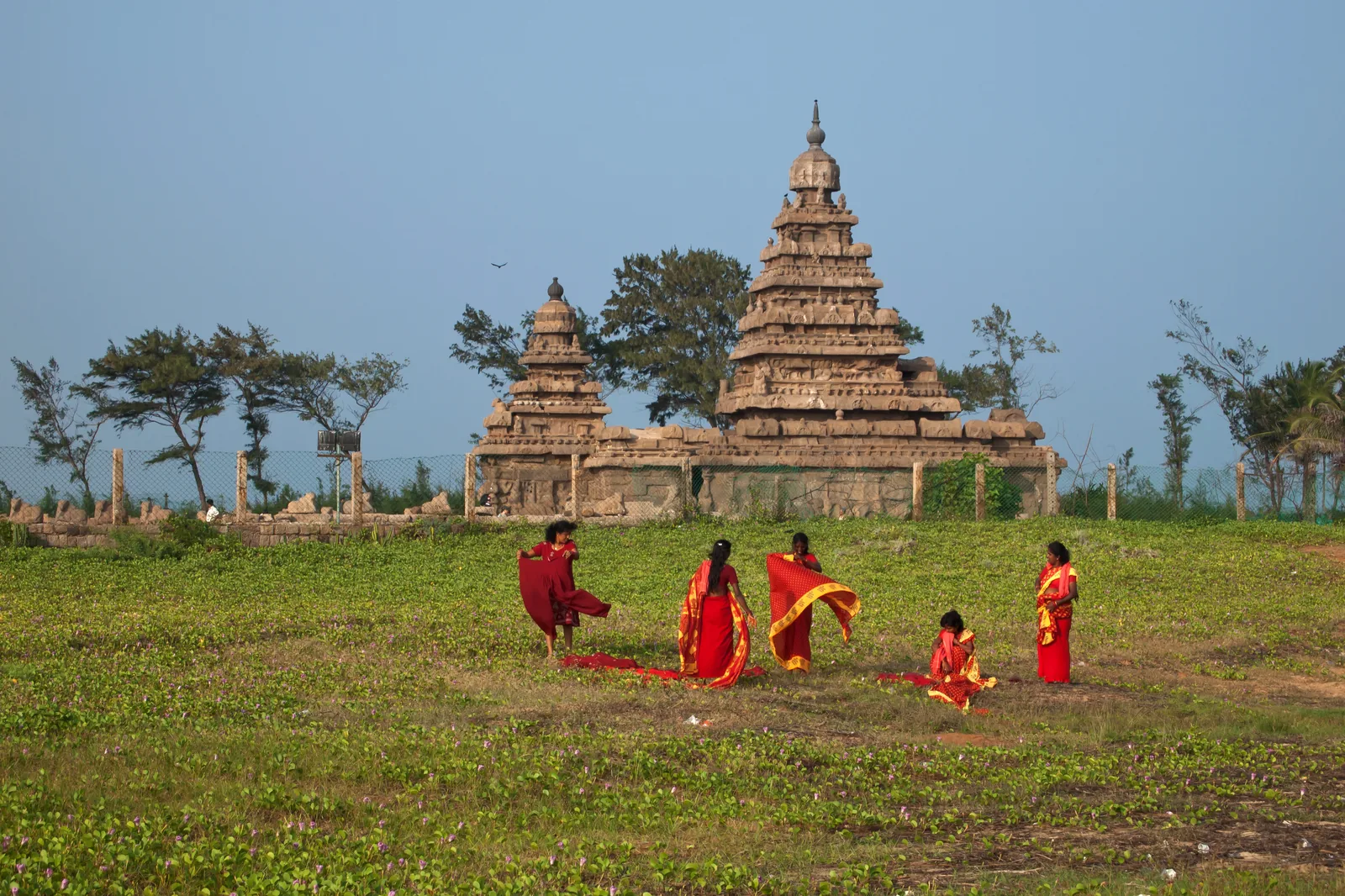 The 8th-Century Granite Shore Temple Overlooking the Crashing Waves of the Bay of Bengal
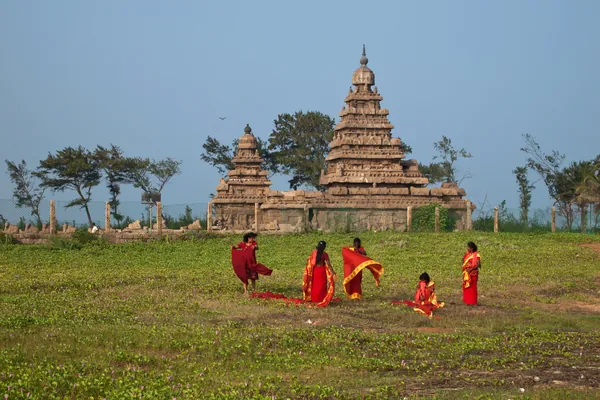
The crown jewel of Mahabalipuram is the 8th-century structural granite Shore Temple (700–728 CE) built during the reign of King Rajasimha. Standing directly at the water's edge, it features twin pyramidal spires (vimanas) surrounded by a stone perimeter wall adorned with hundreds of carved Nandi bulls.
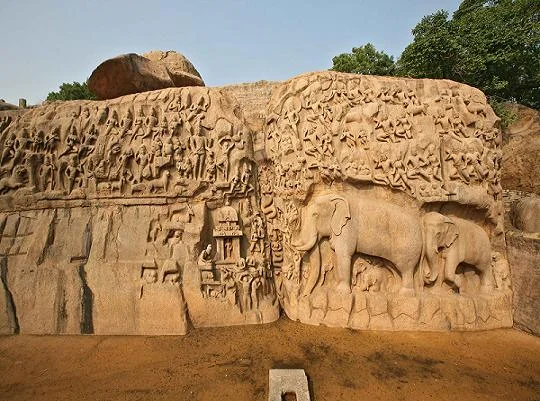
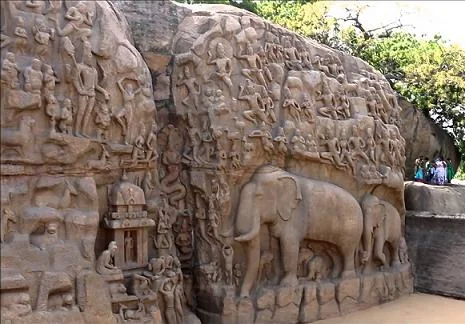
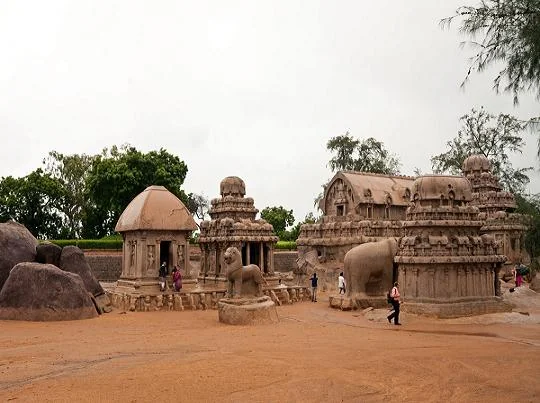
Visitors can marvel at the five monolithic rock-cut chariot temples of the Pancha Rathas, each sculpted from a single huge granite outcrop in distinct architectural styles. Directly in the town center lies Arjuna's Penance (Descent of the Ganges), one of the world's largest open-air rock relief bas-reliefs measuring 27 meters by 9 meters, intricately carved with over 100 celestial figures, animals, and life-size elephant herds.
Nearby, the gravity-defying 250-tonne boulder Krishna's Butterball perches precariously on a 45-degree granite slope. Located just 55 km south of Chennai along the scenic East Coast Road (ECR), Mahabalipuram links seamlessly with Kanchipuram and Pondicherry, making it a must-visit cultural heritage destination.
Best Time to Visit Mahabalipuram:
Mahabalipuram is an oceanfront destination best enjoyed during the cooler winter months:
- October to March (Winter / Peak Heritage & Beach Season): Daytime temperatures range comfortably between 20°C and 30°C with clear blue skies, refreshing sea breezes, and pleasant morning walking weather. Perfect for exploring outdoor rock reliefs, Shore Temple photography, and attending the world-famous Mamallapuram Indian Dance Festival held every January at Arjuna's Penance.
- July to September (Monsoon / Coastal Showers): The South-West monsoon brings pleasant overcast days and cool coastal winds, ideal for uncrowded temple exploration.
- April to May (Summer / Warm Tropical Days): Temperatures range from 26°C to 38°C. Best suited for early morning temple tours (6:00 AM to 9:00 AM) and evening sea breeze strolls along Mahabalipuram Beach.
Famous Local Specialties:
- Fresh Bay of Bengal Seafood Platters: Tandoori jumbo tiger prawns, grilled kingfish steaks, chili garlic crab, and butter garlic squid cooked fresh at beachfront restaurants.
- Traditional South Indian Vegetarian Meals: Authentic Banana leaf lunch with sambar, rasam, kootu, poriyal, appalam, and payasam.
- Fresh Coastal Tender Coconut Water: Cold, refreshing sweet coconut water served fresh at roadside stalls throughout the town.
By Air:
The nearest airport is Chennai International Airport (Airport Code: MAA), located 55 km northwest of Mahabalipuram (approximately 1 hour 15 minutes drive along the 4-lane East Coast Road / ECR or Rajiv Gandhi IT Expressway / OMR). Chennai Airport offers non-stop domestic flights to all major Indian state capitals and direct international flights to London, Frankfurt, Dubai, Abu Dhabi, Singapore, Kuala Lumpur, and Bangkok. Pre-paid airport taxis and app cabs are available 24/7.
By Train:
The closest railway junction is Chengalpattu Junction (Station Code: CGL), situated 29 km west of Mahabalipuram (about 40 minutes drive). Major long-distance train connections include:
- Chennai Central (Station Code: MAS - 60 km): Premier rail terminal connected by Vande Bharat, Rajdhani, and Shatabdi express trains from Delhi, Mumbai, Kolkata, and Bengaluru.
- Chennai Egmore (Station Code: MS - 55 km): Gateway for trains heading across Tamil Nadu and Kerala.
- Frequent suburban local trains run from Chennai Beach/Egmore to Chengalpattu, from where regular direct buses and taxis travel to Mahabalipuram.
By Road:
Mahabalipuram is connected via the scenic 4-lane coastal highway East Coast Road (ECR / SH-49) and Old Mahabalipuram Road (OMR / SH-49A):
- From Chennai (~55 km / 1 hour 15 minutes): Smooth, scenic seaside drive along the Bay of Bengal coastline via Kovalam and Crocodile Bank.
- From Kanchipuram (~65 km / 1.5 hours): Drive via Chengalpattu and Tirukalukundram on SH-58.
- From Pondicherry (~95 km / 2 hours): Beautiful coastal highway drive along the scenic ECR corridor.
- From Bangalore (~350 km / 6.5 hours): National highway drive via Vellore, Ranipet, and Kanchipuram on NH-48.
- State Buses: MTC (Chennai) runs frequent AC Volvo and deluxe express buses (Route 588, 599, 102) from CMBT Koyambedu, T. Nagar, and Thiruvanmiyur directly to Mahabalipuram Bus Stand.
Shopping in Mahabalipuram is world-famous for handmade granite stone sculptures, seashells, Kanchipuram silks, and bronze handicrafts:
- Hand-Carved Stone & Granite Sculptures: Hand-chiseled statues of Lord Ganesha, Buddha, Nataraja, and carved decorative temple relief panels crafted by traditional artisans along Five Rathas Road.
- Seashell Curios & Jewellery: Natural conch shells (*Shankh*), mother-of-pearl necklaces, seashell lamps, and wall mirrors from Othavadai Street and beach markets.
- Kanchipuram Silk Sarees: Genuine hand-woven pure silk sarees with pure gold zari borders from certified weavers' outlets.
- Handcrafted Brass & Bronze Statues: Traditional lost-wax cast bronze idols and temple oil lamps from artisan casting workshops.
Must-Visit Places in Mahabalipuram
Mahabalipuram features a breathtaking collection of UNESCO oceanfront temples, monolithic stone chariots, open-air bas-reliefs, and gravity-defying boulders:
1. Shore Temple & Stone Nandi Enclosure (8th-Century UNESCO Ocean Monument)
Perched on a granite promontory overlooking the Bay of Bengal, the Shore Temple is an 8th-century structural temple complex built during the reign of Pallava king Narasimhavarman II (Rajasimha). Consisting of two Shiva shrines and an Ananthasayana Vishnu shrine, the temple is surrounded by a low boundary wall lined with hundreds of seated granite Nandi bull statues.
Shore Temple — 8th-Century Dravidian Oceanfront UNESCO Heritage Temple in Mahabalipuram
2. Pancha Rathas (Five Monolithic Granite Chariot Temples)
Carved out of single massive pink granite boulders in the late 7th century, the Pancha Rathas (Five Chariots) are named after the Pandava brothers (Dharmaraja, Bhima, Arjuna, Nakula, Sahadeva) and Draupadi. Each ratha represents a unique experimental prototype of Dravidian temple architecture, accompanied by life-size monolithic stone statues of an elephant, a lion, and a bull.
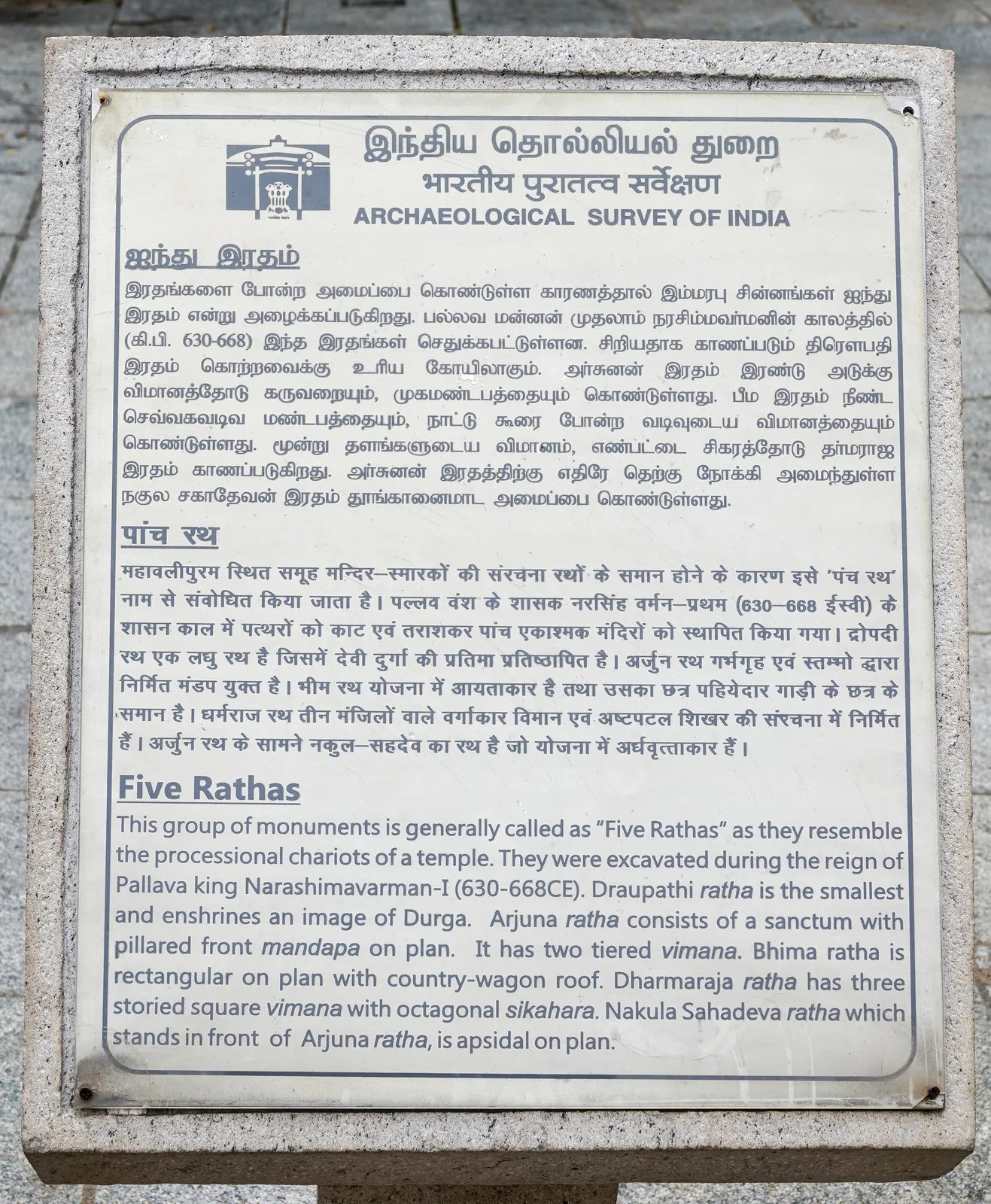 Pancha Rathas — Five 7th-Century Monolithic Chariot Temples Carved from Single Granite Rocks
3. Arjuna's Penance & Descent of the Ganges (World's Largest Bas-Relief)
Measuring 27 meters long by 9 meters high, this colossal open-air rock relief carved across two massive granite boulders depicts the descent of the sacred river Ganges from heaven to earth brought by Sage Bhagiratha's austerities. The cleft between the boulders represents the holy river, surrounded by over 100 intricately chiseled gods, semi-divine nagas, celestial nymphs, and life-size wild elephant families.
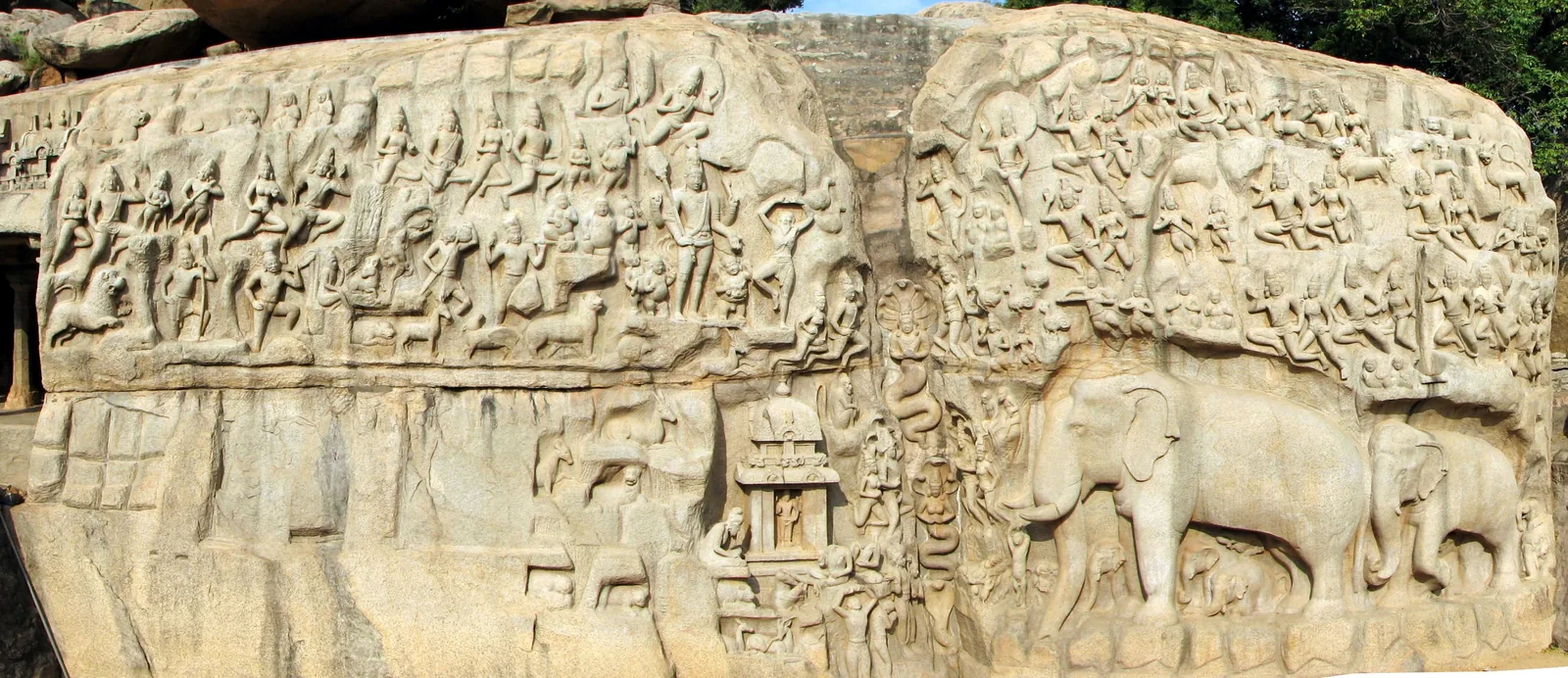 Arjuna's Penance — Monumental 27-Meter Open-Air Bas-Relief Carving of the Descent of the Ganges
4. Krishna's Butterball (250-Tonne Gravity-Defying Granite Boulder)
A natural geological phenomenon, Krishna's Butterball (*Vaan Irai Kal*) is a massive 250-tonne granite boulder measuring 6 meters high and 5 meters wide, balancing impossibly on a smooth 45-degree rock slope. Despite centuries of cyclonic winds and historical attempts by Pallava kings and British governors to move it with elephants, the boulder remains immovable.
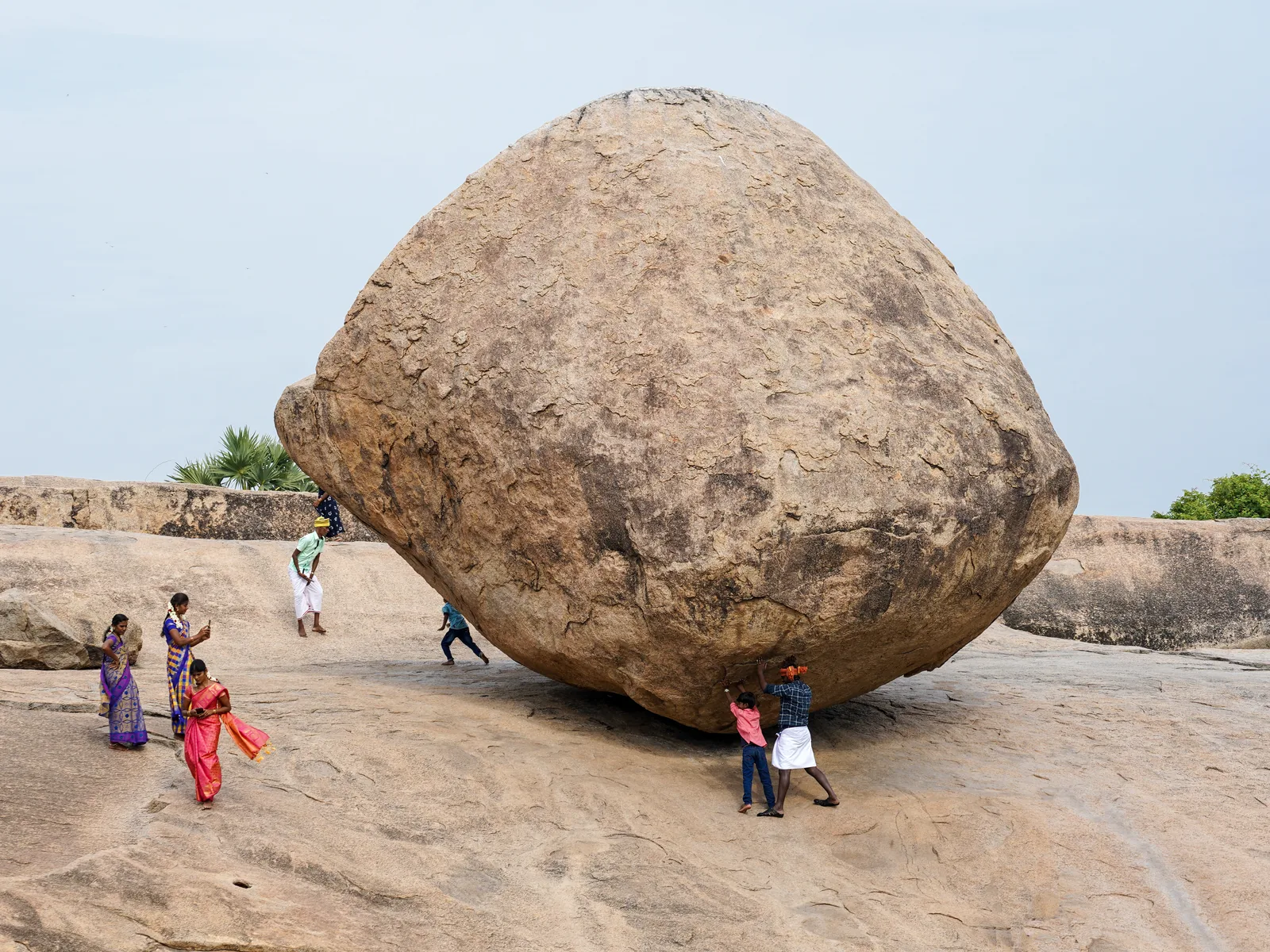 Krishna's Butterball — 250-Tonne Giant Granite Boulder Balancing on a Steep Rock Slope
5. Tiger Cave (8th-Century Rock-Cut Yali Saluvankuppam Mandapam - 5 km)
Located 5 km north of Mahabalipuram on the coastal highway in Saluvankuppam, Tiger Cave is a rock-cut pavilion featuring an open mandapam bordered by 11 intricately carved *Yali* (mythical lion-faced beasts) heads. Built during the reign of Rajasimha, the site served as an open-air coastal theatre for royal cultural events.
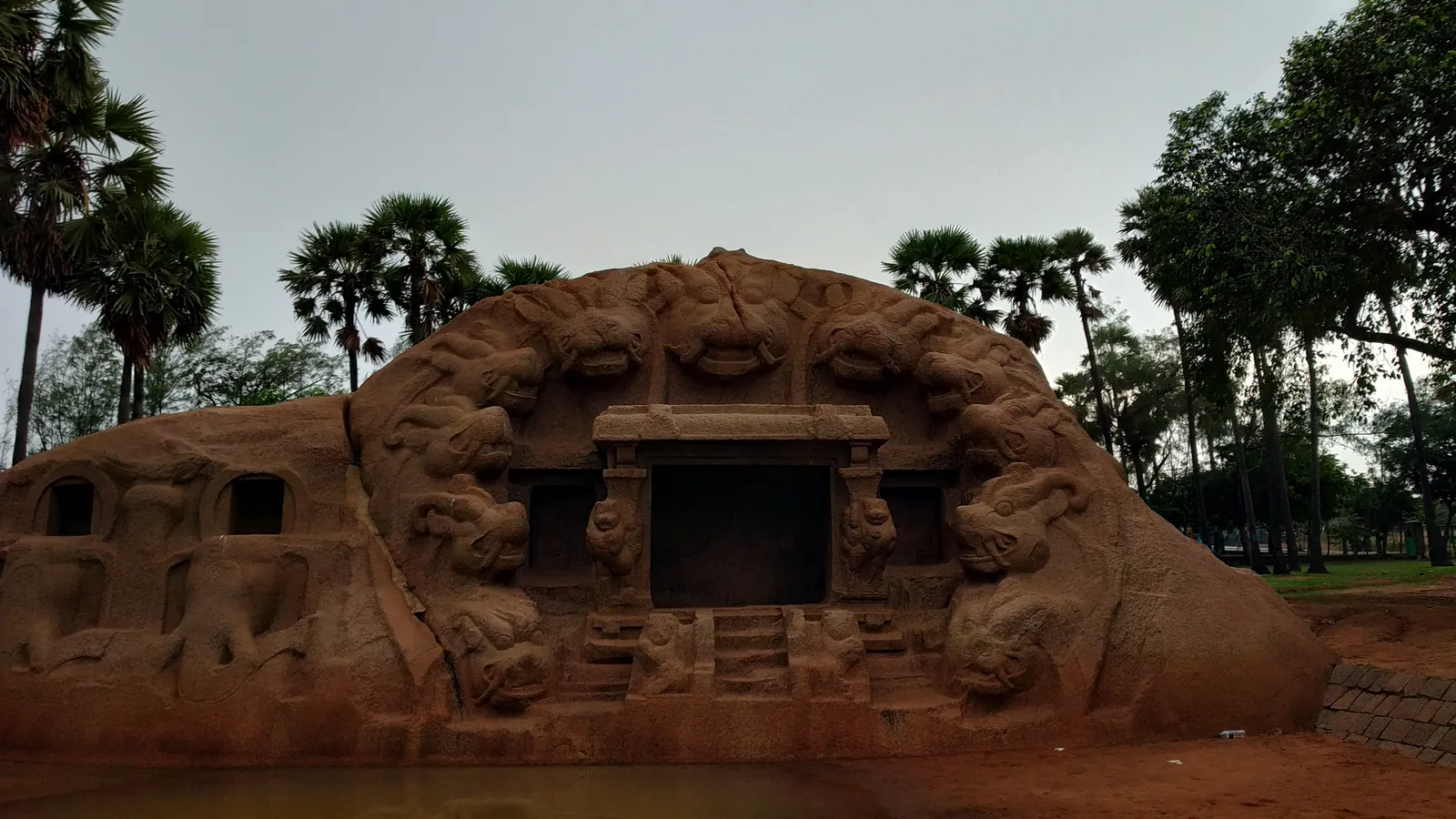 Tiger Cave — 8th-Century Coastal Rock-Cut Pavilion Framed with 11 Carved Yali Lion Heads
6. Varaha Cave Temple & Mahishasuramardini Rock-Cut Mandapam
Carved into rock hills behind Arjuna's Penance, the Varaha Cave features exquisite 7th-century bas-reliefs depicting Lord Vishnu lifting Goddess Bhudevi as Varaha the boar, while the Mahishasuramardini Cave showcases the dramatic battle between eight-armed Goddess Durga and the demon Mahishasura.
7. Mahabalipuram Historic Lighthouse & Olakkannesvara Temple Viewpoint
Climb the circular granite stairs of India's oldest stone masonry lighthouse (1887) and the 8th-century Olakkannesvara temple crowning the hillock, offering sweeping 360-degree views of the Shore Temple, town monuments, and the vast Bay of Bengal.
8. India Seashell Museum & Marine Aquarium Complex
Recognized as Asia's largest seashell museum, this educational complex houses over 40,000 rare seashells, conchs, fossilized mollusks, pearls, and marine artifacts collected from across the world's oceans.
9. Madras Crocodile Bank Trust & Reptile Center (14 km)
Founded by herpetologist Romulus Whitaker along the East Coast Road, this world-renowned reptile conservation sanctuary is home to over 2,400 crocodiles, alligators, gharials, giant Aldabra tortoises, and king cobras.
Popular Hotels in Mahabalipuram
 Hotel
Hotel
 Hotel
Hotel
 Hotel
Hotel
 Hotel
Hotel
 Hotel
Hotel
 Hotel
Hotel
 Hotel
Hotel
 Hotel
Hotel
 Hotel
Hotel
 Hotel
Hotel
Tour Packages from Mahabalipuram
 Package
Top Places to Visit in Mahabalipuram
Mahabalipuram Photo Gallery & Attractions
Explore high-resolution photographs of iconic temples, historical monuments, and scenic landmarks in Mahabalipuram.
Plan Your Mahabalipuram Trip Now
Get the best verified hotel deals and customized tour packages. Book directly on EarthTrip and save up to 45%!