- .
- info@earthtrip.in
-
INR
-
USD
INR
USD
Enjoy the legacy of India in this journey including Orchha, Khajuraho and Varanasi. Our tour representative will greet you with traditional Indian welcome to Delhi and escort you in sightseeing world famed monuments. The tour embarks on Delhi then Jaipur and then land of palaces, Agra. Take a break from regular commercial hassles with home-stay at Orchha. Visit Temples and Mosque in the religious city, Varanasi as the tour proceeds from dating distinct pattern of art and temple architecture of Khajuraho.
Golden Triangle with Khajuraho tour is a personalised individual tour & can be started any time of year / month. This tour is a cobination of six major tourist cities in india. You shall see Orchha and Khajuraho two heritage city which are famous for temples and monuments. This is very unique and charming which give which give you pleasure of visiting a Khajuraho the KAMA SUTRA erotic temple and a marvelous sculpture . The Orchha is which is very small town but since last decade it has been a very popular among the foreigner tourist . So you can visit these both unique city too beside the Delhi/Jaipur/Agra , which most well known cities of Golden triangle tour .
Day 01: Delhi Arrival
On arrival at Airport / Railway station, meet our representative and proceed to Hotel for Check in. Delhi is a city built and re-built seven times over several centuries. The capital city today marries the quaint and unique elements of different historical eras with the pace of the bustling, growing economy. At every turn of the road, the past and the present coexist. Later proceed for city Tour of NEW DELHI - drive past the stately government buildings of the British Era designed by Lutyen’s, including the Presidential Palace. Overnight at Hotel.
Day 02: Delhi
After Breakfast proceed for full day side sightseeing like the Red Fort, Chandni Chowk Bazaar and Khari Baoli spice market on your way to visit Jama Masjid. One of the largest mosques in the world and the largest in India, it was built by Shah Jahan to dominate the city. Then, make your way to Raj Ghat, a memorial built to commemorate the site of Mahatma Gandhi’s cremation. Also visit the UNESCO World Heritage-listed Qutub Minar, India’s tallest minaret, made of red sandstone and marble and inscribed with verses from the Qur’an. Next stop Lotus Temple completed in 1986. Notable for its flowerlike shape, it serves as the Mother Temple of the Indian subcontinent and has become a prominent attraction in the city also visit Iskon Temple a famous Krishana Temple. Stop next at Humayun’s Tomb, another UNESCO World Heritage site and tomb of a Mughal emperor dating back to the 1500s. Next, pass under the high stone archway of India Gate – constructed in the memory of Indian soldiers who died in World War I – and drive along Rajpath (King's Way), the ceremonial boulevard heading toward Rashtrapati Bhavan, official home to the President of India. Also visit Birla Temple a Lord Vishnu Temple.Along the way, your guide will point out architectural and cultural features of these important monuments. Overnight at hotel.
Day 03: Delhi – Jaipur (260 Kms / 05 hrs)
After breakfast drive to Jaipur. Arrive & Check into the hotel. Jaipur: Beautiful palaces, forts and colourful bazaars speak of the pink city’s glorious regal past. Modernity walks hand-in-hand with history in Jaipur. This largest city of Rajasthan, founded by Maharaja Sawai Jai Singh, is famous for its magnanimous hospitality. Evening explore colorful local market. Overnight at Hotel.
Day 04: Jaipur
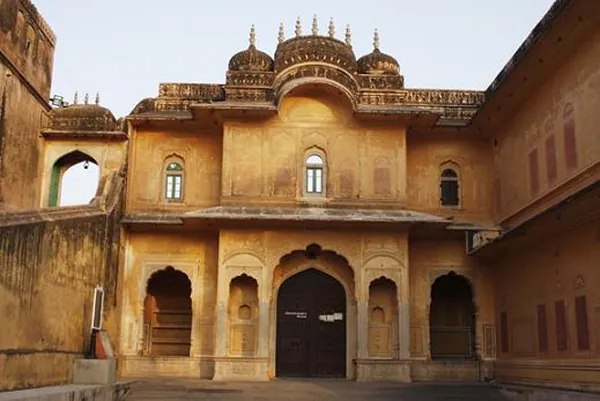
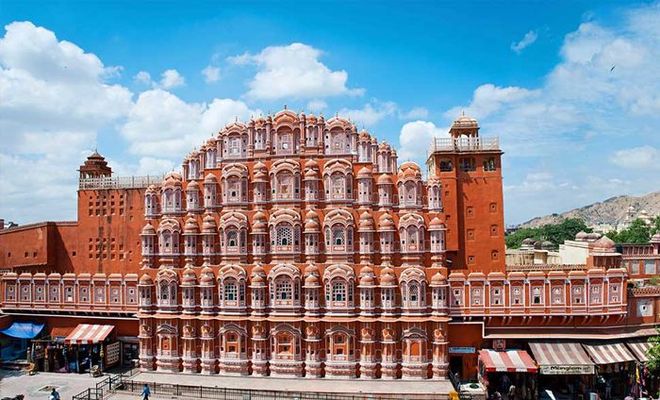
After Breakfast, Visit Amber - the ancient capital of the Rajput Empire reaching the fort on elephant back. It is a deserted palace surrounded by majestic ramparts & the magnificent public & private room's evidence the splendor of the rulers of 16th & 17th century Rajasthan. Also visit City Place, Janter Mantar and Hawa Mahal in evening leisure. Overnight at Hotel.
Day 05: Jaipur - Agra (200 Kms / 04 hrs)
After breakfast drive to Agra en-route visit Fatehpur Sikri. Later continue drive to Agra. Arrive and check in at Hotel. Akbarabad, as Agra was known during the Mughal era, is home to some of the most magnificent Mughal architectures. Situated on the banks of river Yamuna, the monumental beauty of Agra has inspired countless people around the world. This third largest city of the state of Uttar Pradesh is home to three UNESCO world heritage sites. Later Proceed to Visit to the world - famous Taj Mahal - or literally "Crown of Palaces" was built by Shah Jehan to immortalize the memory of his beloved wife Mumtaz Mahal who died tragically in 1631. After that visit, the Red Fort built by three generations of Mughal Emperors between 1565 and 1573. It housed both the presidential Palaces of the Royal family, and the military quarters. Overnight at Hotel.
Day 06: Agra – Gwalior (120 Kms / 02 hrs)
After breakfast drive to Gwalior on arrival transfer to hotel & check in. Later visit Gwalior fort- Gwalior Fort is one of the main attractions of the Gwalior city Located on the hill right in the middle of the city. Inside the majestic fort walls there are many monuments but maintaining those are restricted to only a few of them simply magical at sunset. It is breathtaking majesty and poetry. Scindia Museum- Located in the city, the palace-cum-museum sees visitors who are eager to get a glimpse into the lifestyles of royalty. Built in 1874, it reflects the architectural style of the Palace of Versailles, France. The stunning Durbar hall is resplendent with its painted gold leaves and enormous mirrors. Sas-Bahu ka Mandir- Is another structure dedicated to Lord Vishnu also known as Shashtra Bahu. These twin temples are situated adjacent to each other and the larger one is covered with intricate carvings and sculptures. The twin temples were built by Raja Mahipal and were completed in 1093 A.D. Overnight at hotel.
Day 07: Gwalior – Orchha (130 kms / 02 hrs)
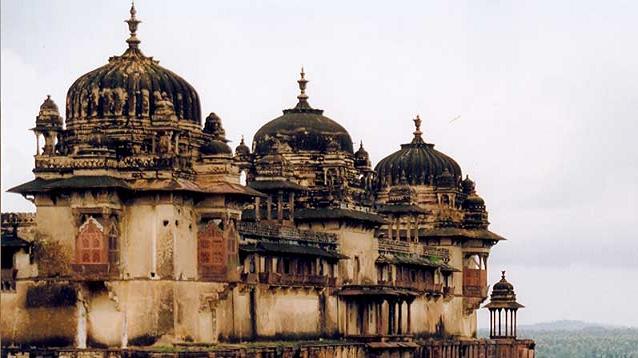
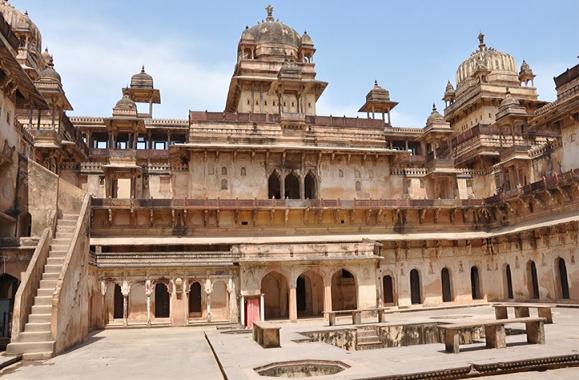
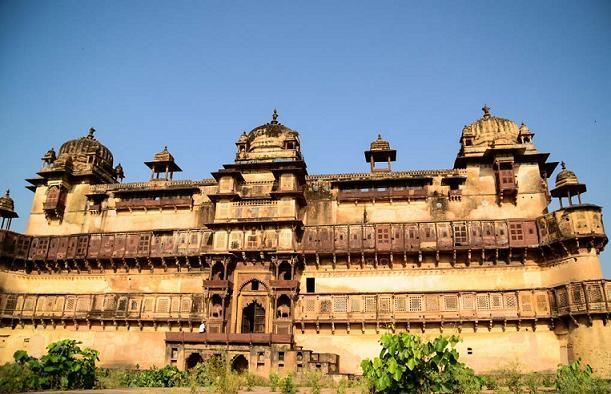
After breakfast drive to Orchha. Here interesting notable thing is that Jhansi lies in Uttar Pradesh whereas Orchha lies in Madhya Pradesh state. On reaching Orchha, relax for some time in your hotel and later proceed for Orchha sightseeing in which we will visit Jahangir Fort, Rai Praveen Ka Mahal, riverside cenotaphs, Ram Raja Temple etc. Here fort located on island of Betwa river. All these monuments are of Bundela dynasty. Overnight at hotel
Day 08 : Orchha – Khajurao (180 kms / 03 hrs)
After breakfast proceed to khajurao arrival and check in hotel. Khajuraho is a heritage destination renowned for its temples having sculptures carved in erotic poses and is visited by guests from world over. Visit Western Group of Temples in the late afternoon (Audio Tour facility is developed by Archelogical Survey of India (ASI) for these temples). Enjoy Light and Sound Show in the Evening. Overnight at hotel.
Day 09: Khajurao – Panna day Excurtion
After breakfast, visit Eastern and Southern group of Temples. After visit full day Excursion to Panna Panna is home to Gharial Sanctuary, Raneh Waterfalls and Diamond Mines. Overnight at Hotel.
Day 10: Khajurao – Varanasi (by Overnight Train) (415 kms / 8hrs)
After Breakfast, visit Eastern and Southern group of Temples. Day Excursion to Panna (46 kms). Panna is home to Gharial Sanctuary, Raneh Waterfalls and Diamond Mines. Evening board your Overnight trains to Varanasi. Overnight at Train.
Day 11: Varanasi
Arrive at Varanasi station. Meet and transfer to hotel for check in. Dating back to more than 3000 years, Varanasi is said to be the oldest city of the world. There are temples at every few steps here Hinduism it is believed that those who breathe their last in this city attain nirvana and get an instant gateway to liberation from the cycle of births and re-births. After Lunch proceed for tour planned for second half of the day We begin the tour of the city with the famous Banaras Hindu University. Next we visit the famous 18th century Durga temple dedicated to Goddess Durga & later visit one of the most famous temples of Varanasi, the Tulsi Manas temple. We en our tour with a one-of-its-kind temple the ‘Bharat Mata’ (Mother India). The temple was inaugurated by Mahatma Gandhi in 1936. The temple has the undivided India personified as a mother deity and has her statue built in marble. Unlike other temples, this one does not have images of the customary gods and goddesses; it houses a relief map of India, carved out of marble. Evening Aarti ceremony - Every evening, hundreds of people gather at the banks of the river Ganges to participate in the aarti (hymn). The evening aarti offers one of the most spectacular sensory experiences, when hundreds of lamps light up the river side at dusk, the entire city of Varanasi comes to a standstill and the sound of chimes and dongs reverberates in each and every street. Overnight at Hotel.
Day 12: Varanasi Departure
Early morning proceed to morning Cruise on Ganges. The ‘Ghats of Ganga’ dotted with temples or more than 100 ghats (banks) alongside the Ganges in Varanasi. The best way to cover them all is acruise. A morning cruise on the Ganges presents a very beautiful view of the ghats bathed in crimson light. After the cruise we set out to explore the city. A walk through old Varanasi will be a memorable experience. After Breakfast at hotel check out and proceed for your onward destination.
Payments policy
Tour Cancilation policy
By Air:
The city is served by Jaipur International Airport (Airport Code: JAI), situated in Sanganer just 12 km south of the city center. Jaipur Airport offers daily non stop flights connecting New Delhi, Mumbai, Bengaluru, Chennai, Hyderabad, Kolkata, Pune, Ahmedabad, and Goa. Direct international flights operate regularly to Dubai, Sharjah, Abu Dhabi, and Muscat. Prepaid airport taxis, app cabs, and luxury car rentals operate around the clock from the arrival terminal.
By Train:
Jaipur Junction Railway Station (Station Code: JP) is the headquarters of the North Western Railway zone, connected by premier superfast and express trains:
By Road:
Jaipur is connected via modern expressways and national highways:
Jaipur features an extraordinary array of UNESCO hill forts, royal palaces, open air observatories, and lake pavilions:
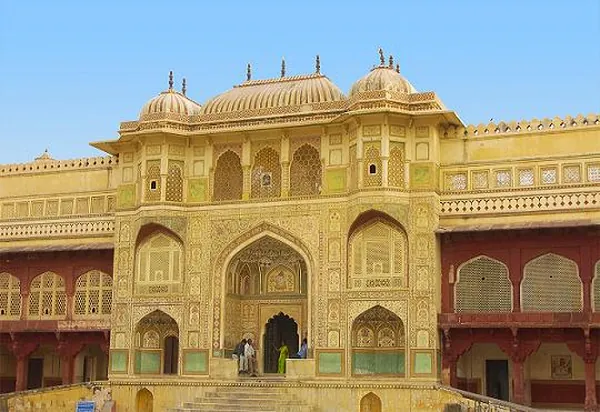
Perched high on a rocky hill in Amer town 11 km north of Jaipur, Amber Fort is a 16th century Rajput marvel built by Raja Man Singh I. Inside, travelers discover the world famous Sheesh Mahal (Mirror Palace), where walls and ceilings are covered with convex Belgian glass mirrors that reflect a single candle into thousands of sparkling stars.
 Amber Fort — 16th-Century Hilltop Sandstone Citadel and UNESCO World Heritage Monument
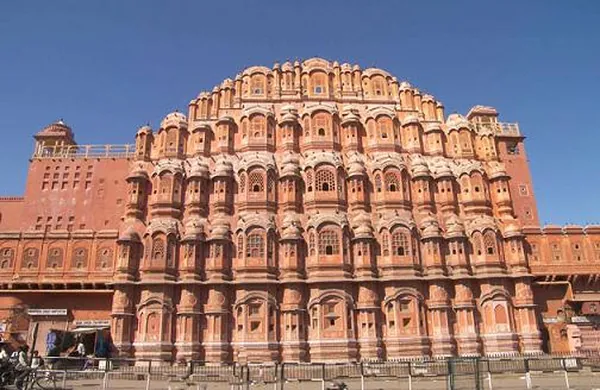
Built in 1799 by Maharaja Sawai Pratap Singh and designed by Lal Chand Ustad, Hawa Mahal (Palace of Winds) resembles the crown of Lord Krishna. Its five story pink sandstone facade features 953 intricately carved stone latticework windows (*jharokhas*) that allowed royal women to observe street festivals below without being seen.
 Hawa Mahal — Five-Story Terracotta Palace of Winds with 953 Intricate Stone Windows
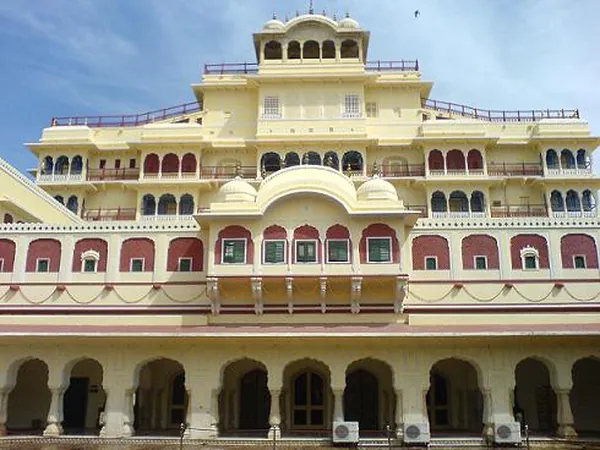
Located in the heart of the walled old city, the City Palace complex was established by Sawai Jai Singh II and remains the royal residence of the Jaipur royal family. The complex houses the seven story *Chandra Mahal*, the *Mubarak Mahal* textile museum, the *Diwan-i-Khas* with its Guinness record giant silver water urns (*Gangajalis*), and the stunning peacock painted *Pritam Niwas Chowk* courtyards.
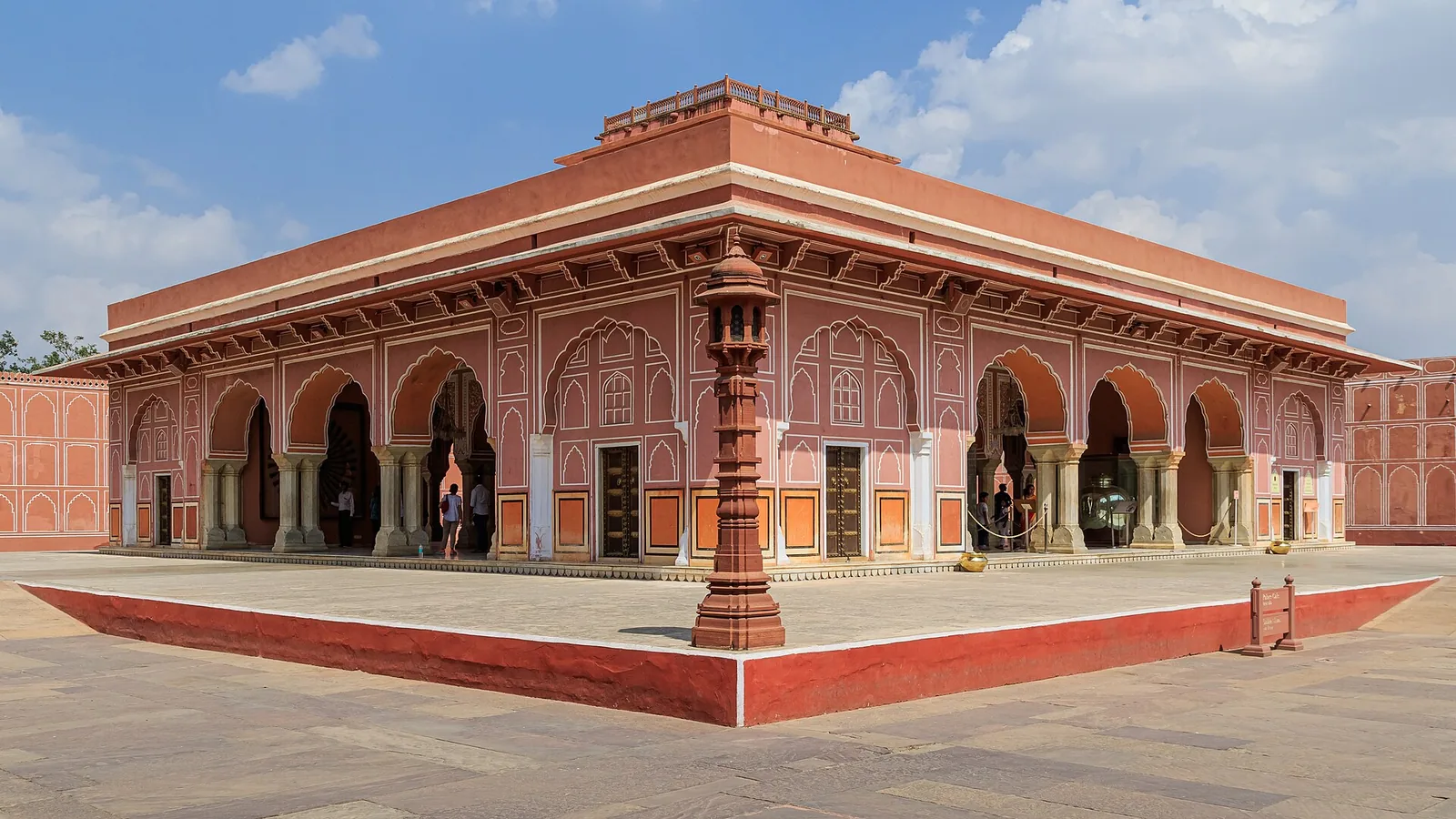 City Palace — Grand Royal Palace Complex and Living Royal Heritage Museum in Jaipur
Completed in 1734 by Maharaja Sawai Jai Singh II, Jantar Mantar is an open air astronomical observatory and a UNESCO World Heritage Site. It features 19 monumental stone and brass architectural astronomical instruments, including the world's largest stone sundial — the 27 meter high *Vrihat Samrat Yantra* — accurate to within two seconds.
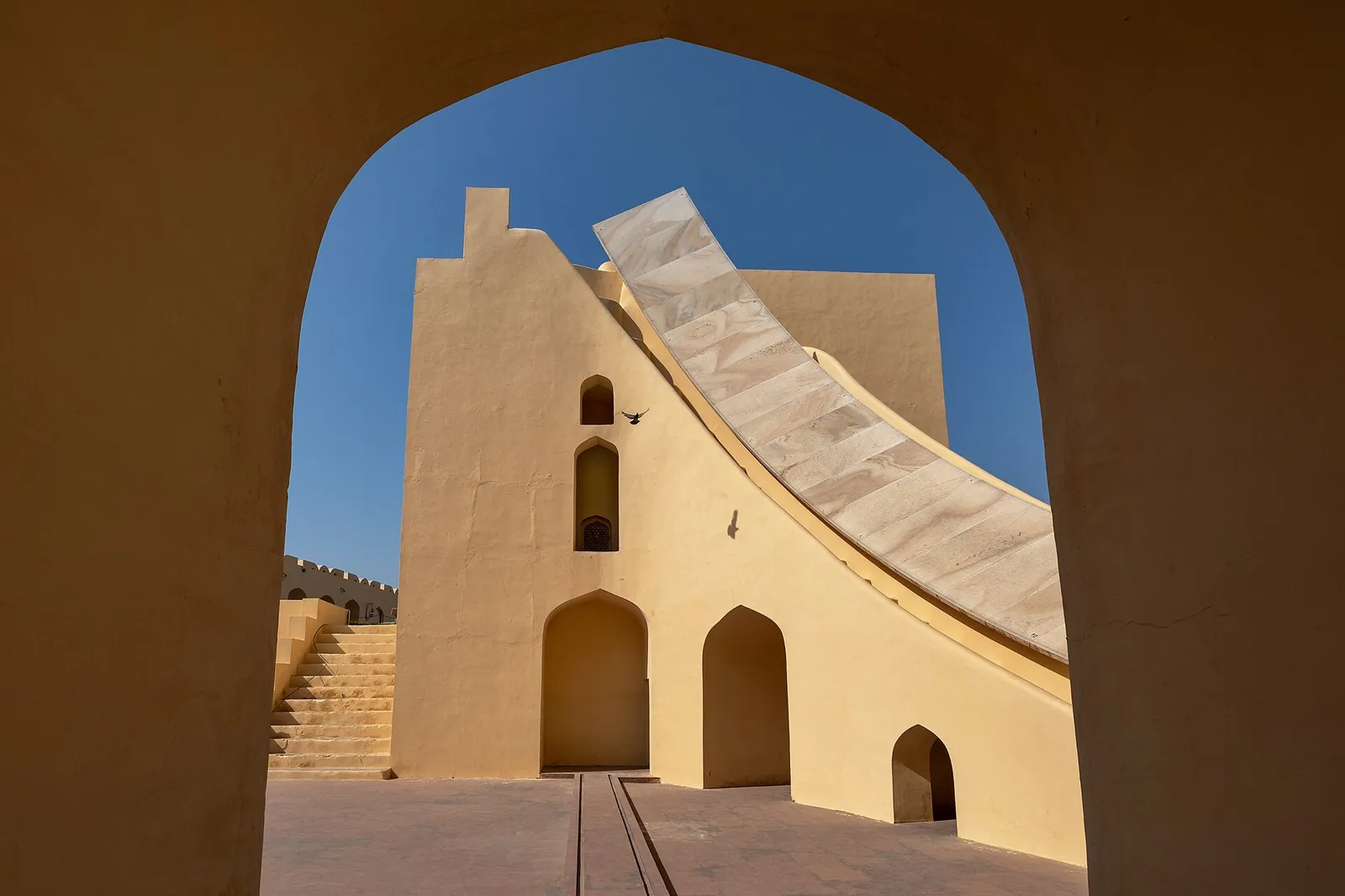 Jantar Mantar — 18th-Century UNESCO Stone Astronomical Observatory in Jaipur
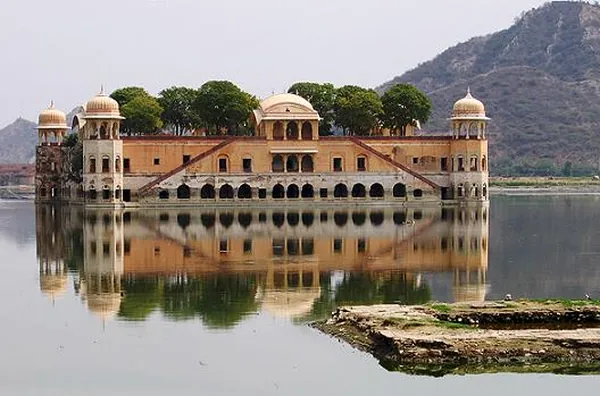
Appearing to float magically in the middle of Man Sagar Lake against the backdrop of the Nahargarh hills, Jal Mahal is an 18th century pleasure palace built in pink sandstone. While four of its five stories remain submerged underwater, the palace presents a stunning visual spectacle, especially when illuminated at night.
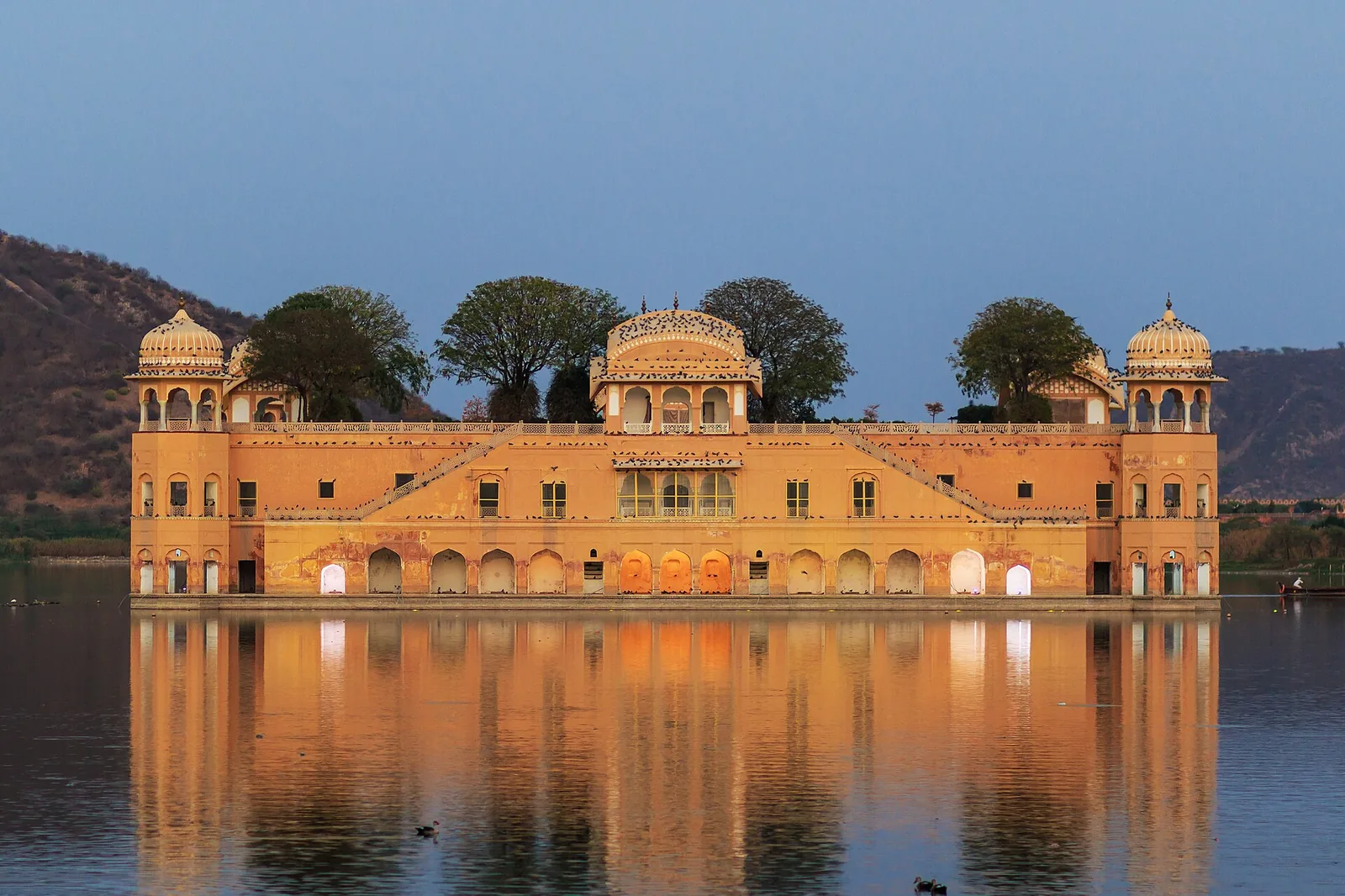 Jal Mahal — 18th-Century Pink Sandstone Water Palace on Man Sagar Lake
Standing on the edge of the Aravalli ridge, Nahargarh Fort (*Abode of Tigers*) was built in 1734 to fortify Jaipur. The fort features the elegant *Madhavendra Bhawan* with identical suites for nine royal queens, offering unmatched panoramic sunset views over the entire pink city.
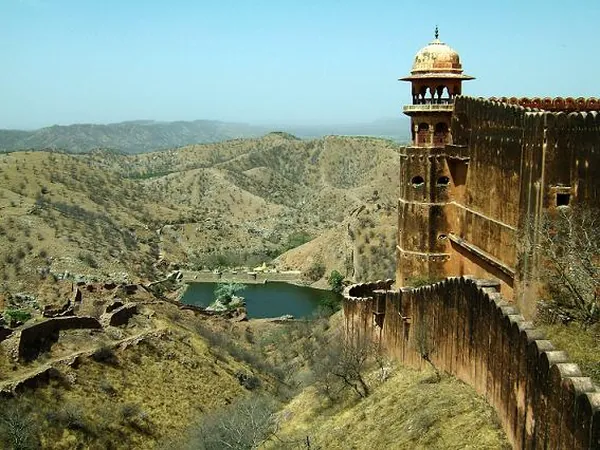
Built in 1726 by Sawai Jai Singh II to protect Amber Fort, Jaigarh Fort is connected to Amer by underground subterranean passageways. It houses the legendary *Jaivana Cannon*, the world's largest cannon on wheels cast during the medieval era.
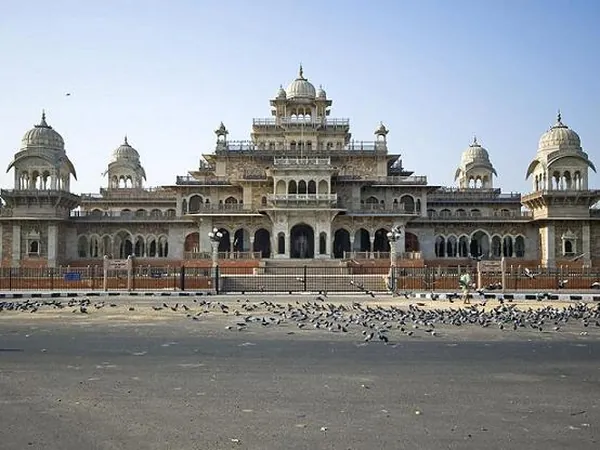
The oldest state museum in Rajasthan, the Albert Hall Museum is housed in an exquisite Indo Saracenic stone building opened in 1887. The museum displays rich collections of miniature paintings, Persian carpets, Egyptian mummies, metal sculptures, and traditional royal costumes.
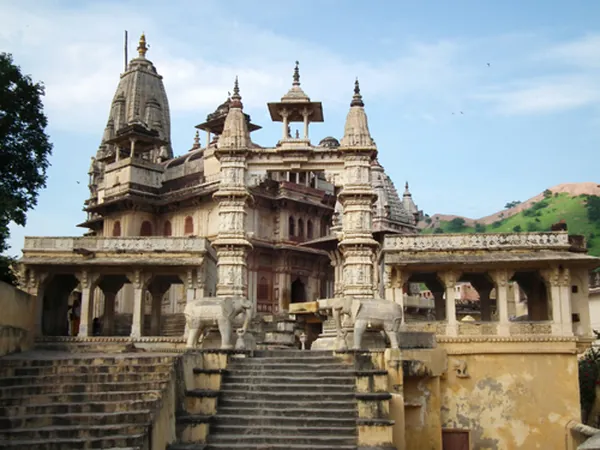
Nestled in a narrow mountain pass 10 km east of Jaipur, Galta Ji is an ancient Hindu pilgrimage site featuring natural freshwater springs, carved pink pavilions, and sacred bathing kunds surrounded by hundreds of friendly rhesus macaques.
Duration: 11 Nights / 12 Days
 Best Flights
 Best Prices
 Unique Holidays