- .
- info@earthtrip.in
-
INR
-
USD
INR
USD
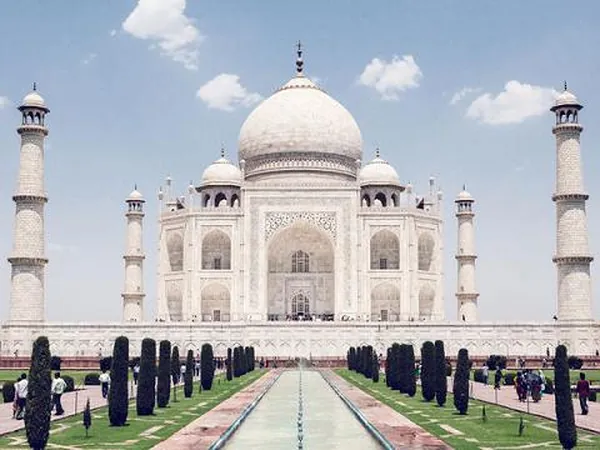
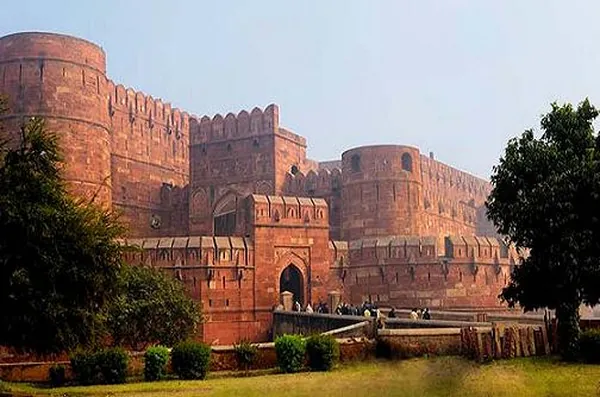
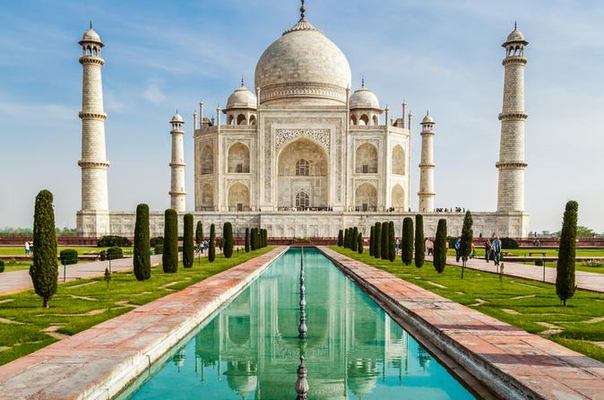
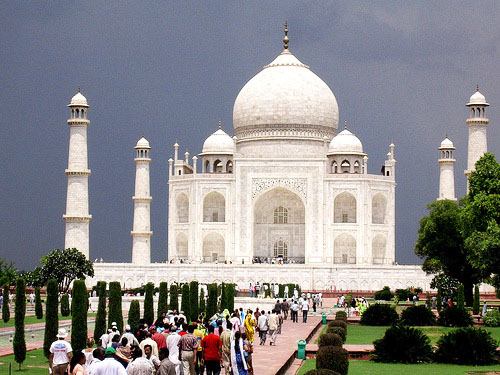
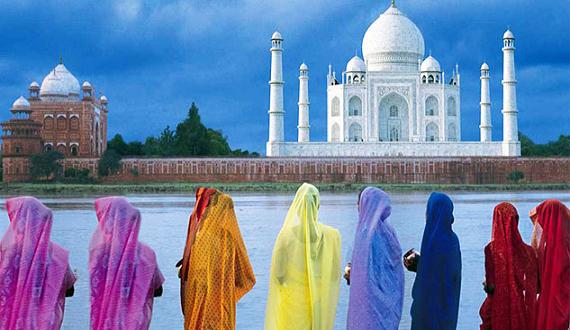
Agra Fort in built by Mughal Empire Akbar. It is located nearly 2 km from Historic Taj Mahal. The fort built by splendid red stone so it is also known as Lal Qila. The fort contains many palaces built by both red and white marble. Some palaces were built with traditional Gujarati and Bengali designs is a major tourist destiny of India. Taj Mahal is ne of the Seven Wonders of the World built by Saha Jahan for his beloved wife Mamtaz Mahal. Taj displays its different moods throughout the day through its varied shades, pinkish in the morning, milky white in the evening, golden when the moon shines. The tomb represents the house of the queen paradise and it is based on the palace garden of the great nobles on the both sides of river Yamuna in Agra. The Taj made up with white marble is a great attraction of India and is considered as a symbol of love.
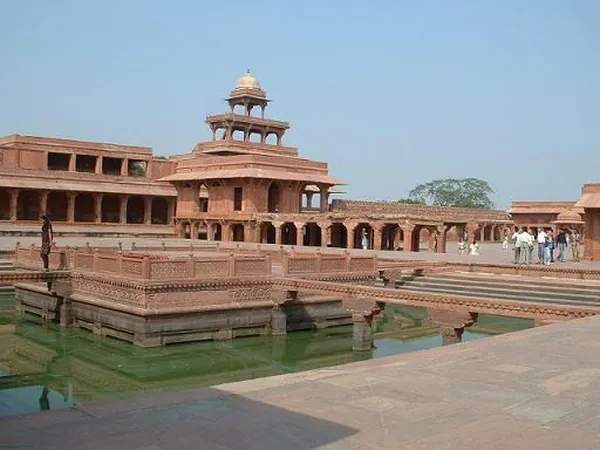
The name Fatehpur Sikri evokes a kind of nostalgia of Indian history. Built by the great Mughal Emperor, Akbar, it displays great work of architecture. The well preserved palace buildings and the still used mosque reminds of brilliant Indo-Islamic work. Places to see in Fatehpur Sikri are many. From the Buland Darwaza to the tomb of Saikh Salim Chisti, there are various other noteworthy monuments. Birbal Bhawan is the place dedicated to one of the nine jewels of Akbar. This trip to Agra will surely make you enjoy.
Day 1: Arrival Delhi
On Arrival At Delhi Airport/Railway station. Upon arrival meet & assist and transfer to Hotel. Overnight stay at Hotel.
Day 2: Delhi - Agra (205 Kms - Approx 04h30 drive)
After breakfast drive to Agra. After that sightseeing of Agra visit Agra Fort - The great Mughal Emperor Akbar commissioned the construction of the Agra Fort in 1565 & Evening Sunset visit of Taj Mahal (Taj Mahal is closed on Friday) - One of the seven wonders of the world, built by the Moghul Emperor Shahjehan in the memory of his beloved queen Mumtaz Mahal the construction of this architectural marvel took over 22 years and required almost 20000 labourer. Overnight stay at Hotel.
Day 3: Agra - Fatehpur Sikri - Delhi (265 Kms - 06 Hours)
Morning proceed for Delhi by surface via visit deserted town of Fatehpur Sikri - built by the Mughal Emperor Akbar. Upon arrival Delhi If time permit then you do the orientation tour of Old Delhi visit Old bazaar near old Mosque (jama Masjid) and view red Fort and drive pass India Gate (A War Memorial) & President House & Government Building.
Later refreshment then late evening assistance and transfer to International to board flight for onward destinations
Payments policy
Tour Cancilation policy
By Train:
Agra is one of the most accessible railway hubs in North India. Agra Cantt Railway Station (Station Code: AGC - 4 km from Taj Mahal), Agra Fort (AF), and Raja Ki Mandi (RKM) connect with high speed trains:
By Road:
By Air:
Agra Airport (Kheria Airport - Airport Code: AGR - 12 km from city center) connects scheduled domestic flights to Mumbai, Bengaluru, Lucknow, Ahmedabad, and Jaipur. For extensive international flights, Indira Gandhi International Airport in New Delhi (DEL - 210 km / 3 hours drive via Yamuna Expressway) is the primary gateway.
Agra features a collection of UNESCO World Heritage monuments, Mughal palaces, riverside gardens, and sandstone gateways:
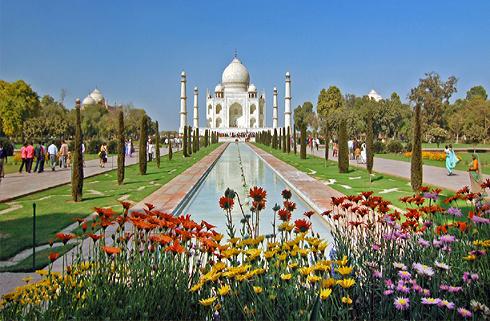
Recognized as one of the Seven Wonders of the World, the Taj Mahal is an ivory white Makrana marble mausoleum constructed between 1631 and 1648 on the southern bank of the Yamuna River. Enclosed within a 42-acre formal Persian *Charbagh* garden with central lotus reflection pools, the complex includes four 40-meter minarets, a red sandstone mosque, and a matching guest house (*Mehmankhana*), adorned with semi precious floral stone inlays.
 Taj Mahal — UNESCO World Heritage White-Marble Mausoleum and Symbol of Mughal Architecture
Spanning 94 acres along the Yamuna River, Agra Fort (the Red Fort of Agra) was the primary royal residence of the Mughal dynasty until 1638. Built from red sandstone by Emperor Akbar in 1565 and later expanded by Shah Jahan with white marble pavilions, the fort contains palaces like *Jahangiri Mahal*, *Khas Mahal*, *Sheesh Mahal* (Mirror Palace), *Diwan-i-Aam*, and the octagonal *Musamman Burj* tower overlooking the Taj Mahal.
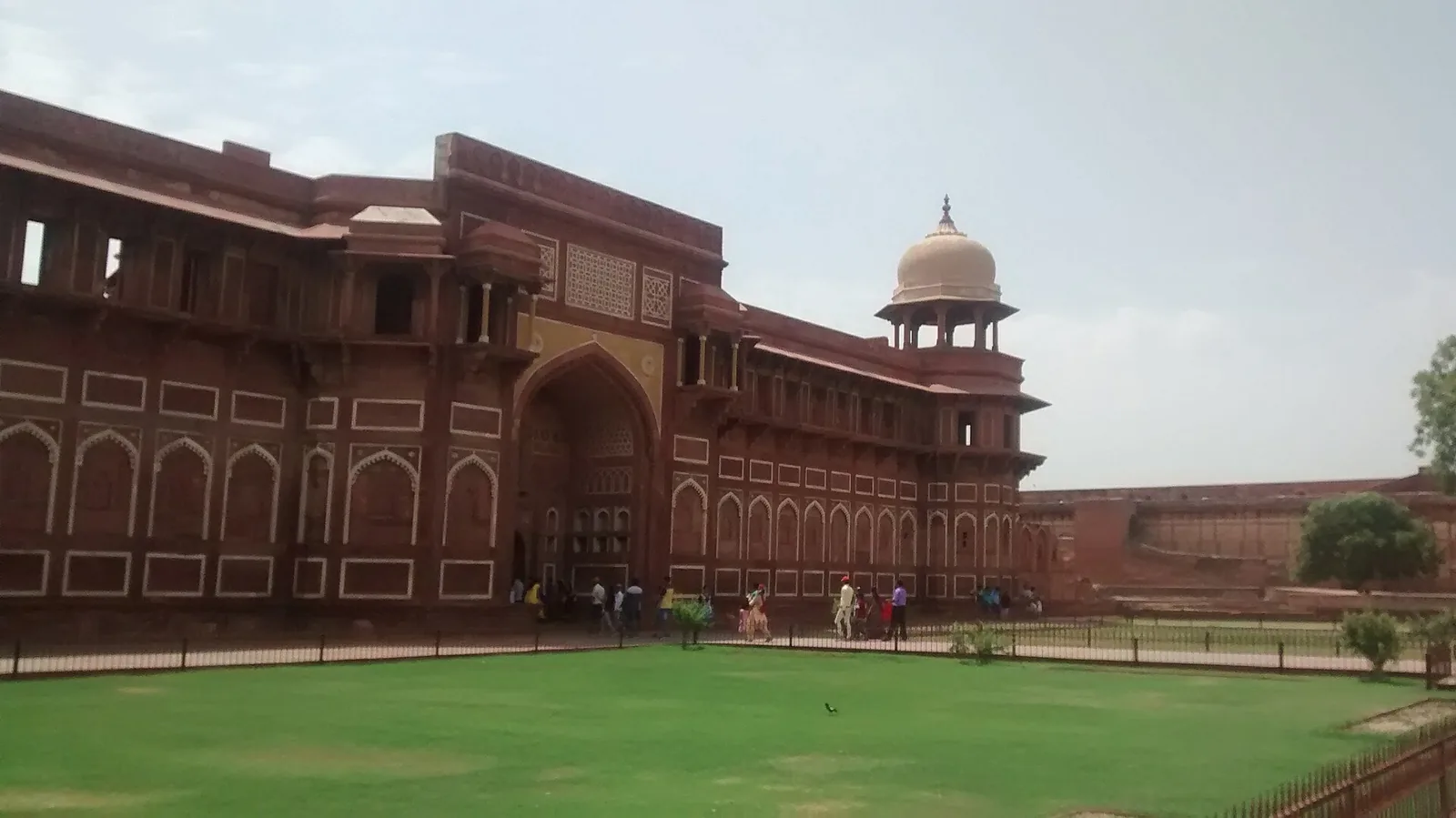 Agra Fort — Massive 16th-Century Red Sandstone Imperial Fortress and Royal Palace Complex
Located 37 km west of Agra, Fatehpur Sikri (City of Victory) was founded by Emperor Akbar in 1571 as the capital of the Mughal Empire. Constructed entirely from red sandstone, the deserted royal city features the colossal 54-meter-high Buland Darwaza (Gate of Magnificence), the white marble *Tomb of Sufi Saint Salim Chishti*, *Panch Mahal* (5-story tiered palace), and *Jodha Bai's Palace*.
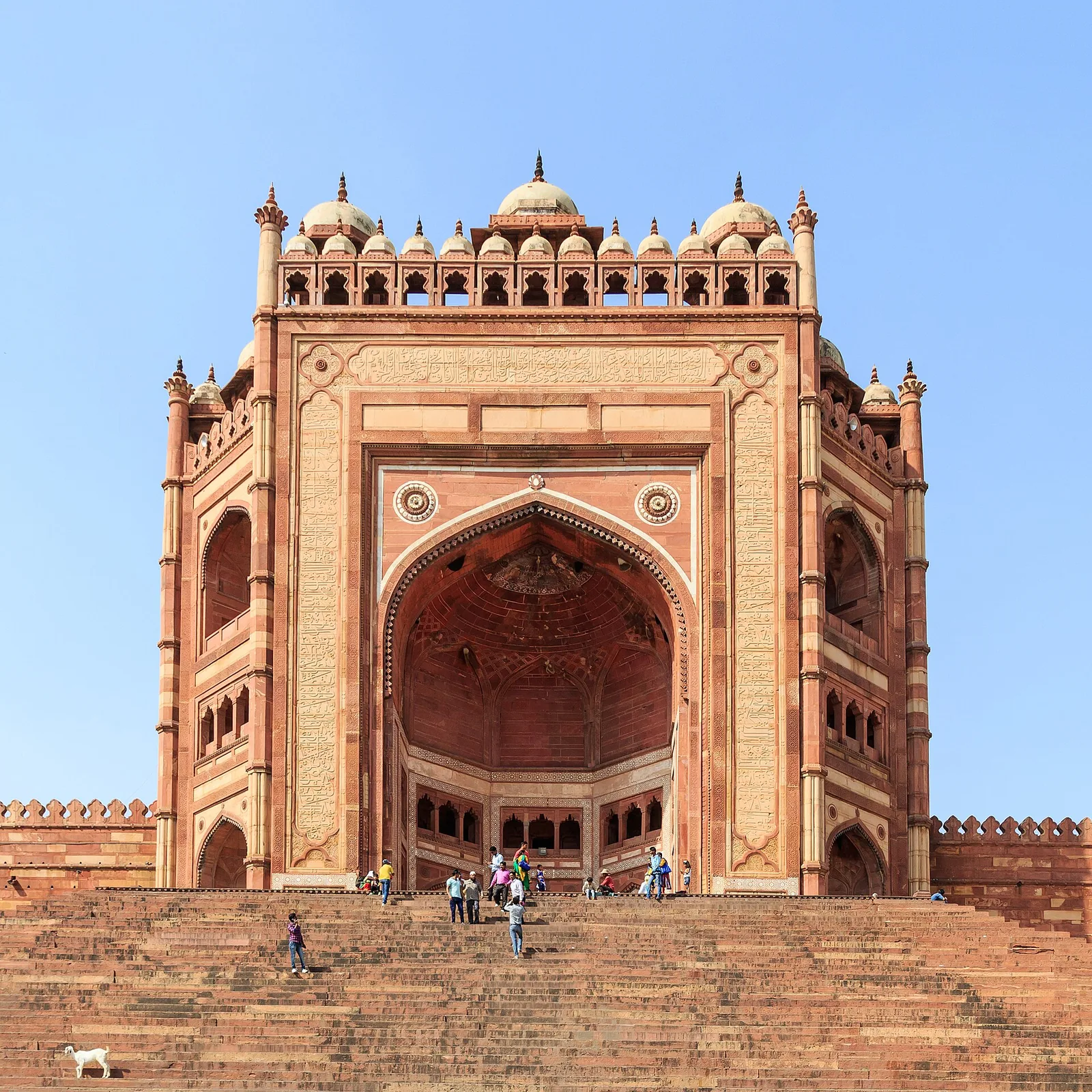 Fatehpur Sikri — Imperial Red Sandstone City and Grand 54-Meter Buland Darwaza Gateway
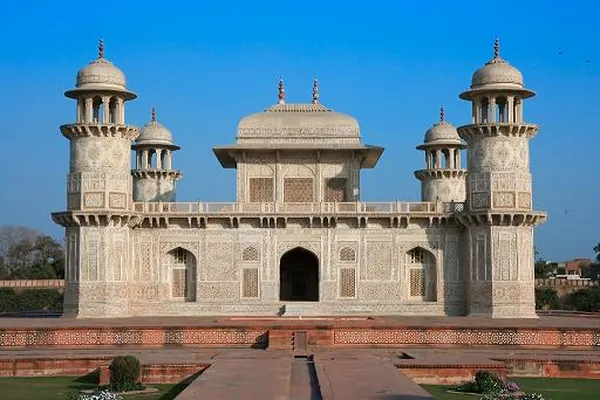
Commissioned between 1622 and 1628 by Empress Nur Jahan for her father Mirza Ghiyas Beg, this jewel-like mausoleum is often regarded as a draft of the Taj Mahal. Built entirely from white Makrana marble with delicate lattice screens (*jali*) and geometric floral inlay work with carnelian, jasper, and onyx, it sits in a serene walled garden along the Yamuna River.
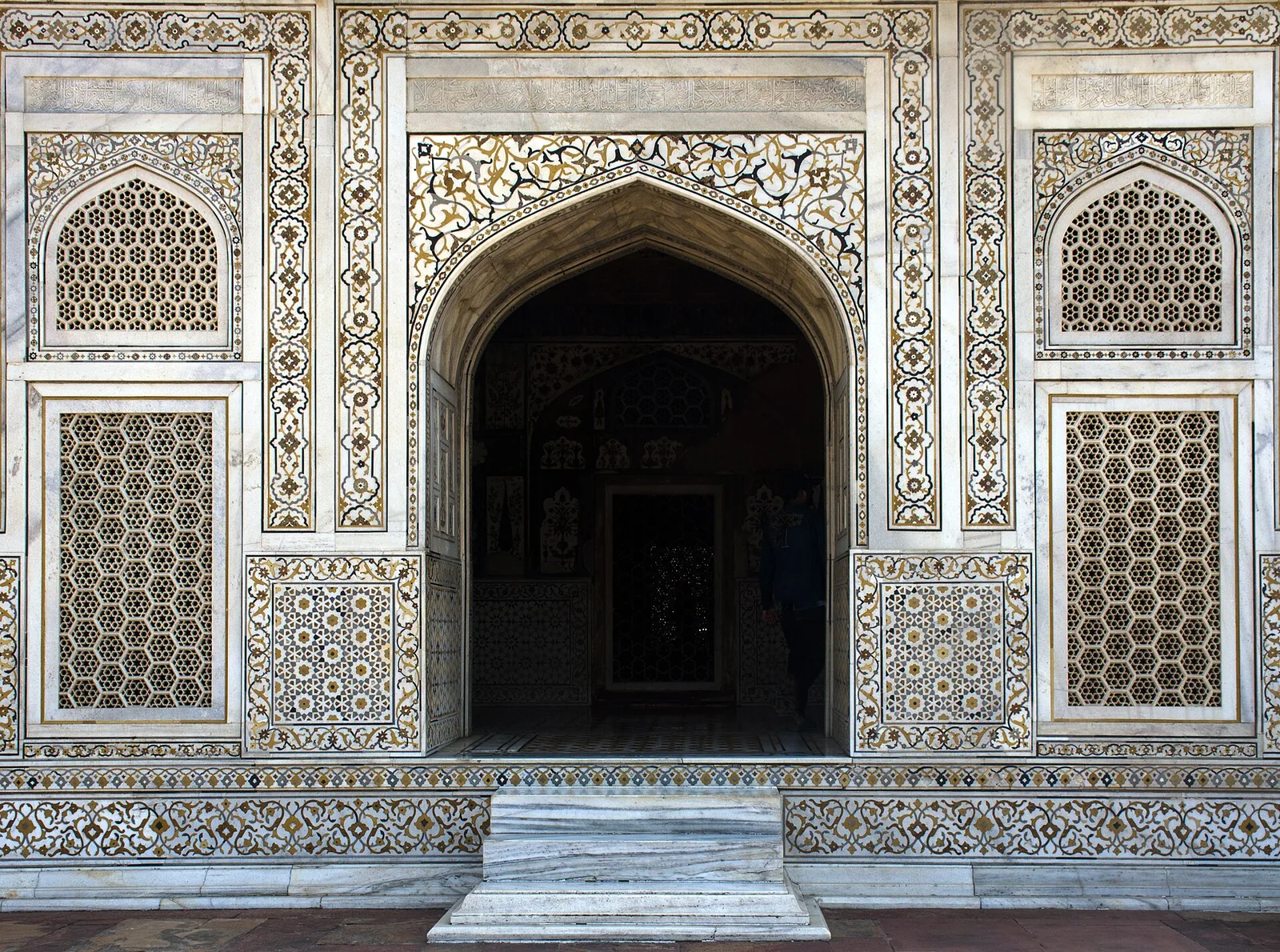 Tomb of Itmad-ud-Daulah — Exquisite Marble Jewel on Yamuna River Known as Baby Taj
Originally laid out by Emperor Babur as the last of eleven riverfront pleasure gardens, Mehtab Bagh (Moonlight Garden) aligns with the Taj Mahal across the Yamuna River. Restored by the Archaeological Survey of India, the 25-acre garden offers sunset and sunrise views of the Taj Mahal reflecting over the river waters.
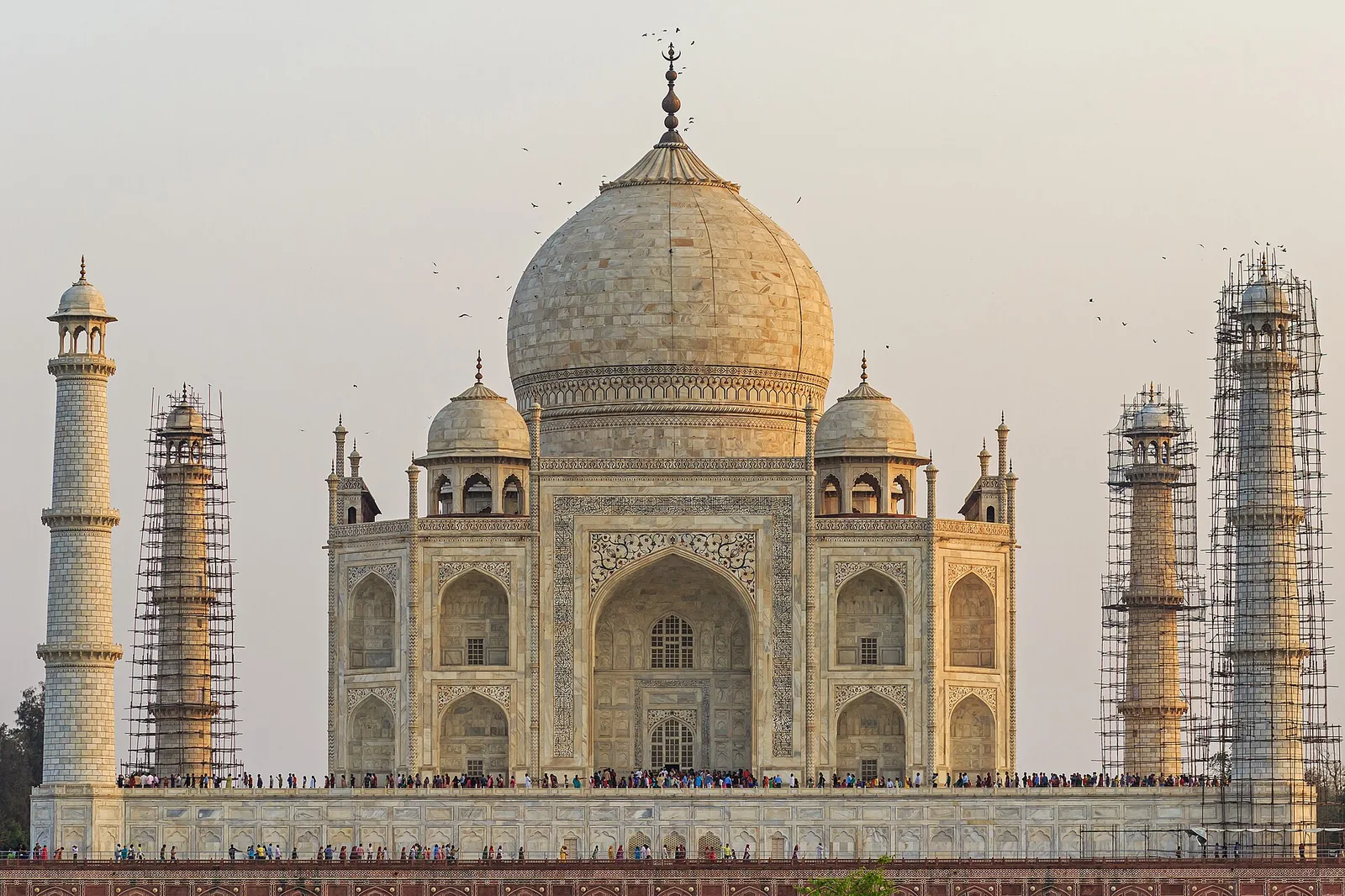 Mehtab Bagh — Riverside Mughal Garden Providing Sunset Panoramas of the Taj Mahal
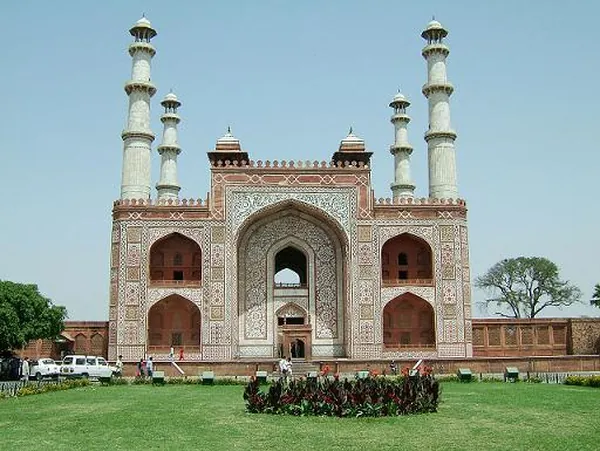
Situated 13 km from Agra center, this five story mausoleum commenced by Emperor Akbar and completed by his son Jahangir in 1613 blends Islamic, Hindu, Buddhist, and Jain architectural elements within a 119-acre walled deer park.
Commissioned in 1648 by Shah Jahan's daughter Jahanara Begum, this congregational mosque stands opposite Agra Fort, featuring red sandstone construction, white marble zigzag chevron domes, and a large central prayer courtyard.
Vibrant labyrinthine bazaars located behind Jama Masjid and Agra Cantt, famous for marble handicrafts, authentic sweet petha, handcrafted leather footwear, and zardozi bridal embroidery.
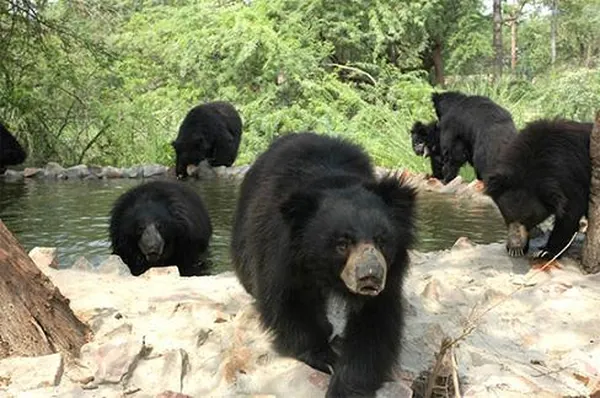
India's largest wildlife rehabilitation facility, providing rescue, care, and peaceful natural retirement for abused dancing sloth bears and working Asian elephants near Keetham Lake.
Duration: 3 Nights / 4 Days
 Best Flights
 Best Prices
 Unique Holidays